When road contractors, asphalt producers, and infrastructure companies invest in an Emulsion Bitumen Plant, the lowest purchase price is rarely the only consideration. The real question is whether the equipment can consistently produce stable bitumen emulsion, meet the required production capacity, support different formulations, and operate economically over many years.
An Asphalt Emulsion Plant is designed to heat and melt bitumen, prepare an emulsifier solution, and disperse the bitumen into water through high-speed shearing. The result is a stable asphalt emulsion suitable for applications such as surface treatments, slurry sealing, tack coats, chip sealing, and other road maintenance processes.
For buyers comparing a bitumen emulsion plant for sale, several factors deserve attention: production capacity, colloid mill performance, dosing accuracy, material compatibility, automation, cooling efficiency, maintenance requirements, transportation, and total investment.

The core function of a bitumen emulsion plant is simple in principle but demanding in practice. Bitumen must be heated to the appropriate working condition, while water and emulsifier are accurately prepared before the materials enter the colloid mill. High-speed shearing then breaks the bitumen into fine droplets and disperses them throughout the aqueous phase.
For buyers, this means that the quality of individual components directly affects the final asphalt emulsion production process.
| Buyer Concern | What to Check | Why It Matters |
|---|---|---|
| Production capacity | 3–4, 5–6, 8–10, 12–15 tph options | Matches project demand |
| Colloid mill | Power, wear resistance, adjustable gap | Influences particle size and emulsion stability |
| Dosing system | Automatic metering and control | Helps maintain formulation consistency |
| Soap system | Separate tanks and continuous supply | Supports stable production |
| Material compatibility | Stainless steel/PPR pipelines | Improves corrosion resistance |
| Cooling system | Heat exchanger and cooling-water circulation | Helps control emulsion temperature |
| Automation | PLC + touch-screen control | Reduces manual operating errors |
| Installation | Modular/skid-mounted structure | Simplifies overseas transportation and setup |
SINOTO’s Asphalt Emulsion Plant range covers multiple production requirements, with standard models including STEB-4, STEB-6, STEB-10 and STEB-15. The listed capacities range from approximately 3–4 tph to 12–15 tph, while customized continuous production lines can also be considered for larger infrastructure projects.
Buyer Tip: Do not compare an asphalt emulsion plant price only by machine size. Compare the complete production system, including the colloid mill, metering system, tanks, pumps, heating, cooling, automation, installation requirements, and after-sales support.
 ⚙️ How Does Colloid Mill Technology Affect Asphalt Emulsion Production?
The colloid mill is one of the most important components of an Asphalt Emulsion Plant because it provides the high-speed mechanical shearing required to disperse heated bitumen into water.
A poorly configured milling system can create inconsistent particle distribution, unstable emulsion, higher demulsification risk, and increased maintenance costs. For this reason, buyers evaluating an emulsion plant manufacturer should pay close attention to the mill rather than focusing only on the nominal production capacity.
SINOTO uses a wear-resistant colloid mill with an adjustable stator-and-rotor gap. The product information states that the clearance can be adjusted down to 0.01 mm, allowing the system to support fine and consistent shearing for different emulsion formulations.
The reference design approach also emphasizes high-speed shearing and dynamic metering as important elements of emulsified asphalt equipment.
① Consistent particle size
Controlled shearing helps produce a more uniform dispersion of bitumen droplets.
② Better formulation adaptability
Different projects may require different emulsion grades. The plant can be configured for cationic, anionic, rapid-setting, medium-setting, slow-setting, and modified emulsions.
③ Lower maintenance risk
Wear-resistant materials in the core mill can help extend component service life and reduce unexpected downtime.
④ More stable production
When the colloid mill works together with accurate metering and automated controls, the entire production process becomes easier to manage.
For buyers specifically searching for a cationic emulsion plant, this flexibility is particularly important because formulation requirements can vary according to aggregate characteristics, climate, road application, and project specifications.
 🏭 Which Capacity Is Right: 6 TPH or 10 TPH Asphalt Emulsion Plant?
Capacity should be selected according to actual project demand rather than simply choosing the largest available machine.
A 6 tph asphalt emulsion plant can be a practical choice for regional road contractors, medium-sized maintenance companies, and producers whose daily production requirements are moderate. It provides a balance between investment, footprint, operating requirements, and output.
A 10 tph bitumen emulsion plant, on the other hand, is more suitable when demand is higher and the equipment needs to support larger road maintenance or infrastructure projects.
| Model | Approx. Capacity | Colloid Mill Power | Typical Positioning |
|---|---|---|---|
| STEB-4 | 3–4 tph | 11 kW | Small/medium production |
| STEB-6 | 5–6 tph | 22 kW | Regional production |
| STEB-10 | 8–10 tph | 37 kW | Medium/large projects |
| STEB-15 | 12–15 tph | 45 kW | High-volume production |
SINOTO’s product range also lists a combined model capable of producing approximately 10 tph emulsion bitumen and 5–8 tph cut-back bitumen.
💡 Selection principle: If your production demand is growing, leave reasonable capacity headroom. However, oversizing the plant unnecessarily can increase initial investment, power consumption, space requirements, and operating costs.
Therefore, when requesting an asphalt emulsion plant price, provide the manufacturer with your target hourly output, working hours per day, required emulsion grades, raw material conditions, and local electrical standards. A quotation based on complete technical requirements is much more useful than a simple price comparison.
 🌍 How Can an Emulsion Plant Manufacturer Reduce Overseas Installation and Operating Costs?
For international buyers, equipment transportation and installation can have a major impact on the total project cost.
A well-designed bitumen emulsion plant for sale should therefore consider not only production performance but also logistics, installation, maintenance, and operator requirements.
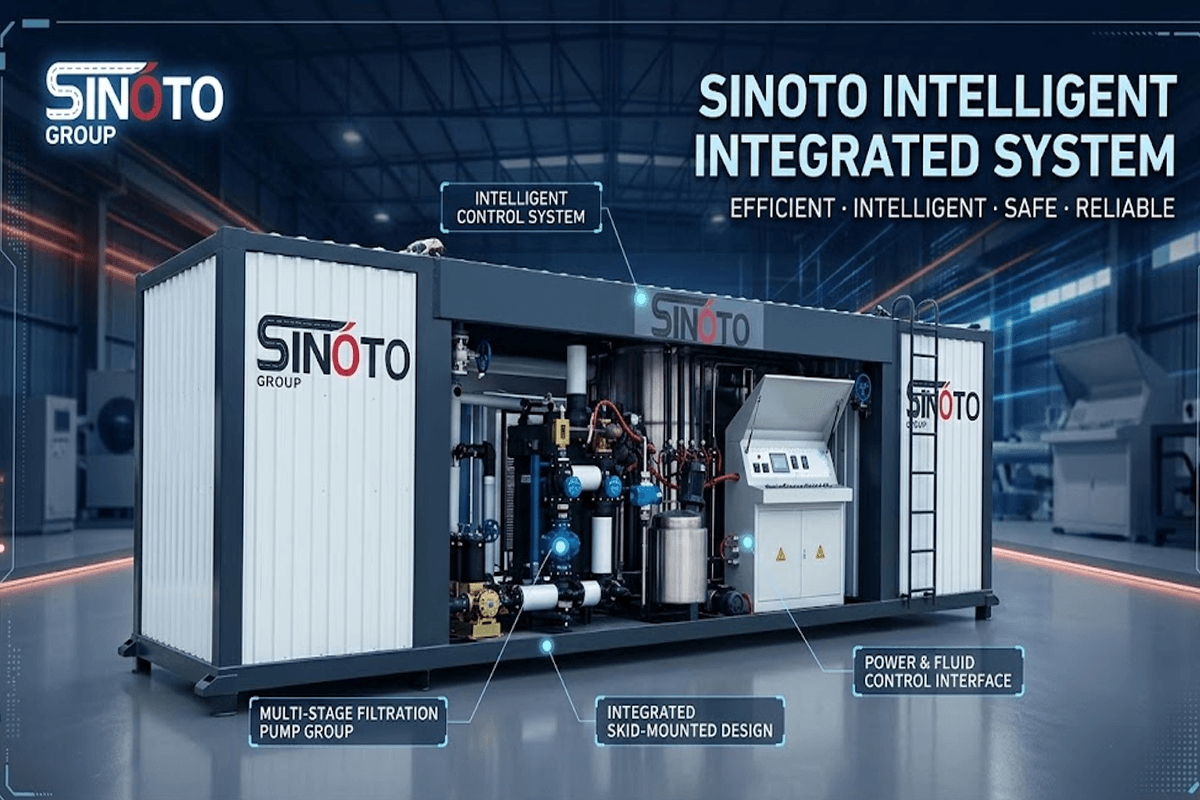
SINOTO uses an integrated and modular design for its emulsion plant, with organized pipelines and insulation around key asphalt and heat-transfer lines. The product page also describes a containerized configuration intended to simplify overseas transportation and installation.
This can provide several practical advantages:
🚢 Simpler international transportation through modular equipment design.
🔧 Faster installation because major systems are integrated and logically arranged.
🧰 Easier maintenance through accessible pumps, tanks, valves, and control components.
⚡ Reduced manual intervention through PLC-based automatic control.
♻️ Better thermal efficiency through heat exchange and cooling-water circulation.
🧪 Broader material compatibility through corrosion-resistant 316 stainless steel and PPR components.
The control system is another important consideration. SINOTO’s system uses Siemens PLC technology for automated proportioning and control, with automatic compensation designed to maintain accurate material ratios. Two soap/emulsion tanks can work alternately to support continuous production.
For companies comparing an asphalt emulsion plant manufacturer, this type of automation can be more valuable than simply choosing the lowest initial bitumen emulsion plant price.
Before purchasing, buyers should prepare a technical checklist:
Production: What output do you need per hour and per day?
Product: Do you need cationic, anionic, rapid-setting, slow-setting, or modified bitumen emulsion?
Raw materials: What grades of bitumen, emulsifier, additives, and water will be available locally?
Automation: Do you require manual, semi-automatic, or fully automatic control?
Power supply: What voltage, frequency, and electrical standards are used at your site?
Installation: Will the equipment be installed permanently or moved between projects?
Logistics: Can the selected configuration be efficiently shipped to your country?
Service: Does the supplier provide installation guidance, commissioning support, spare parts, and technical assistance?
These questions help turn an asphalt emulsion plant price inquiry into a complete technical evaluation.
 📩 Are You Looking for a Bitumen Emulsion Plant for Sale?
Choosing an Emulsion Bitumen Plant is ultimately a balance between production capacity, emulsion quality, automation, flexibility, maintenance, logistics, and total operating cost.
Whether you need a 6 tph asphalt emulsion plant, a 10 tph bitumen emulsion plant, or a larger customized system, the right equipment should be selected around your actual production requirements and target emulsion formulations.
SINOTO provides bitumen emulsion plants with multiple capacity options, adjustable colloid milling technology, automated proportioning, corrosion-resistant material systems, and modular designs for international projects.
👉 [REQUEST A QUOTE] — Tell us your required capacity, emulsion type, project location, and technical requirements, and the SINOTO team can recommend a suitable configuration and provide a detailed quotation.
#BitumenEmulsionPlant #AsphaltEmulsionPlant #BitumenEmulsion #AsphaltEmulsionProduction #RoadConstruction #AsphaltEquipment

Whatsapp ID: 8619059581045

WeChat ID: +8619059581045