Choosing an Stationary Asphalt Mixing Plant / Asphalt Batch Plant is not simply a matter of comparing equipment prices. For highway contractors, asphalt producers, municipal road departments, and infrastructure investors, the real decision involves production capacity, mix quality, fuel consumption, environmental performance, automation, maintenance, and long-term operating costs.
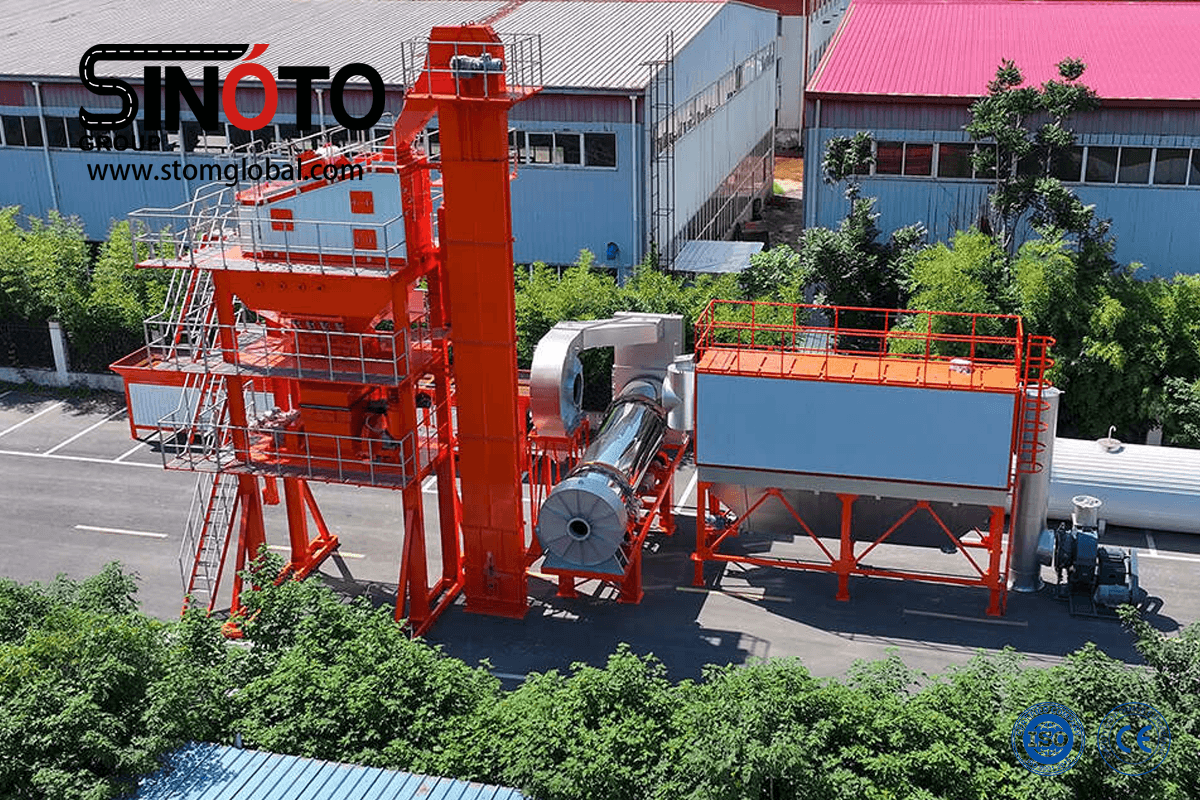
A modern stationary asphalt mixing plant is the core production system for manufacturing consistent hot-mix asphalt. It combines aggregate feeding, drying, screening, weighing, bitumen supply, mixing, dust collection, storage, and intelligent control into one coordinated production line.
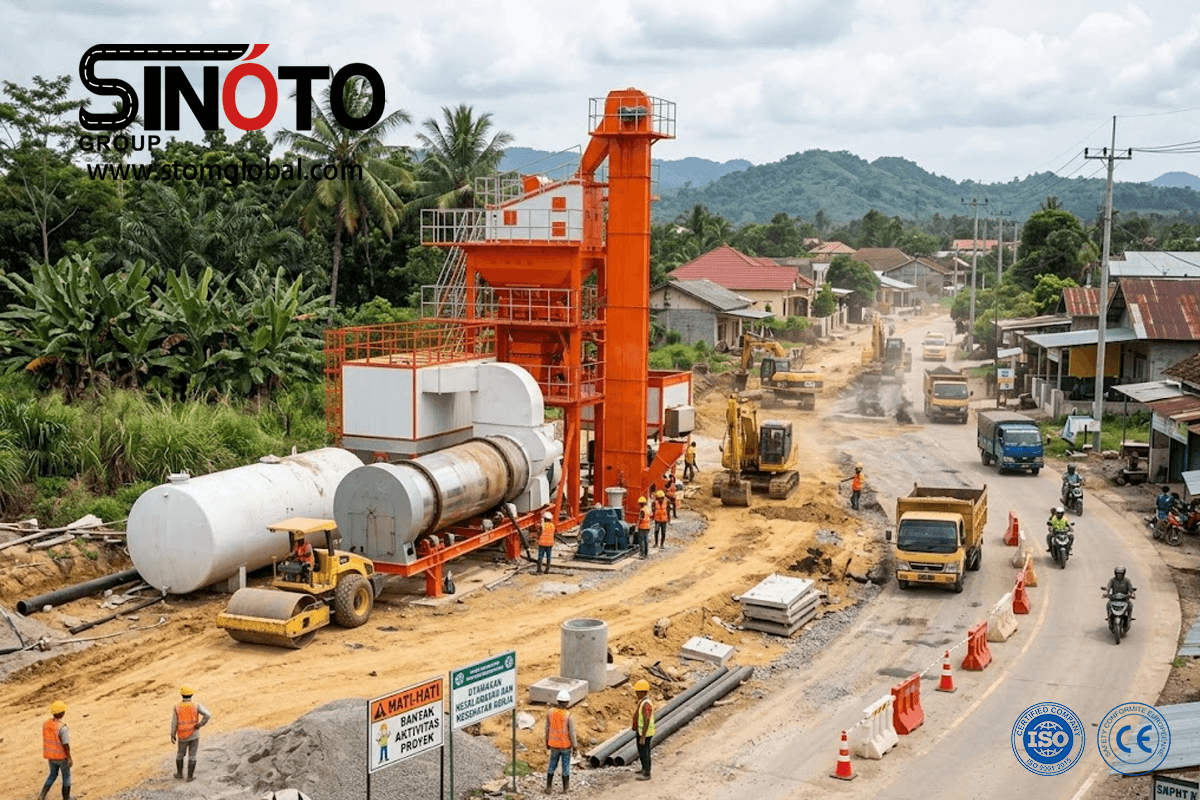
For projects that require stable output over a long period, an asphalt batch plant can provide the production flexibility and mixture control needed for highways, airports, bridges, ports, urban roads, and large-scale infrastructure projects.
💡 Buyer Insight: The lowest initial equipment price does not always mean the lowest project cost. Production stability, fuel efficiency, material accuracy, maintenance requirements, and environmental compliance can have a much greater impact on total ownership cost.
 What Should You Look for in a Stationary Asphalt Mixing Plant?
The first question is whether the equipment can match your actual project requirements. A plant that is too small may create production bottlenecks, while excessive capacity can increase unnecessary investment and operating costs.
SINOTO’s stationary asphalt plant range covers approximately 40–400 tph, allowing contractors to select equipment according to project scale and expected asphalt demand.
Important factors include:
⚙️ Production capacity: Match tph output with daily and monthly asphalt requirements.
🎯 Weighing accuracy: Precise aggregate, bitumen, and filler dosing helps maintain mix consistency.
🔥 Heating efficiency: A properly designed drying and heating system can reduce unnecessary fuel consumption.
🌫️ Dust collection: Effective filtration is increasingly important for environmental compliance.
🖥️ Automation: PLC-based control reduces manual intervention and improves process monitoring.
🔧 Maintenance access: Easy access to major components can reduce downtime.
🏗️ Structural design: A robust stationary configuration is suitable for long-term production at a fixed site.
For example, the SINOTO technical configuration includes automatic computer control with IPC, PLC, monitoring, printing, and other integrated functions. The system can monitor the production process from cold aggregate feeding through hot-mix discharge.
This makes an asphalt mixing plant more than a simple mixer. It is an integrated production system designed to maintain repeatable asphalt quality throughout continuous project operations.
 Which Asphalt Batch Plant Capacity Is Suitable for Your Project?
Capacity should be selected according to actual demand rather than simply choosing the largest available model.
| Typical Project Requirement | Suggested Capacity Range | Typical Application |
|---|---|---|
| Small/medium road projects | 60–100 tph | Urban roads, maintenance, regional projects |
| Medium highway projects | 100–160 tph | Highway paving and municipal infrastructure |
| Large road projects | 160–260 tph | High-volume highway construction |
| Major infrastructure | 260–400 tph | Large highways, airports, ports and major projects |
For buyers searching specifically for a 60 tph asphalt batch plant, the key question should be whether the capacity can meet peak daily demand. For larger highway contracts, a 120 tph asphalt mixing plant or 160 tph asphalt plant may provide a better balance between production capacity and investment.
The right capacity is therefore determined by project schedule, paving speed, truck availability, material supply, working hours, and required daily output.
 How Does an Asphalt Batch Plant Improve Asphalt Quality and Production Efficiency?
An asphalt batch plant separates the production process into controlled stages. Aggregates are fed from cold bins, dried and heated, screened into different sizes, accurately weighed, combined with mineral filler and bitumen, and then mixed in batches.
This process provides an important advantage: better control over the final asphalt mixture.
SINOTO’s technical data specifies weighing accuracy of approximately ±0.5% for hot aggregate, ±0.25% for bitumen, and ±0.2% for filler. The batch mixer uses a twin-shaft forced mixing system, with a listed mixing cycle of about 45 seconds.
📊 Production Principle: Accurate weighing + controlled heating + precise bitumen dosing + forced mixing = more consistent hot-mix asphalt.
The batch production method is particularly useful when contractors need to produce different asphalt formulas during the same project. Mix proportions can be adjusted through the control system instead of relying on manual operation.
Automation also helps reduce operator workload. Real-time monitoring allows operators to observe key production parameters and make adjustments when necessary.
For an asphalt plant manufacturer, the objective is therefore not only to increase nominal tph output but also to improve the stability and repeatability of the complete production process.
 Why Are Environmental Performance and Energy Efficiency Important?
Environmental performance has become a major consideration when purchasing an asphalt plant.
An asphalt production facility generates dust, exhaust gases, and asphalt fumes during aggregate drying and mixing. A modern system therefore needs an effective dust collection and exhaust treatment design.
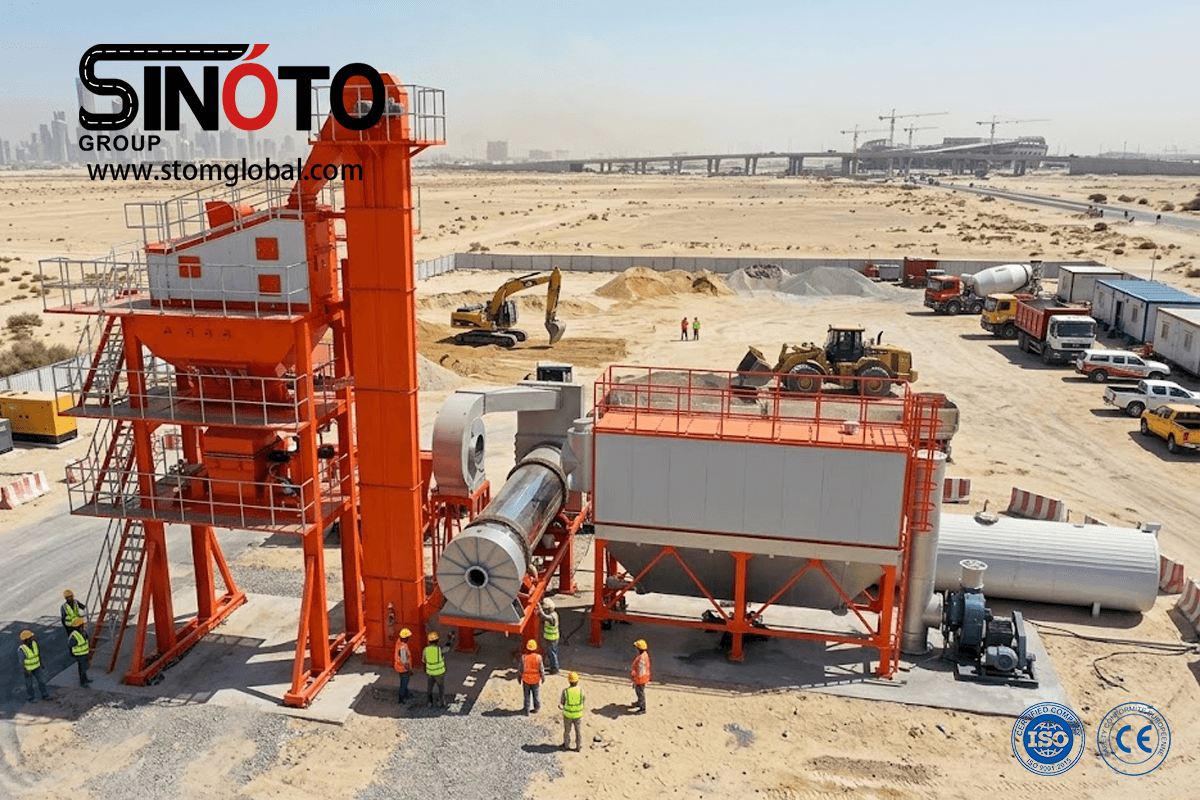
SINOTO’s stationary configuration incorporates primary dust collection and baghouse filtration. The listed technical data includes NOMEX filter bags and an air-emission figure of up to ≤20 mg/Nm³ for the specified configuration.
The plant also supports different burner fuel options, including diesel, heavy oil, fuel oil, coal, and natural gas, depending on the selected configuration and local project requirements.
| Feature | Why It Matters |
|---|---|
| Baghouse dust collector | Helps control particulate emissions |
| Efficient burner | Supports stable heating and fuel management |
| Closed production structure | Helps reduce dust dispersion |
| Asphalt-fume treatment | Supports cleaner production |
| Variable-frequency drives | Helps optimize equipment operation |
| RAP compatibility | Can improve material utilization where configured |
Environmental performance should not be viewed separately from operating cost. Better heating control, optimized airflow, efficient motors, and appropriate fuel selection can contribute to lower energy consumption over the equipment’s service life.
This is particularly important for contractors operating an stationary asphalt plant for sale in regions where environmental regulations and fuel prices strongly affect project economics.
When comparing asphalt batch plant price, buyers should avoid comparing only the quotation value.
A complete investment may include the main plant, cold aggregate feeders, dryer, burner, dust collector, mixing tower, bitumen system, filler system, storage silo, electrical system, installation, commissioning, spare parts, transportation, and operator training.
The actual cost of ownership is influenced by:
Initial equipment investment
Fuel consumption
Electricity consumption
Spare parts and maintenance
Labor requirements
Production downtime
Environmental compliance
Expected service life
A reliable stationary asphalt plant manufacturer should therefore provide more than a basic equipment quotation. Buyers should request technical specifications, production capacity, component brands, fuel requirements, dust-control configuration, installation requirements, spare-parts support, and after-sales service.
For example, SINOTO’s modular design is intended to simplify assembly and maintenance. The manufacturer states that modular connections can reduce assembly and disassembly time compared with conventional welded structures.
For buyers searching online for stationary asphalt plant for sale, asphalt batch plant price, or an asphalt plant manufacturer, these technical details are often more important than a headline price.
🏗️ Investment Tip: Ask for a complete technical and commercial proposal instead of comparing equipment prices alone. A slightly higher initial investment may deliver better productivity, lower downtime, easier maintenance, and stronger long-term ROI.
 Which Stationary Asphalt Plant Manufacturer Should You Choose?
The right stationary asphalt plant manufacturer should combine equipment manufacturing capability with engineering support.
Before placing an order, consider whether the supplier can provide:
✅ Customized production capacity
✅ Complete technical specifications
✅ PLC automatic control
✅ Dust collection and environmental solutions
✅ Multiple fuel options
✅ Installation and commissioning support
✅ Spare parts and after-sales service
✅ Project-based equipment recommendations
✅ International transportation and export experience
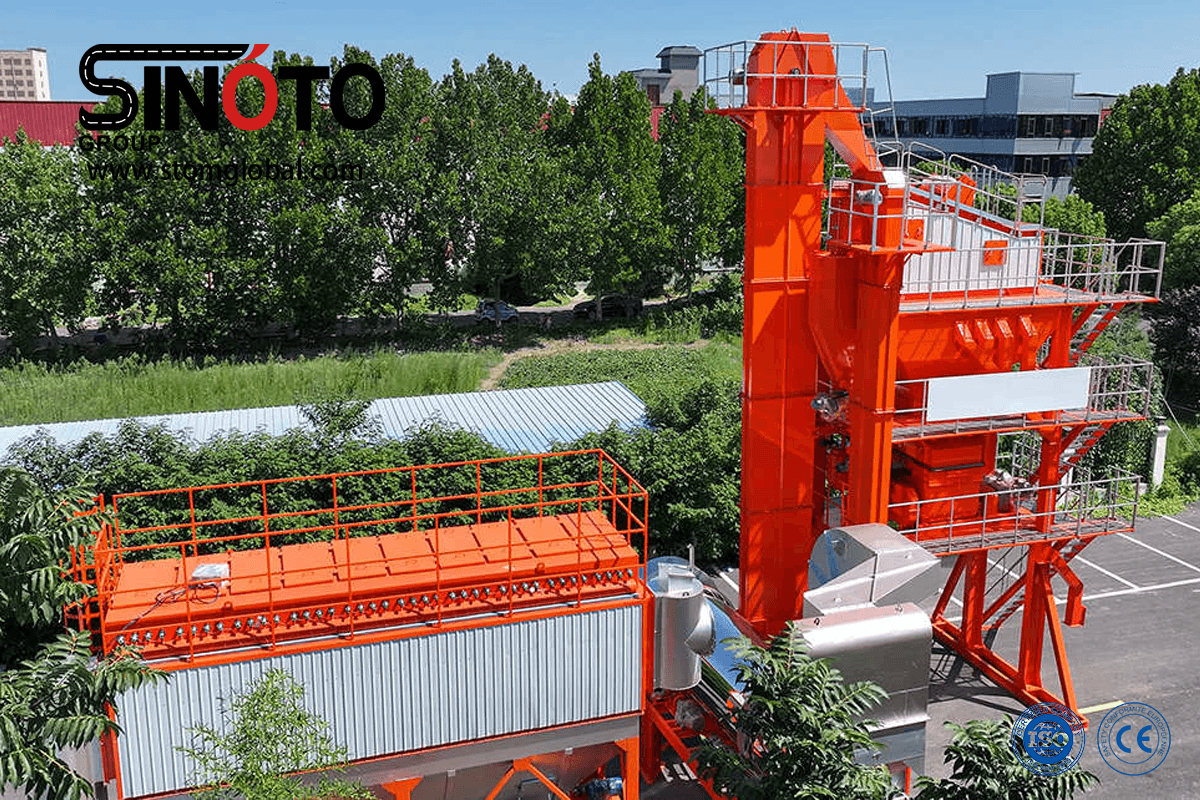
SINOTO provides stationary batch-type hot-mix asphalt plants covering a broad capacity range and designed for highway, municipal road, airport, port, and other infrastructure applications.
Whether you are evaluating a 60 tph asphalt batch plant, 120 tph asphalt mixing plant, 160 tph asphalt plant, or a higher-capacity system, the best solution should be based on your actual production requirements rather than capacity alone.
A properly selected stationary asphalt mixing plant can become the long-term production center of a road construction business—providing consistent asphalt quality, controlled production, reliable operation, and scalable output for demanding infrastructure projects.
Tell us your required capacity, project location, asphalt mix requirements, fuel availability, and expected production volume. Our engineering team can recommend a suitable configuration and provide a detailed technical proposal and quotation.
#StationaryAsphaltMixingPlant #AsphaltBatchPlant #AsphaltMixingPlant #AsphaltPlant #RoadConstruction #AsphaltPlantManufacturer

Whatsapp ID: 8619059581045

WeChat ID: +8619059581045