Road maintenance contractors face a common challenge: how can they improve pavement durability, maintain consistent construction quality, and control project costs at the same time? Traditional chip sealing methods may require separate operations for asphalt spraying and aggregate spreading, increasing coordination demands and the risk of uneven application.
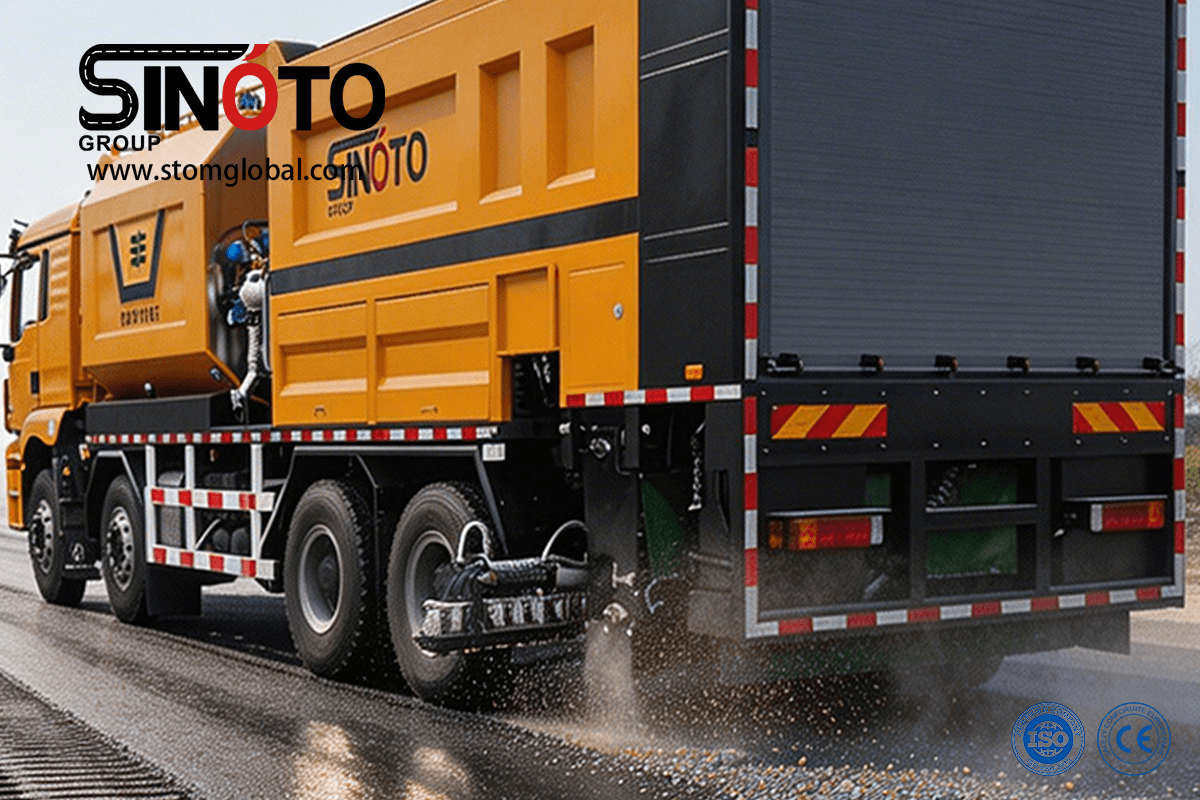
An Asphalt Synchronous Chip Sealer provides a more integrated solution by spraying bitumen and spreading stone chips almost simultaneously. This coordinated process helps improve bonding between the binder and aggregates, supports uniform surface treatment, and reduces the time between material application stages.
For highway contractors, municipal road authorities, and infrastructure equipment distributors, choosing the right synchronous chip sealer is not simply about purchasing a truck. Buyers must evaluate spraying accuracy, aggregate distribution, engine performance, tank capacity, maintenance requirements, and long-term operating costs.
SINOTO offers asphalt synchronous chip sealing equipment with different chassis configurations, tank capacities, and working widths to support road construction and preventive maintenance projects.
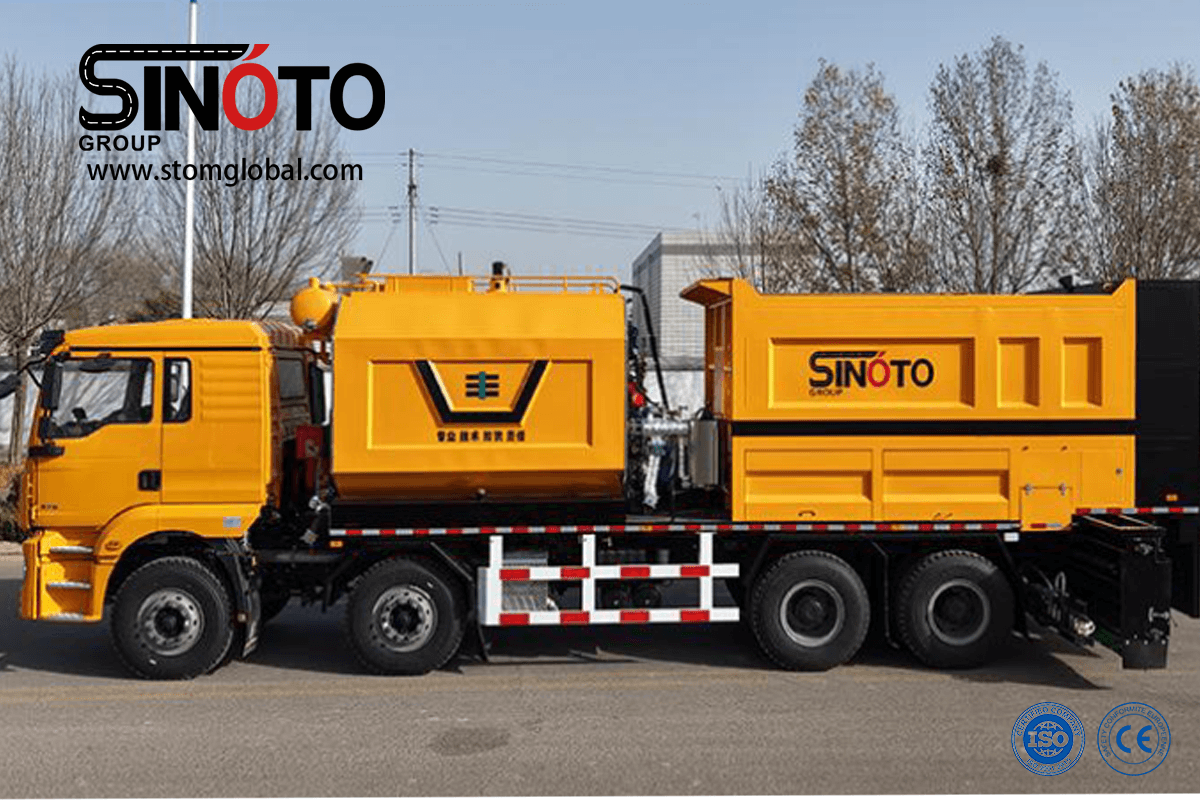
The main advantage of a synchronous chip sealer is the coordination of two essential operations: binder spraying and aggregate spreading. By reducing the time between these processes, the machine helps create favorable conditions for aggregate adhesion before the binder cools or its properties change.
A conventional chip seal operation may involve multiple machines and separate work stages. An integrated chip seal truck combines binder spraying and chip distribution in one coordinated operation, helping reduce equipment coordination and improve workflow.
This approach is particularly useful for highway maintenance, rural road upgrades, surface treatment, waterproofing layers, and preventive pavement maintenance.
Uneven binder application can contribute to aggregate loss, bleeding, or inconsistent surface texture. Excessive or insufficient aggregate spreading can also affect pavement performance.
A modern asphalt chip sealer uses controlled spraying and spreading systems to help maintain consistent material application. SINOTO lists an asphalt spraying range of 0.2–3.0 L/m², an aggregate spreading range of 2–22 kg/m², and a listed distribution accuracy of ±1% in its technical specifications. Actual application rates depend on the selected model, materials, calibration, and project conditions.
The synchronous application process helps place stone chips onto freshly sprayed binder, supporting adhesion and the formation of a protective wearing surface after compaction.
Key takeaway: The value of a chip seal machine lies not only in its working width or truck capacity, but also in how accurately it coordinates binder spraying, aggregate spreading, vehicle speed, and material flow.
For buyers comparing a chip sealer with conventional road maintenance equipment, the most important question is whether the machine can deliver the required surface quality consistently under actual site conditions.
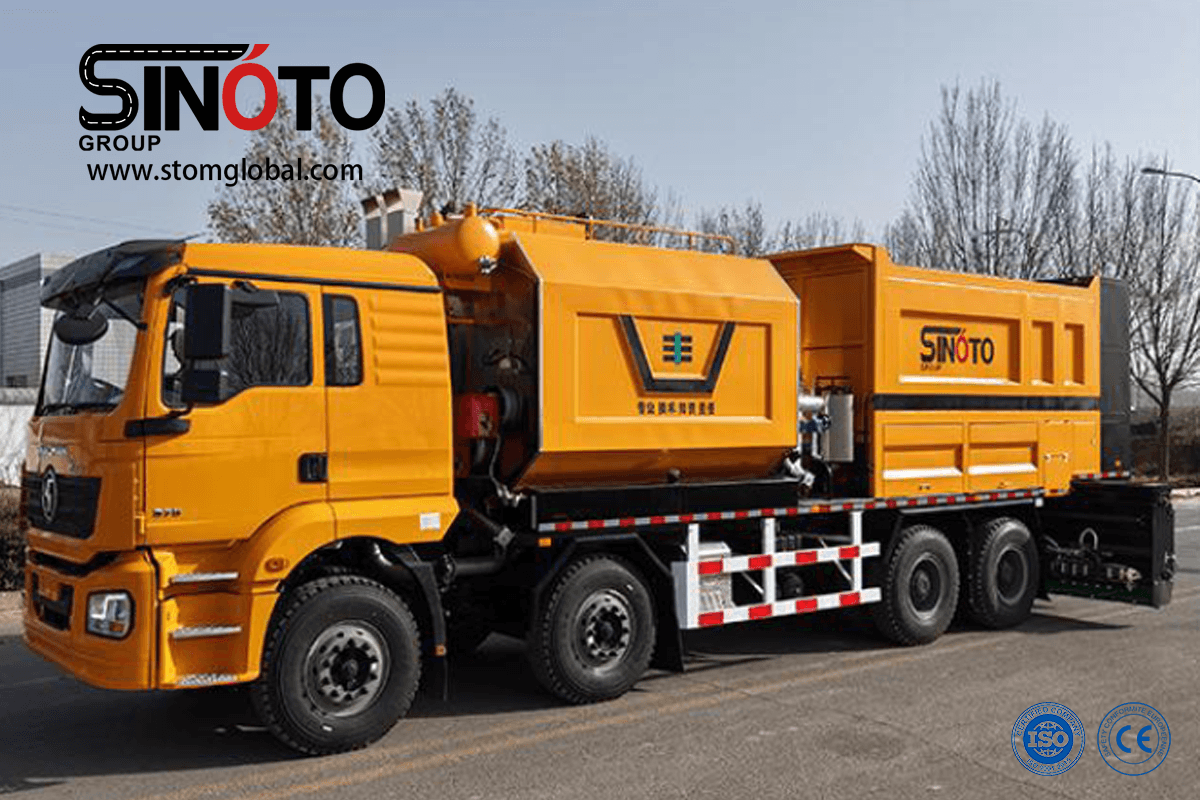
Selecting synchronous chip sealing equipment requires matching the machine to project scale, daily production targets, aggregate requirements, road width, and transportation conditions.
The following table summarizes the published SINOTO specifications for representative models.
| Specification | STCS5180TFC | STCS5252TFC | STCS5318TFC |
|---|---|---|---|
| Chassis configuration | 4×2 | 6×4 | 8×4 |
| Bitumen tank capacity | 5,000 L | 8,000 L | 8,000 L |
| Aggregate hopper capacity | 4 m³ | 10 m³ | 12 m³ |
| Maximum sealing width | 2,500 mm | 3,800 mm | 4,200 mm |
| Listed working speed | 3–10 km/h | 3–10 km/h | 3–10 km/h |
| Typical selection consideration | Smaller-scale projects | Medium-to-large projects | Wider coverage requirements |
Source: SINOTO product specifications. Confirm the final configuration and technical data with the manufacturer before ordering.
A 5000L chip sealer truck can be a practical option for contractors who prioritize a more compact configuration, smaller project requirements, or flexible deployment across multiple maintenance sites.
An 8000L synchronous chip sealer may be more suitable for larger projects requiring greater binder capacity and wider aggregate coverage. Its suitability depends on the available aggregate supply, road conditions, loading logistics, and required production schedule.
Larger tanks do not automatically guarantee higher productivity. If a project has limited aggregate supply, frequent traffic interruptions, or narrow roads, a smaller configuration may deliver better operational flexibility.
When evaluating a chip sealer, pay attention to:
SINOTO lists an intelligent control system, a speed-measuring radar, a touch-screen interface, and heating through a Riello burner with thermal-oil circulation and automatic temperature control. Component configurations vary by model.
These features can help contractors evaluate whether a synchronous chip sealer for sale meets their actual operating requirements rather than comparing equipment on price alone.
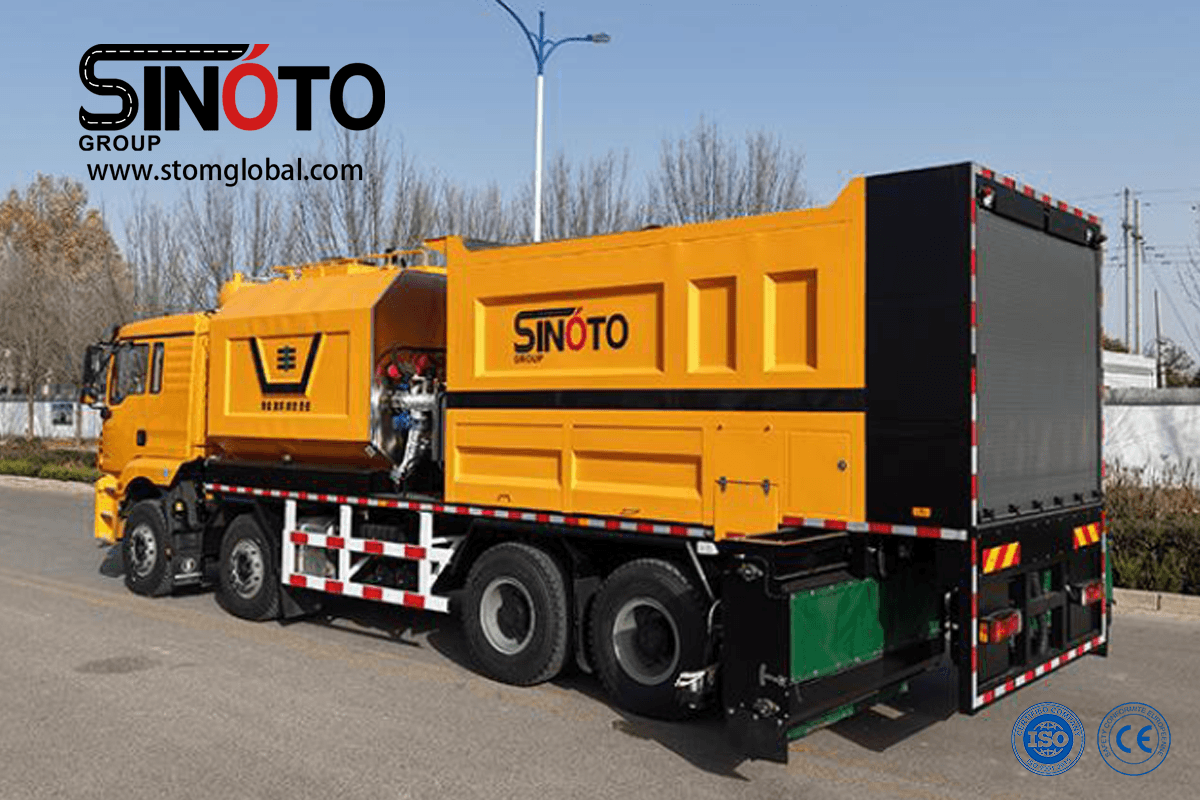
The purchase price is only one part of the total cost of owning an asphalt chip sealer. Fuel consumption, binder heating, aggregate handling, maintenance, operator training, transportation, and downtime all affect project profitability.
A chip seal truck price quotation generally depends on several variables:
Buyers searching for a chip sealer truck price or an asphalt chip sealer should therefore request a complete quotation based on a defined configuration.
| Cost consideration | What buyers should verify | Potential benefit |
|---|---|---|
| Initial purchase | Chassis, tank capacity, included systems | Avoid configuration gaps |
| Material consumption | Binder and aggregate application rates | Reduce unnecessary material use |
| Heating system | Fuel requirements and temperature control | Improve thermal management |
| Maintenance | Service intervals and spare parts availability | Reduce unexpected downtime |
| Technical support | Training, troubleshooting, and warranty terms | Improve equipment availability |
| Project logistics | Loading, transportation, and refilling arrangements | Reduce nonproductive time |
Buyer tip: Compare the total cost per treated square meter, not just the initial chip sealer truck price. A machine that matches project requirements and maintains reliable operation may offer better long-term value than a cheaper machine with unsuitable capacity or limited support.
The second reference article discusses possible reasons for declining vehicle power, including restricted air intake, a damaged or leaking intake pipe, a clogged air filter, supercharger problems, and valve clearance or cylinder sealing issues.
Although these are general vehicle powertrain concerns rather than faults unique to every chip sealer model, they illustrate why preventive maintenance matters.
When a chip seal truck loses power, operators should investigate the symptoms systematically instead of assuming that the engine itself must be replaced.
| Observed symptom | Possible cause | Recommended action |
|---|---|---|
| Reduced engine power | Restricted air intake or clogged filter | Inspect intake pipes and service the air filter |
| Reduced boost or acceleration | Supercharger or boost-system fault | Check according to the engine manufacturer’s procedures |
| Persistent loss of compression | Valve clearance or cylinder sealing issue | Arrange professional engine diagnosis |
| Abnormal temperature or warning lights | Cooling, lubrication, or other system fault | Stop when necessary and follow the service manual |
| Irregular spraying or spreading | Control, sensor, hydraulic, or material-flow issue | Inspect the relevant subsystem and calibrate it |
These are initial diagnostic directions, not definitive diagnoses. Engine work and hydraulic or electrical repairs should follow the manufacturer’s service procedures and be performed by qualified technicians where required.
A reliable asphalt chip sealing machine manufacturer should help buyers understand maintenance schedules, recommended consumables, troubleshooting procedures, and spare parts availability before the equipment reaches the jobsite.
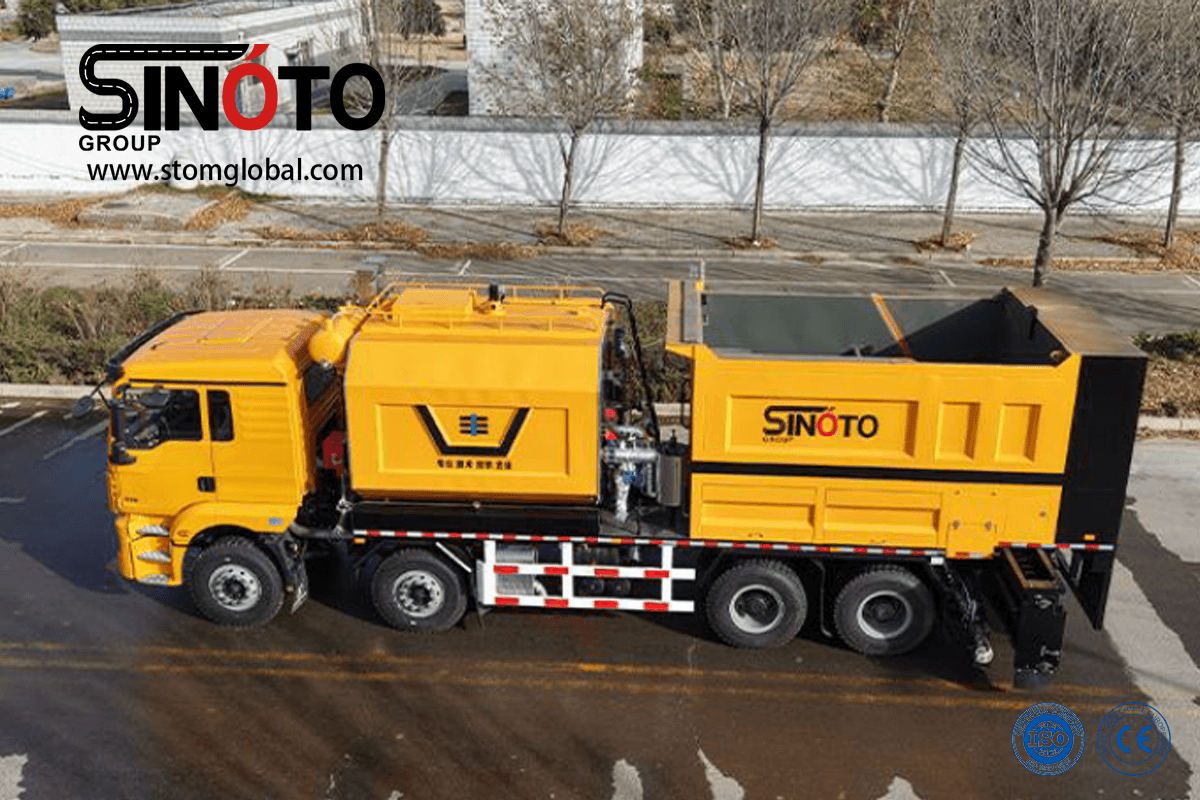
Choosing the right manufacturer requires more than comparing product photos and advertised prices. Contractors should confirm that the supplier can provide the required technical configuration, export documentation, operating guidance, and support for the intended application.
A qualified supplier should be able to explain the differences between available models, including tank capacity, maximum sealing width, chassis configuration, binder compatibility, aggregate size, and control functions.
SINOTO’s listed models support bitumen tank capacities of 5,000–8,000 L in the representative configurations shown above, with maximum sealing widths ranging from 2,500 mm to 4,200 mm. The product page also identifies compatibility with hot bitumen, polymer-modified bitumen, emulsion bitumen, and rubber-modified bitumen, subject to the selected machine configuration and operating requirements.
For contractors considering a chip seal machine for highway or municipal work, ask the manufacturer to confirm:
For smaller road maintenance teams, a 5,000L chip sealer truck may offer a useful balance of capacity and maneuverability. For larger road sections, an 8,000L model with a larger aggregate hopper and wider sealing bar may help reduce interruptions for replenishment.
Where reflective cracking is a concern, buyers can also ask about fiber-reinforced synchronous chip sealing configurations. Suitability depends on pavement condition, engineering design, material selection, and the proposed construction method.
Procurement recommendation: Before requesting a final quotation, prepare a short project specification covering the target road width, daily coverage, binder type, aggregate size, operating environment, and expected service life. This allows the manufacturer to recommend a suitable configuration instead of simply offering the largest available machine.
A reliable synchronous chip sealer supplier should be transparent about what is included in the quotation and what must be confirmed separately.
If you are planning a highway maintenance project, municipal road upgrade, or preventive surface treatment program, STOM Global can help you evaluate suitable asphalt synchronous chip sealer configurations according to your project requirements.
Share your target working width, preferred tank capacity, chassis preference, binder type, aggregate specifications, and destination country to help the sales team prepare a more relevant proposal.
Request a Customized Asphalt Synchronous Chip Sealer Quote
For direct inquiries, contact SINOTO Group:
Choose synchronous chip sealing equipment based on application accuracy, operational reliability, maintainability, and total project cost—not purchase price alone.
#AsphaltSynchronousChipSealer #ChipSealTruck #RoadMaintenance #AsphaltEquipment #RoadConstruction

Whatsapp ID: 8619059581045

WeChat ID: +8619059581045

