Picture a crew applying a prime coat on a highway base. Halfway down the lane, one nozzle clogs and a pale, dry stripe appears in the fresh black surface. If you are shopping for an asphalt distributor for sale, this scene is a fair test of any machine. Blockages happen eventually. What matters is how the equipment limits the damage and how fast your crew recovers.
This guide explains what happens when a spray nozzle blocks, how operators should respond, and which design features on the STBD series from Henan Sinoto (STOM Global) reduce the risk. It is written for contractors, road maintenance departments and dealers comparing a bitumen sprayer for sale against their project needs.
💡 Quick answer: A blocked nozzle leaves a strip with little or no binder, which breaks the uniform application rate that seal coats, tack coats and prime coats depend on. Stop spraying, isolate the nozzle, check binder temperature, clear or replace the nozzle, then test-spray before resuming.
Icon Topic Key Point ⚠️ Main risk Streaking and under-application 🔥 Most common cause Cooled or contaminated binder 🛠️ First response Stop, isolate the nozzle, inspect 🛡️ Best prevention Circulation heating and good filtration
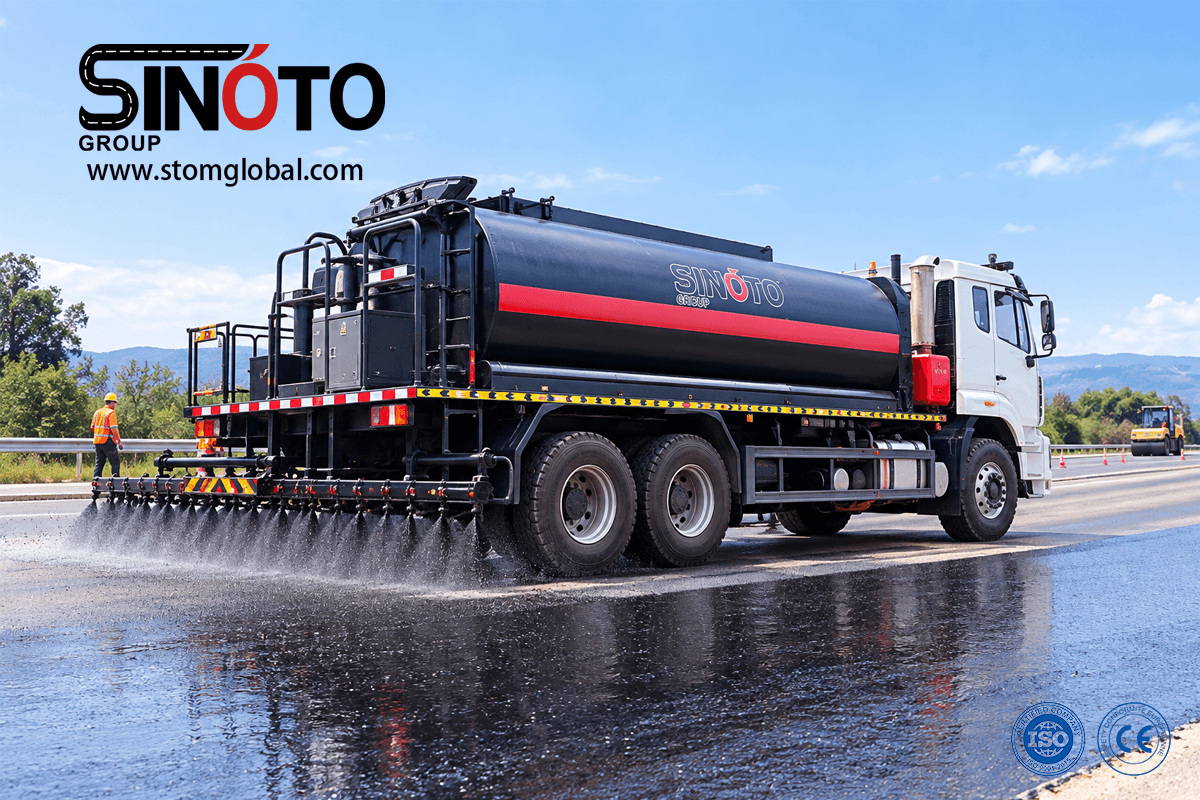
A blockage rarely stays confined to one nozzle. Every nozzle on the spray bar is meant to deliver an equal share of binder, so when one stops, several problems follow:
Because road performance depends on a uniform rate, one blocked nozzle can compromise an entire lane. A quality asphalt sprayer for sale should make the problem visible quickly and let the operator act on a single nozzle without stopping the whole job.
| Symptom | Likely Cause | Risk | Action |
|---|---|---|---|
| Dry stripe in the spray pattern | Cooled binder or debris in the nozzle | Poor bonding | Stop, clean the nozzle |
| Weak or fan-shaped spray | Partial blockage or worn nozzle | Uneven rate | Inspect, replace if worn |
| Several adjacent nozzles affected | Contaminated binder or clogged filter | Wide coverage gaps | Check the filter and binder temperature |
| Pressure rises while spraying | Restricted nozzles or line | Equipment stress | Stop and inspect the spray bar |
Speed matters, but safety matters more. A practical field checklist looks like this:
🛡️ Safety note: Bitumen at spraying temperature causes severe burns. Always wear heat-resistant gloves, a face shield and protective clothing, and depressurize the system before removing any nozzle.
Different binders behave differently. Emulsified bitumen can break and leave residue if left sitting. Cutback and hot bitumen thicken quickly when temperature drops. High-viscosity modified bitumen needs the most careful temperature control. A well-designed machine handles all of these in one platform, which is why the STBD series is specified for emulsified, cutback, hot, heavy-traffic and modified bitumen.
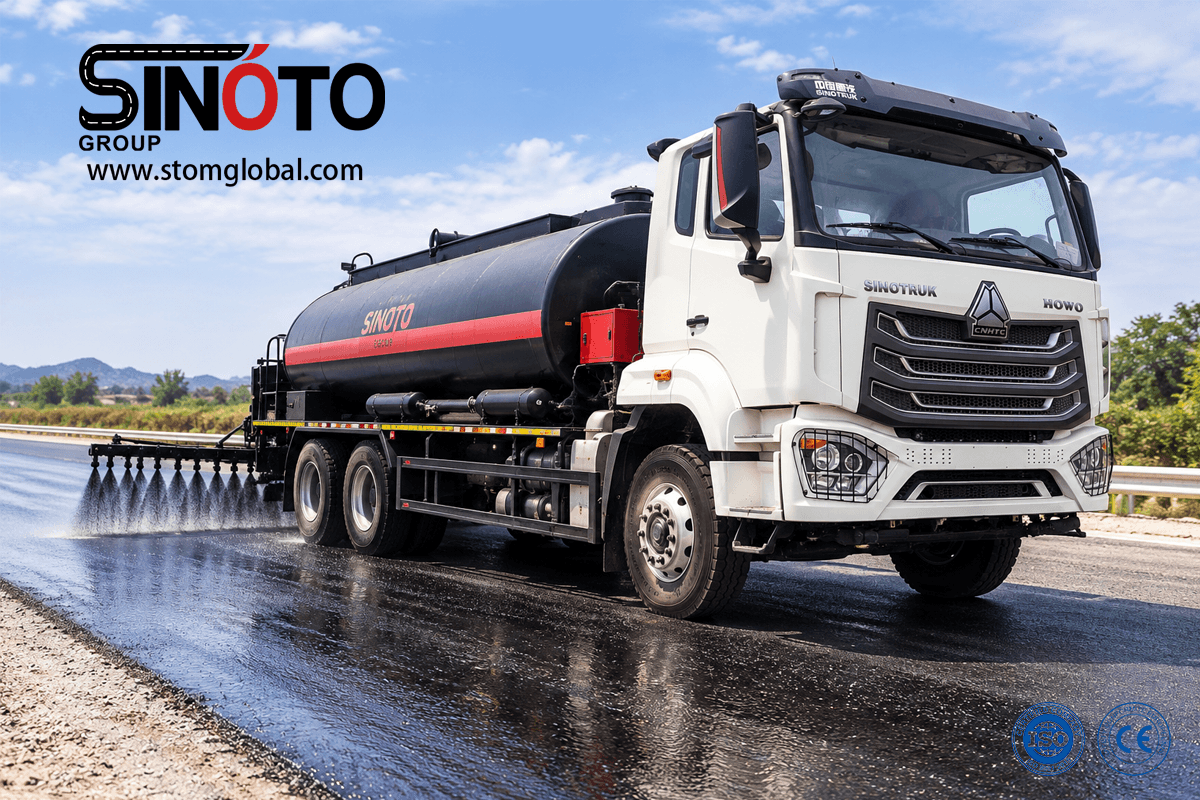
Most blockages start with temperature, contamination or residue, so prevention is largely a design issue. When evaluating a bitumen distributor manufacturer, look for these features, all found on the STBD series:
A reliable asphalt distributor manufacturer also chooses proven components. STOM specifies Danfoss hydraulic pumps, HydraForce proportional valves, IDEC PLC control and RIELLO burners. A bitumen sprayer manufacturer that uses recognized parts makes maintenance and spare-part sourcing much easier for buyers in remote regions.
📌 Buyer tip: Ask any supplier how the system heats and flushes the spray bar after shutdown. Residue left overnight is a classic cause of next-morning blockages.
Blockage risk is only one part of the decision. Buyers usually raise the same set of questions:
When you compare an asphalt distributor price across suppliers, check that each quote covers the same items: chassis brand, pump model, burner, control system and spare-parts kit. A lower bitumen sprayer price or asphalt sprayer price can hide weaker heating, cheaper pumps or a basic controller. Those are exactly the parts that decide how often nozzles block. Asking a bitumen distributor manufacturer for a full component list is a simple way to compare fairly.
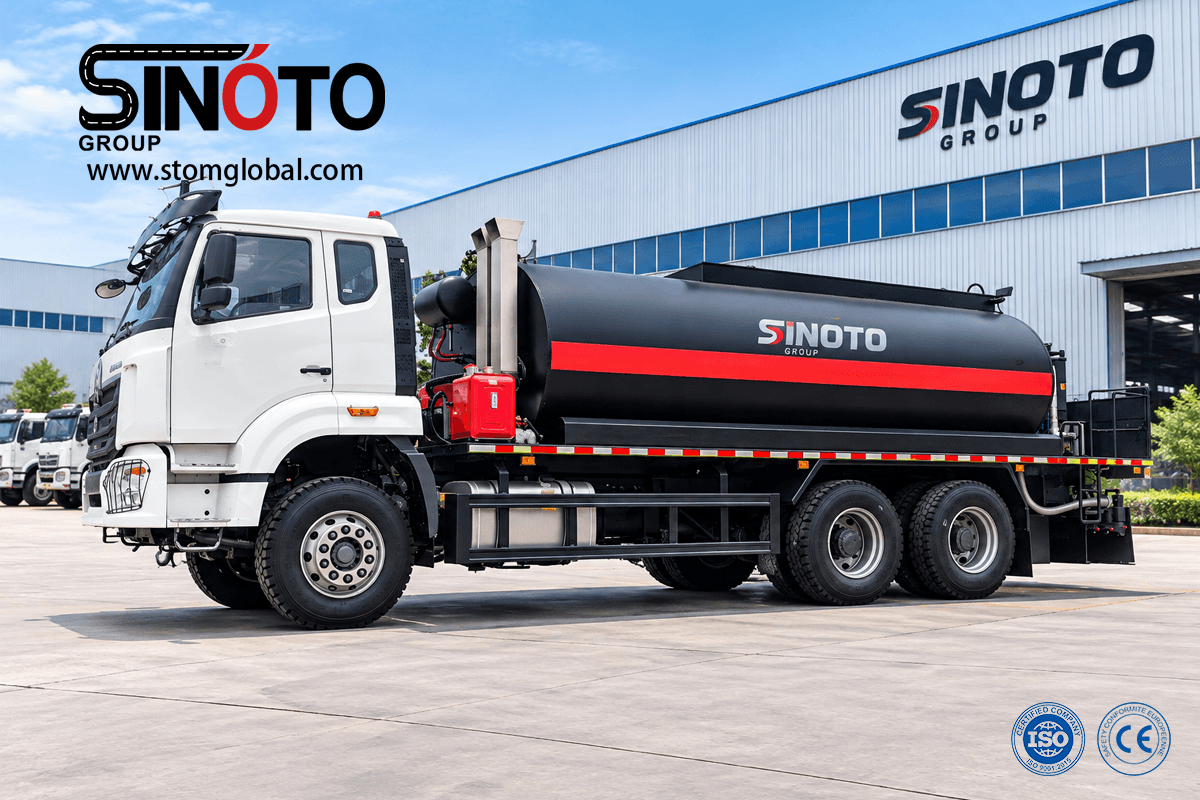
The STBD range covers most road maintenance and construction needs:
| Model | Tank | Chassis | Nozzles | Spray Width | Bitumen Pump |
|---|---|---|---|---|---|
| STBD-6000 | 6,000 L | 4×2 | 28 | 1.2–4 m | QGB680 (680 L/min) |
| STBD-8000 | 8,000 L | 4×2 | 28 | 1.2–4.5 m | QGB680 (680 L/min) |
| STBD-10000 | 10,000 L | 4×2 / 6×4 | 32 | 1.2–4.5 m | QGB950 (950 L/min) |
| STBD-12000 | 12,000 L | 6×4 | 32 | 1.2–4.5 m | QGB950 (950 L/min) |
| STBD-15000 | 15,000 L | 6×4 | 32 | 1.2–4.5 m | QGB950 (950 L/min) |
Chassis options include SinoTruck, Shacman, Dongfeng and FAW. Because tank size, chassis and configuration all change the bitumen distributor truck price. Any asphalt sprayer truck price you receive should be tied to a specific model and specification. As a rule of thumb, choose the smallest tank that covers a full working shift, then pay for the heating, control and pump quality that keep nozzles flowing.
A blocked nozzle is a small fault with a large effect on road quality. The right machine reduces the chance of it happening, shows you quickly when it does, and lets your crew fix it safely. Focus on heating design, nozzle-level control, component quality and supplier support, not price alone.
👉 Request a Free Quote for Your Bitumen Distributor for Sale Inquiry Today
📧 info@stomglobal.com | 📱 WhatsApp: +86 190 5958 1045
#BitumenDistributor #AsphaltSprayer #RoadConstruction #RoadMaintenance

Whatsapp ID: 8619059581045

WeChat ID: +8619059581045

