If you are shopping for a bitumen distributor for sale, the purchase price is only part of the decision. Contractors, municipal road departments and equipment dealers all ask the same question before they sign: how much work does it take to keep this truck spraying accurately, year after year? This guide answers it, using the STBD series from Henan Sinoto (STOM Global) as a practical reference.
💡 Quick Answer: A bitumen distributor truck needs three things. Clean the nozzles and spray bar after every job. Check the pumps, thermal-oil heating system and burner on a regular schedule. Recalibrate the control system periodically. Always confirm exact intervals in the manufacturer’s manual.
| 🔥 Heating | ⚙️ Pumps | 💧 Nozzles | 🖥️ Controls | 🚛 Chassis |
|---|---|---|---|---|
| Thermal oil and burner | Bitumen and hydraulic | Spray bar | PLC and radar sensor | Engine and tires |
| Weekly checks | After each job | Every shift | Monthly / seasonal | Per maker schedule |
Bitumen is hot, viscous and sticky. When it cools inside a pump, pipe or nozzle, it hardens and blocks the flow. The result is streaky application, wasted binder and costly downtime.
Precision is the whole point of this machine. The STBD series uses a radar speed-sensing system that matches flow rate to driving speed. Real-time parameter correction keeps spray volume error within ±1.5%. That accuracy only lasts if the sensors, pumps and nozzles are kept in good condition.
Maintenance therefore belongs in every comparison of an asphalt distributor for sale. A machine that is easy to clean and service spends more days on the road and fewer in the workshop. It also shapes the real cost of ownership. Smart buyers look beyond the headline bitumen distributor price and ask how each design handles upkeep.
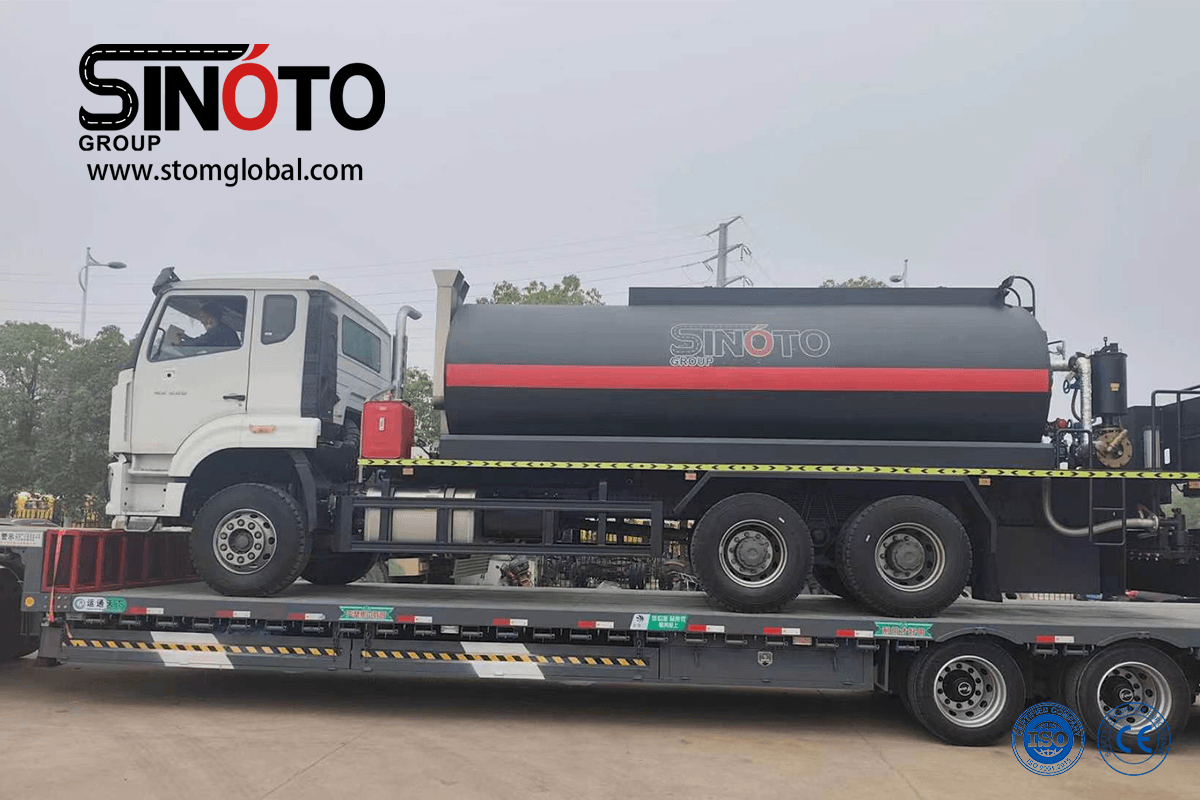
Whichever bitumen sprayer for sale you choose, the routine covers the same few systems. The table below summarizes typical industry practice, so confirm your exact intervals in the operator’s manual.
| System | What to Check | Typical Frequency |
|---|---|---|
| Spray nozzles and spray bar | Clean residue, test each nozzle, check spray pattern | After every shift |
| Bitumen pump and pipework | Flush, inspect seals, look for leaks | After every job |
| Thermal-oil heating | Oil level, circulation, hose and joint leaks | Weekly |
| Burner | Ignition, filters, temperature control | Weekly / seasonal |
| Hydraulic system | Oil level, filters, hoses, motor condition | Weekly; oil change per manual |
| Control system and speed sensor | Wiring, calibration, flow accuracy test | Monthly / before season |
| Tank and insulation | Hatch seals, insulation, sludge build-up | Monthly / seasonal |
| Chassis and auxiliary engine | Oil, filters, tires, brakes | Per engine maker schedule |
After every job: flush the pump, pipework and spray bar with the flushing medium your manufacturer recommends, so residue cannot harden overnight. Wipe the nozzles and confirm each one opens and closes. Then run a short spray-pattern test.
Weekly: check the thermal-oil level and look for leaks. Circulation heating keeps the nozzles, pipes and pumps warm to prevent clogging and aging. A low oil level or a weak circulation flow is a fast route to blockages. Also inspect burner ignition and filters, and check hydraulic oil and hoses.
Monthly and seasonal: inspect the tank hatch seals and insulation, and drain any sludge. Verify wiring and connectors, and recalibrate the speed sensor and flow settings before the paving season starts. The chassis and the auxiliary engine follow their own service schedules.
⚠️ Safety First: Let the heating circuit cool and relieve pressure before opening any line. Wear heat-resistant gloves and eye protection. Keep the tire sprayers working, because they stop bitumen sticking to the tires.
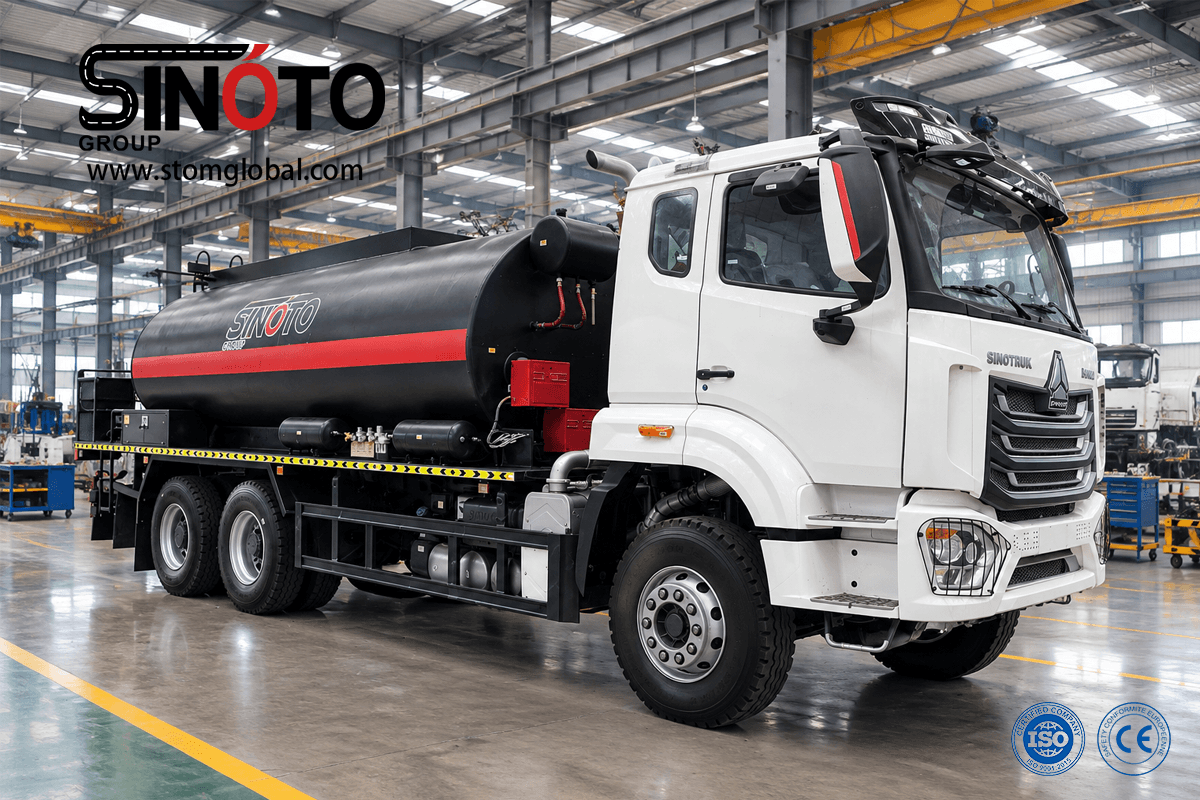
Not every asphalt distributor manufacturer builds with serviceability in mind. When you evaluate a bitumen distributor manufacturer, look for the features below. All of them appear on the STBD models.
A dependable bitumen sprayer manufacturer should also supply the operator’s manual, a spare-parts list and operator training. Ask for these in writing before you place an order.
Many buyers search for the bitumen distributor truck price first. The asphalt distributor truck price depends on tank capacity, chassis, pump and configuration, so a fair comparison needs a defined specification. Larger units are not automatically harder to maintain, but the components differ:
| Model | Tank | Nozzles | Bitumen Pump | Chassis |
|---|---|---|---|---|
| STBD-6000 | 6,000 L | 28 | QGB680 (680 L/min) | 4×2 |
| STBD-8000 | 8,000 L | 28 | QGB680 (680 L/min) | 4×2 |
| STBD-10000 | 10,000 L | 32 | QGB950 (950 L/min) | 4×2 / 6×4 |
| STBD-12000 | 12,000 L | 32 | QGB950 (950 L/min) | 6×4 |
| STBD-15000 | 15,000 L | 32 | QGB950 (950 L/min) | 6×4 |
More nozzles mean a longer cleaning routine, and higher-capacity pumps have their own service needs. That is why an asphalt distributor price or bitumen sprayer price should never be compared without the specification behind it. The same applies to the asphalt sprayer price, the bitumen sprayer truck price and the asphalt sprayer truck price. Ask each supplier what is included: spare nozzles, seals, filters, fluids and calibration support.
A realistic annual budget should include:
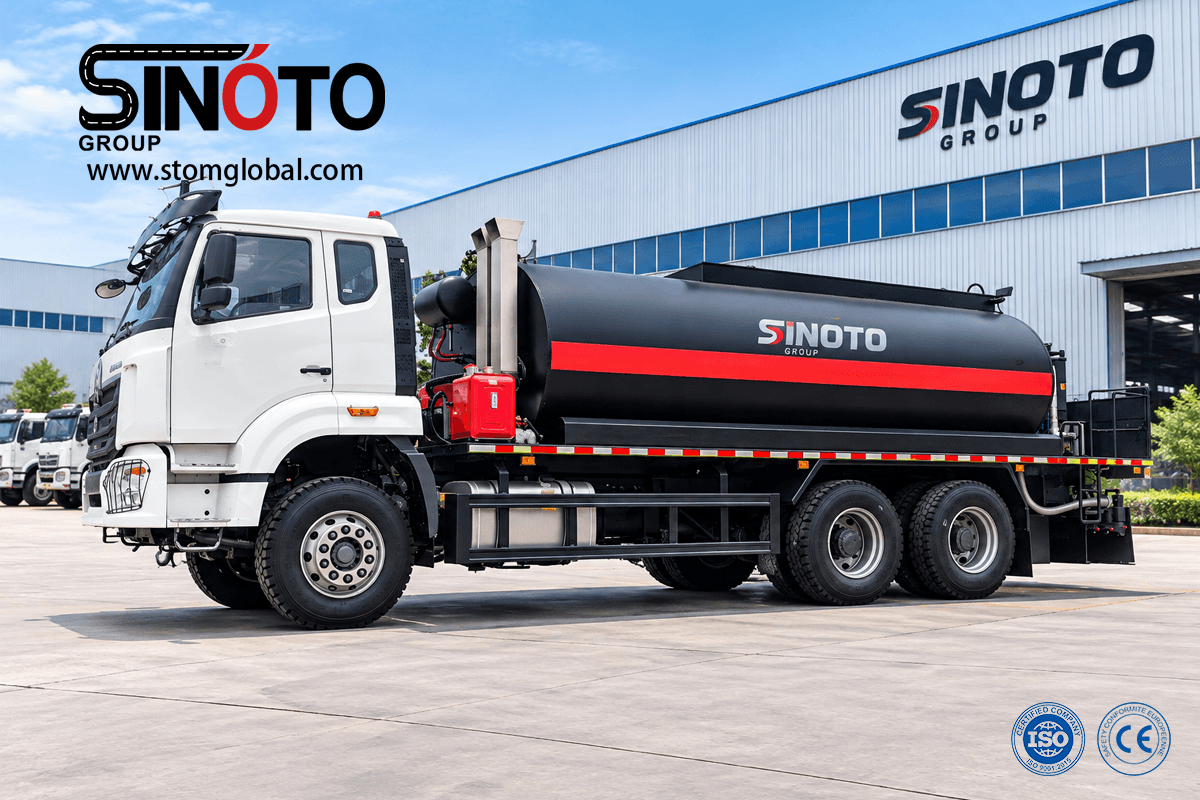
Before you commit to an asphalt sprayer for sale, run through these questions:
A bitumen distributor is a precision machine. With a disciplined routine and a well-designed truck, it will apply bitumen accurately for many seasons on highway seal coats, prime coats, tack coats and fog seals.
Tell us your project type, tank size and chassis preference. Our engineers will send a tailored quotation and maintenance guide.
👉 Request a Free Quote for Your Bitumen Distributor Truck
📧 info@stomglobal.com | 📱 WhatsApp: +86 190 5958 1045
#BitumenDistributor #AsphaltSprayer #RoadMaintenance #RoadConstruction #BitumenSprayerTruck #SINOTOGlobal

Whatsapp ID: 8619059581045

WeChat ID: +8619059581045

