Fuel is usually the biggest running cost in hot mix production, so buyers comparing an asphalt mixing plant for sale almost always ask this question first. A continuous asphalt mixing plant dries the aggregate, sprays the bitumen and mixes everything inside one drying drum. Because there is no separate mixing tower, less heat is lost between steps. The result is a lower fuel bill per tonne than most batch designs. This guide gives realistic consumption figures based on SINOTO’s published specifications, and it explains what drives fuel use up or down.
⚡ 40–120 tph capacity | 🔥 5 fuel options (diesel, heavy oil, fuel oil, coal, natural gas) | 🚚 Stationary and mobile versions | 🔊 ≤70 dB noise
An asphalt drum mix plant burns fuel for one main job: heating and drying aggregate to roughly 150–170 °C. Several factors control how much fuel that takes.
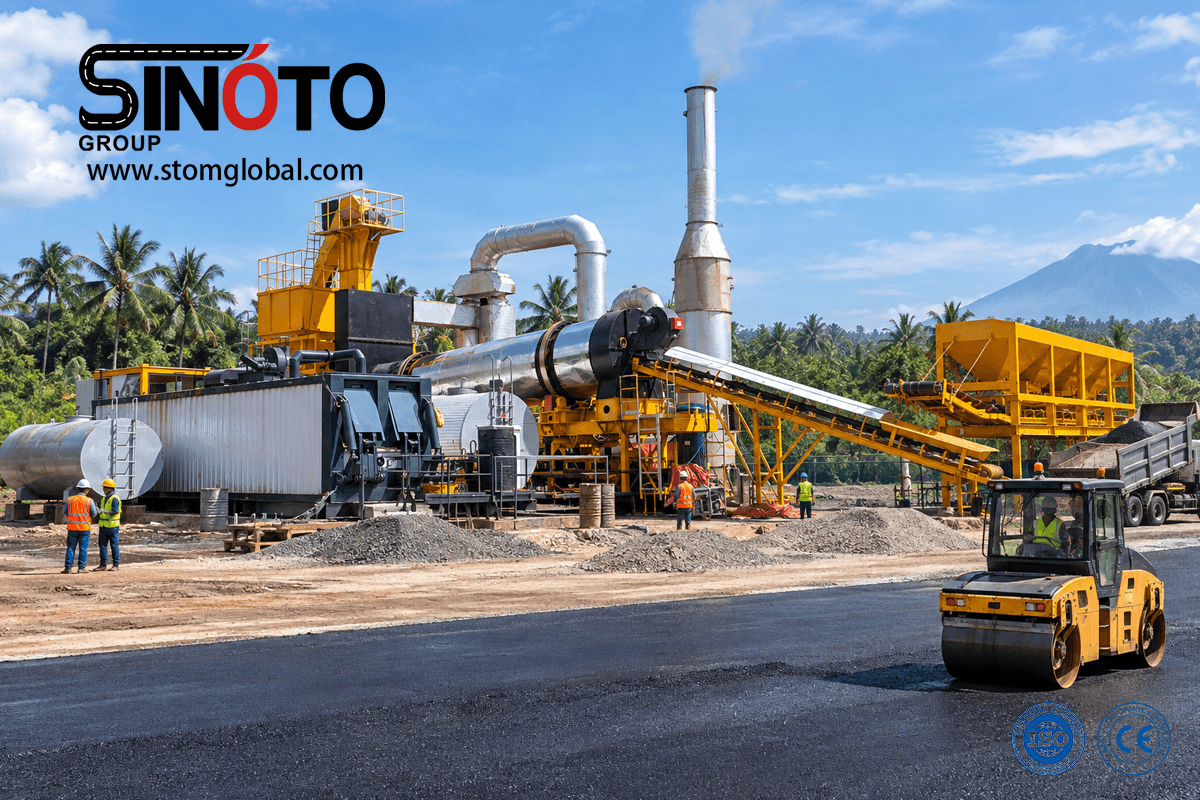
The table below uses the technical parameters published for the SINOTO DHB (stationary) and MDHB (mobile) series. The “per tonne” columns are our own calculation, obtained by dividing the maximum burner rating by rated capacity.
| Model | Capacity (t/h) | Oil Burner Max (kg/h) | Oil per Tonne (kg/t) | Coal Burner Max (kg/h) | Coal per Tonne (kg/t) | Total Power (kW) |
|---|---|---|---|---|---|---|
| DHB60 / MDHB60 | 60 | 400 | ≈ 6.7 | 900 | ≈ 15 | 100 |
| DHB80 / MDHB80 | 80 | 600 | ≈ 7.5 | 1,200 | ≈ 15 | 142 |
| DHB100 / MDHB100 | 100 | 750 | ≈ 7.5 | 1,500 | ≈ 15 | 160 |
| DHB120 / MDHB120 | 120 | 900 | ≈ 7.5 | 1,800 | ≈ 15 | 215 |
📌 How to read this table: Burner figures are maximum burning amounts, which is the worst case. In real production, dry aggregate and moderate discharge temperatures bring consumption below these values. Expect roughly 6–8 kg of oil-based fuel per tonne of mix on average, and confirm against your own material and climate.
Electricity use is modest. Installed power works out to about 1.6–1.8 kW per tonne of hourly capacity, even with every motor counted. Actual power draw is lower, because not every motor runs at full load at once.
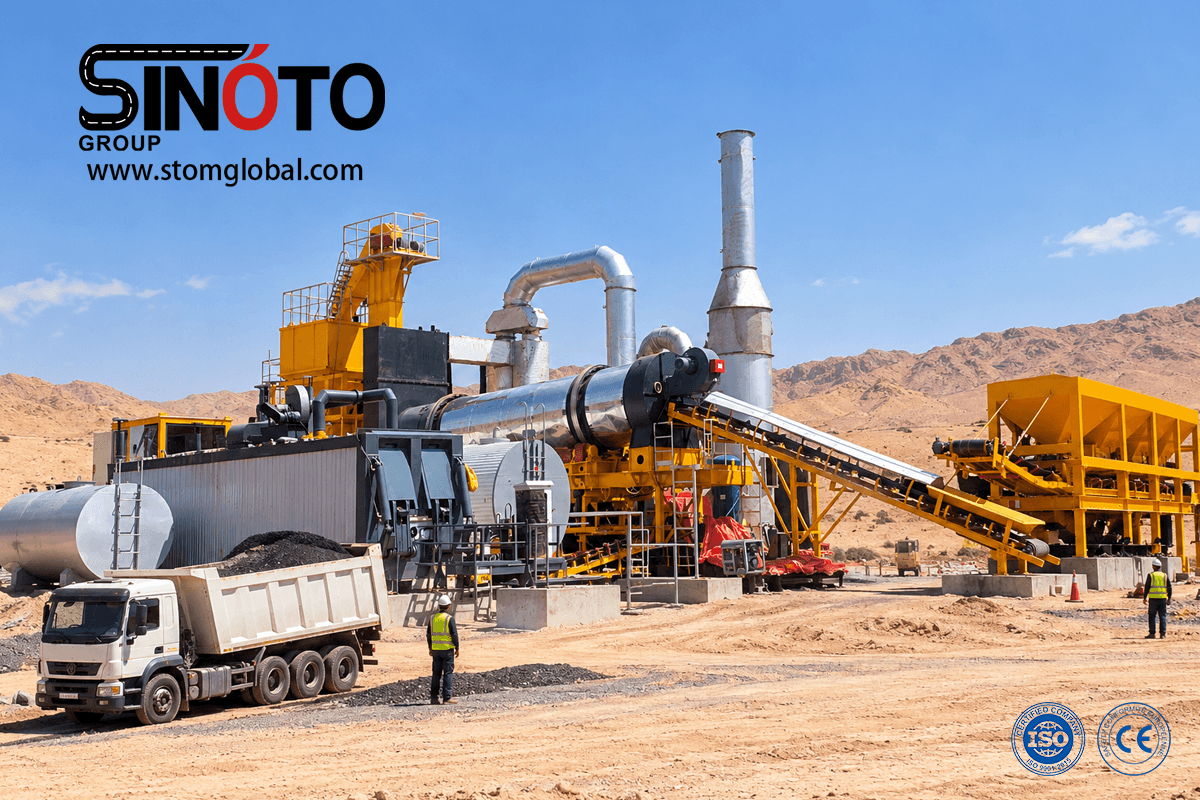
A traditional asphalt batching plant dries aggregate in a drum, lifts it to a tower, screens it, stores it in hot bins, weighs it and then mixes it in a separate mixer. Every stage adds heat loss and idle time. A drum mix plant removes most of those stages, and that gives it three advantages:
For that reason, a continuous asphalt plant is often the most economical choice for high-volume, steady-output work.
An honest limitation: Continuous plants are generally best for municipal roads, low-grade highways, and the base and lower layers of high-grade highways. For premium surface courses or environmentally sensitive areas, a batch-type plant is recommended because it controls gradation more precisely. Buyers who need that precision can look at an asphalt batch plant for sale or a batch mix plant for sale. Small contractors with limited output may consider a mini batching plant as well.
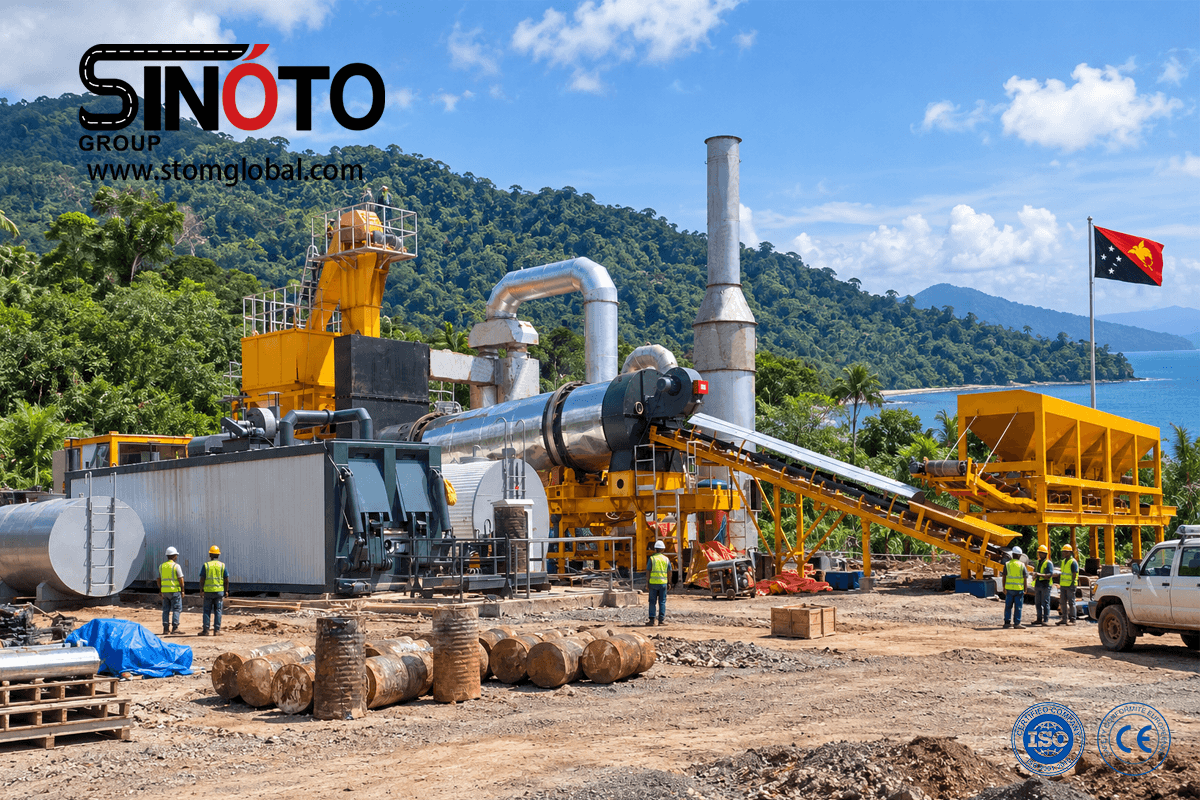
Any hot mix asphalt plant can waste fuel through poor habits. These steps deliver the largest savings:
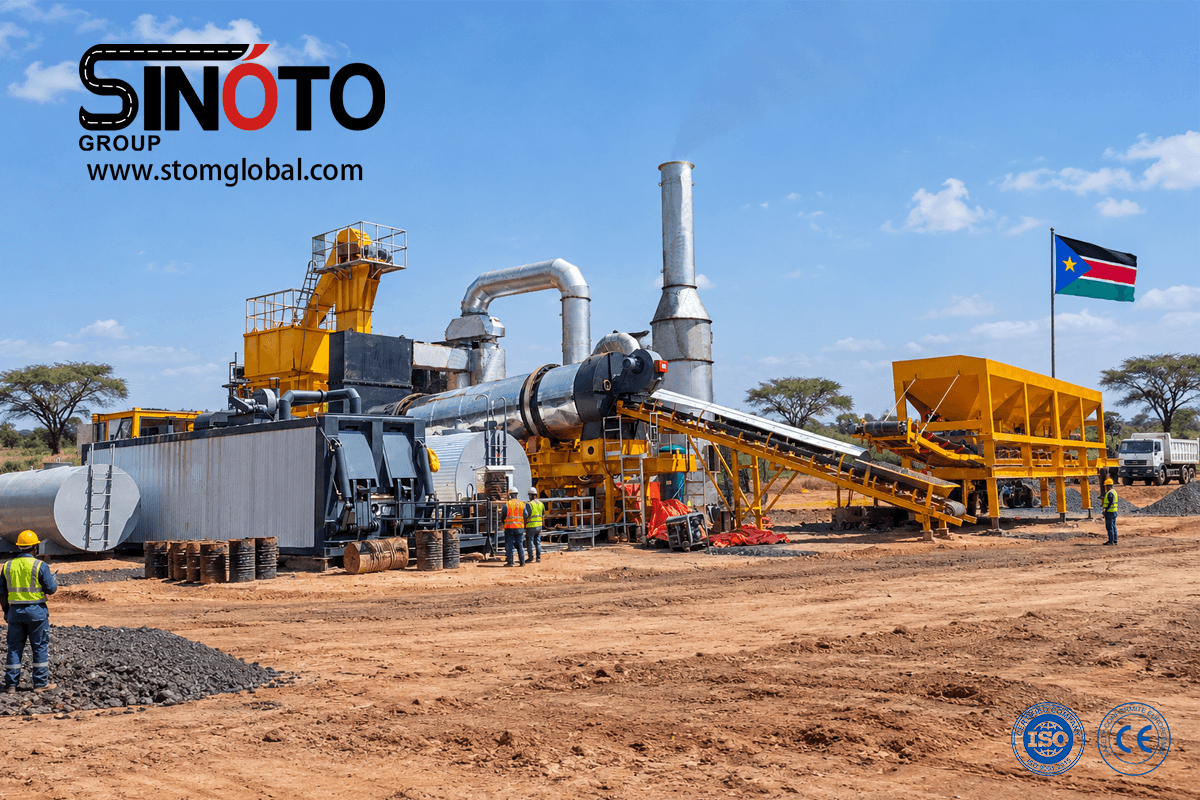
Fuel savings are only part of the picture. Buyers evaluating a continuous asphalt mixing plant usually weigh these points:
| Buyer Concern | What the Continuous Design Offers |
|---|---|
| 💰 Initial investment | Fewer components and a compact layout keep the purchase price low |
| 🔥 Running cost | Continuous thermal exchange lowers fuel and electricity per tonne |
| 🚚 Relocation | Quick installation and easy transfer between job sites |
| 🛠️ Maintenance | Simple mechanics and fewer wear parts reduce upkeep |
| 📈 Output | 40–120 tph without waiting between batches |
Site conditions also matter. A stationary asphalt mixing plant suits long-term production at a fixed yard. A mobile asphalt mixing plant is better for contractors who follow projects from site to site. SINOTO’s MDHB series adds semi-trailer chassis units, so it works as a mobile drum mix plant or portable drum mix plant with quick setup and lower transfer costs.
Whichever configuration you pick, ask suppliers for burner ratings, fuel options and drum dimensions, as listed in the parameter table above. Those numbers tell you far more than a headline price.
💬 Bottom line: For most municipal and base-layer paving, a continuous drum mix design delivers hot mix asphalt at roughly 6–8 kg of fuel per tonne. That is competitive, and it comes with a lower purchase price and simpler maintenance than a full batch tower.
Tell us your daily tonnage, local fuel type and site conditions, and our engineers will recommend the right model and estimate your running costs.
👉 Request a Free Quote for Your Continuous Asphalt Mixing Plant
📧 info@stomglobal.com | 📱 WhatsApp: +86 190 5958 1045
#AsphaltMixingPlant #DrumMixPlant #ContinuousAsphaltPlant #HotMixAsphalt #RoadConstruction #AsphaltPlantForSale

Whatsapp ID: 8619059581045

WeChat ID: +8619059581045

