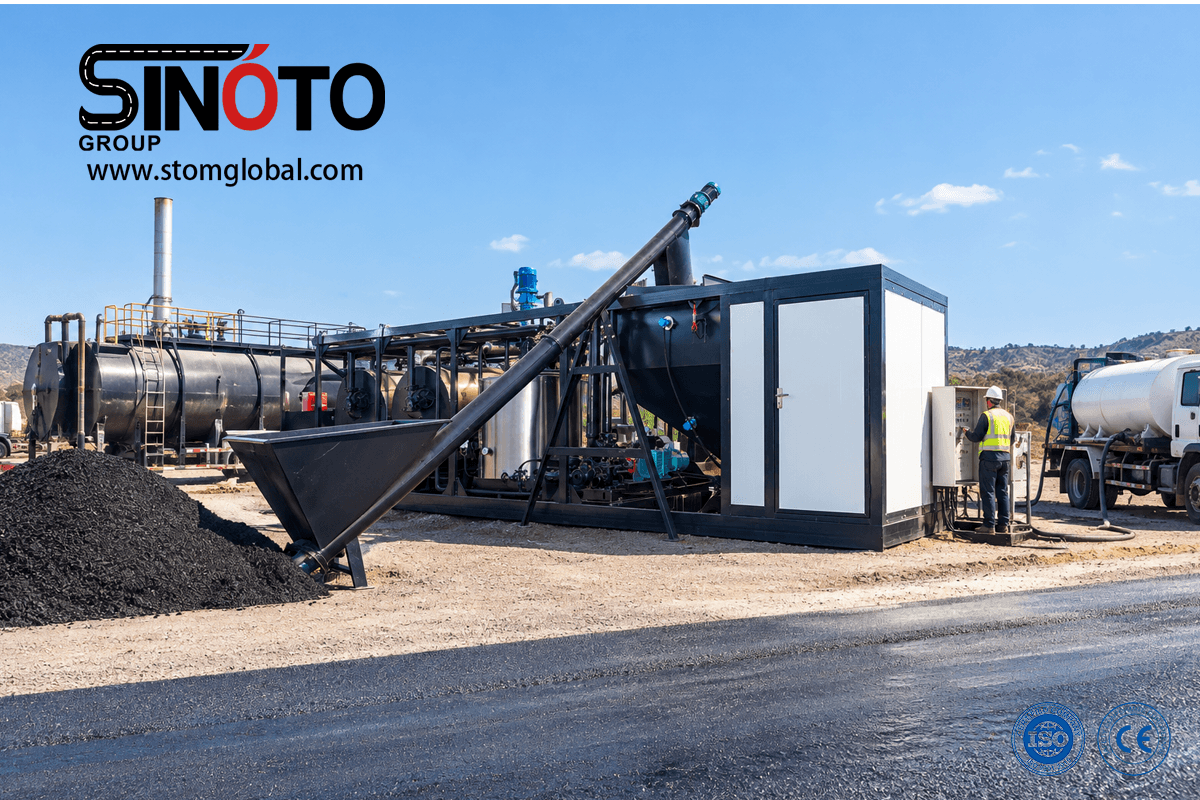
Every road engineer who has priced out arubberized asphalt planteventually asks the same practical question: what type of crumb rubber actually goes into the binder? It sounds like a small detail, but the answer determines almost everything downstream — how well the rubber digests into hot bitumen, how consistent your mix design is from batch to batch, and ultimately how long the finished pavement lasts. ACrumb Rubber Modified Bitumen Plantis only as good as the rubber feedstock running through it, and buyers comparing arubber modified bitumen plant for saleare right to dig into this before they even look at the price tag.
This article walks through the crumb rubber specifications that matter, how a moderncrumb rubber modified asphalt plantturns that material into a high-performance binder, and what actually drivescrumb rubber asphalt plant priceup or down. Whether you’re scoping a10 tph rubber asphalt plantfor a regional contractor or a larger line for a state DOT supplier, understanding the rubber itself is where the sourcing conversation should start.
Buyers researching this equipment usually arrive with two questions running in parallel: “will this binder actually hold up on the road?” and “what will this plant cost me, both to buy and to run?” Both questions trace back to the same feedstock. Get the crumb rubber specification wrong — the wrong mesh, the wrong tire source, too much contamination — and no amount of PLC automation or heat-exchanger capacity will save the final mix. Get it right, and even a modestly sized plant can turn out a binder that performs on par with far more expensive polymer-modified alternatives. That’s the practical lens this guide takes: not just what crumb rubber is, but how it interacts with the machine that processes it, and how that interaction shows up on your quote.
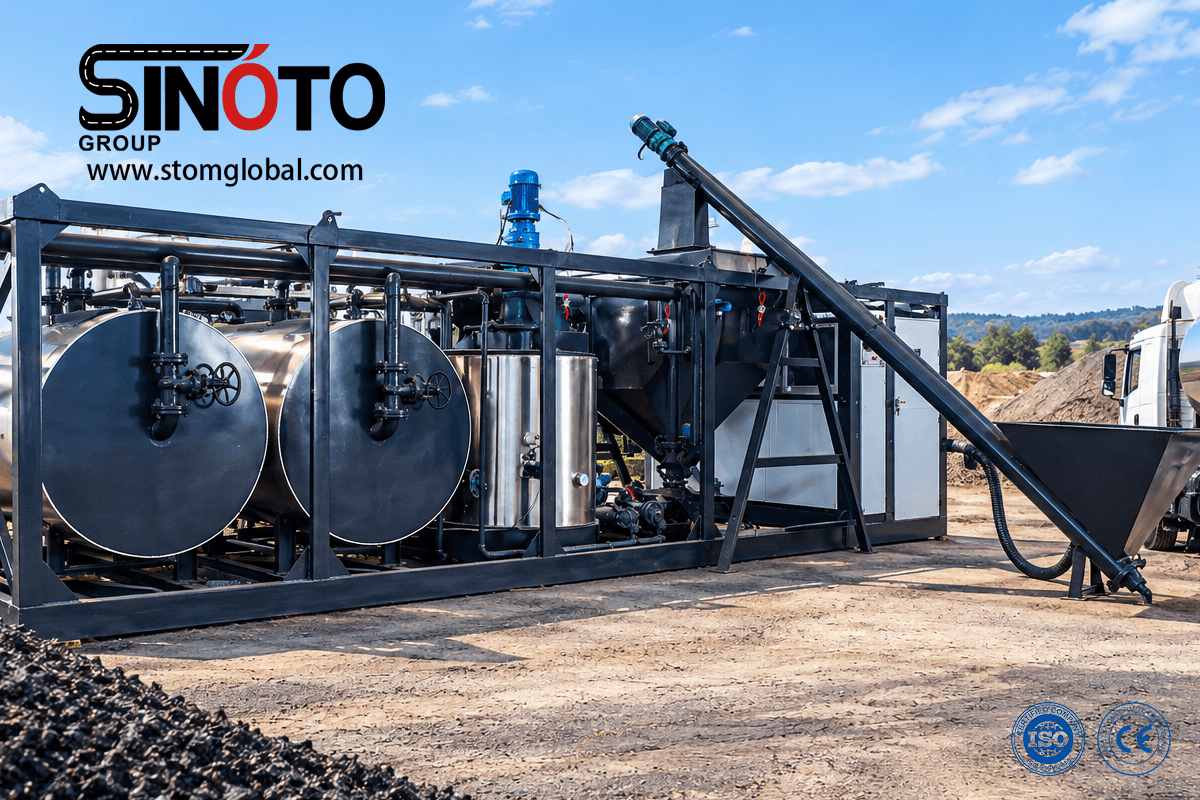
Why Does Crumb Rubber Type Matter for a Rubberized Asphalt Plant?
Crumb rubber is not a single, uniform commodity. It is produced from scrap tires — mostly truck, bus, and passenger tires — through one of two grinding methods, and the method used changes how the rubber behaves once it hits hot bitumen.Ambient grindingshreds tires at room temperature, tearing the rubber into irregular particles with rough, high-surface-area edges.Cryogenic grindingfreezes the rubber with liquid nitrogen and shatters it, producing smoother, more uniform particles. Both are used incrumb rubber modified bitumen plantoperations worldwide, but ambient-ground rubber tends to swell and digest faster in the reaction tank because of its torn, porous surface — which is exactly why most rubberized asphalt producers specify it for wet-process binders.
Beyond the grinding method, buyers should also check three practical specifications before feeding rubber into acrumb rubber modified asphalt plant: contamination limits (steel wire and textile fiber should be reduced to trace levels, typically well under 0.5% by weight), moisture content (kept low so it doesn’t cause foaming or pump cavitation), and consistency of mesh size from batch to batch. A plant with precise dosing hardware can only perform as well as the rubber feedstock it is given — feed it inconsistent rubber, and even the best-engineeredrubberized asphalt plantwill produce inconsistent binder.
Tire source is a secondary but still meaningful factor. Truck and bus tires generally yield rubber with a higher natural rubber content than passenger car tires, which affects elasticity after digestion. Most commercial-scale operations blend both, since sorting purely by tire type at scale is rarely practical or economical. What matters more for consistent output is that the supplier — whether that’s a tire recycler feeding yourcrumb rubber modified bitumen plantor your own in-house grinding line — controls gradation tightly enough that today’s delivery behaves the same as last month’s in the reaction tank.
What Type of Crumb Rubber Works Best in a Rubber Modified Bitumen Plant for Sale?
Mesh size is the single most important spec to match to your application. Coarser crumb rubber (around 20–30 mesh) is common in chip-seal and surface-treatment binders, where a thicker, more elastic membrane is wanted. Mid-range rubber (30–50 mesh) is the workhorse for wet-process rubberized asphalt used in surface courses and highway construction, giving a balance of digestion speed and elasticity. Finer rubber (50–80 mesh) is used where a smoother, more homogeneous terminal-blend binder is required, such as in some waterproofing membrane formulations.
When you’re evaluating arubber modified bitumen plant for sale, ask the supplier which mesh ranges and dosage rates their dosing system is calibrated for — a plant with only coarse, dynamic weighing hardware will struggle with fine mesh consistency, while a plant built with static, loss-in-weight dosing (the kind used in high-spec highway and airport runway paving) can hold tight tolerances across the full range.
| Typical crumb rubber specifications by application in a crumb rubber modified bitumen plant | |||
| Mesh Size | Particle Size | Typical Application | Dosage (by wt. of bitumen) |
|---|---|---|---|
| 20–30 mesh | 0.6–0.85 mm | Chip seal / surface treatment binder | 18–22% |
| 30–50 mesh | 0.3–0.6 mm | Wet-process rubberized asphalt, highway construction | 18–22% |
| 50–80 mesh | 0.18–0.3 mm | Terminal blend / waterproofing membrane | 10–15% |
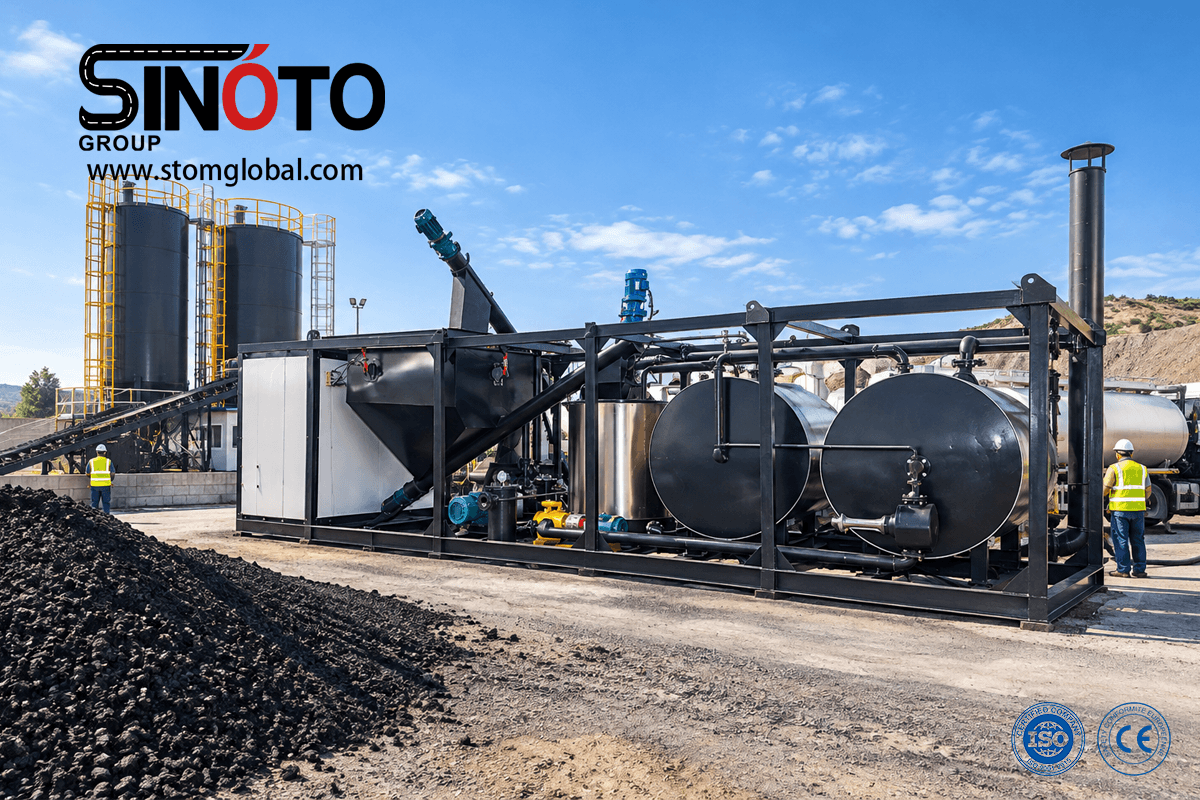
How Does a 10 TPH Rubber Asphalt Plant Turn Crumb Rubber into High-Performance Binder?
Once the right crumb rubber is on site, the plant itself does the real work. A typical process moves through preprocessing and precision dosing, a rapid heat exchange stage, a high-shear reaction and digestion tank, and finally a rubberized-bitumen transfer pump built for thick, high-viscosity material. In a well-configured10 tph rubber asphalt plant, a spiral-plate heat exchanger can raise bitumen temperature by more than 50°C quickly and under sealed conditions, which limits oxidation and keeps the base bitumen from aging before the rubber is even introduced.
The reaction, or “digestion,” stage is where crumb rubber actually becomes part of the binder rather than just being suspended in it. A PLC-controlled cycle holds temperature and mixing time — typically in the 45 to 60 minute range — while high-torque paddles keep rubber particles from settling out. During this window, the rubber swells, absorbs light oils from the bitumen, and builds the elastic polymer-like network that gives rubberized asphalt its resistance to rutting, thermal cracking, and reflective cracking.