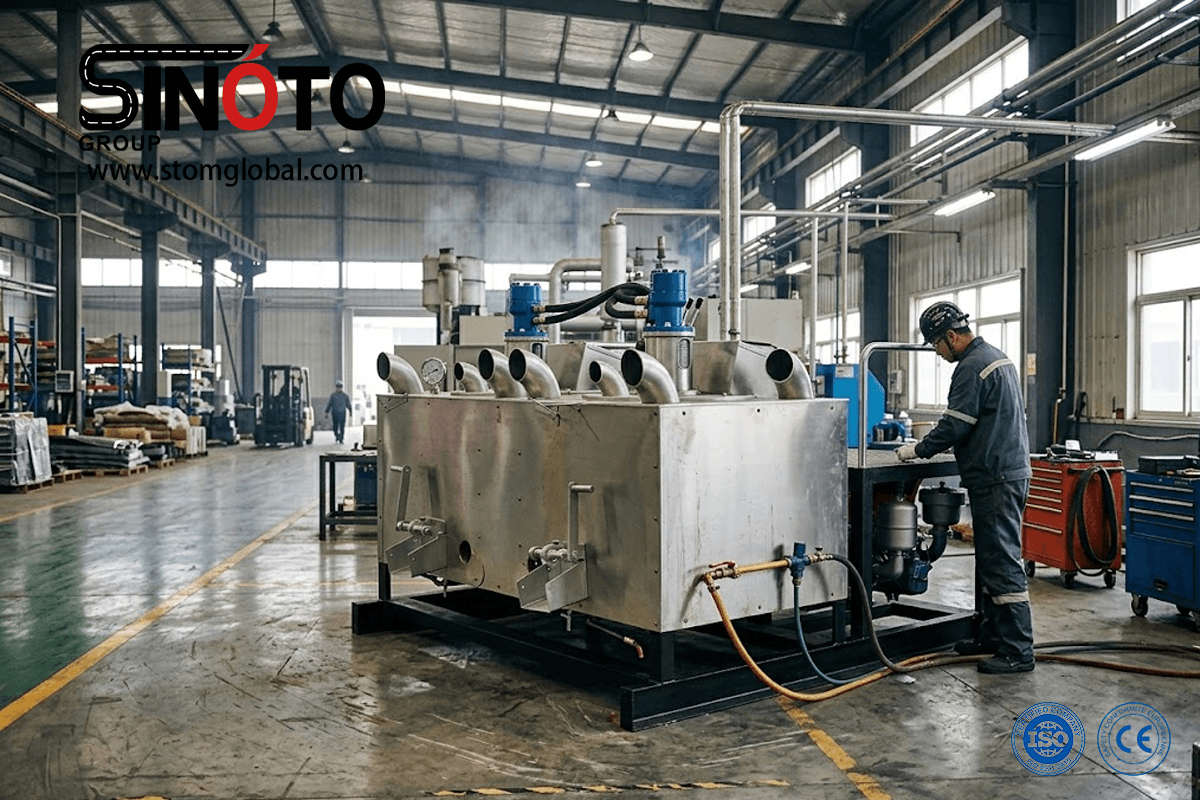
When road marking contractors purchase a Hot Melt Kettle, they are not simply buying a heating tank. They are investing in the first critical step of thermoplastic road marking construction: turning solid thermoplastic material into a consistently melted, workable material that can be supplied to a road marking machine.
The real questions for buyers are usually practical: Can the machine melt material quickly? Can it maintain a stable temperature? Will the material be heated evenly? Which capacity is suitable for my project? What fuel does it use? How much labor and downtime can it save? And what should I consider when comparing a hot melt kettle for sale?
A properly designed Thermoplastic Melting Kettle addresses these concerns through controlled heating, mechanical or hydraulic agitation, thermal insulation and continuous material supply. SINOTO’s current product range covers capacities from 300 kg to 2000 kg, with single-cylinder and double-cylinder configurations available.
💡 Buyer Insight: The best melting equipment is not necessarily the largest or cheapest model. The right choice should match your thermoplastic consumption, road marking schedule, fuel availability, working environment and required production continuity.
Thermoplastic road marking material is supplied in solid block or granular form and must be heated until it reaches a suitable fluid state before application. SINOTO specifies a working melting range of 180–220°C, while the machine’s mixing system helps distribute heat and reduce the risk of material settling or carbonization.
This makes the Road Marking Paint Melter much more than a basic heating container.
A professional paint melting machine should provide several functions:
🔥 Heating and melting – rapidly converts solid thermoplastic material into a liquid or workable state.
🔄 Agitation and mixing – keeps the material moving to promote uniform heating.
🌡️ Temperature maintenance – helps maintain suitable viscosity during construction.
⚙️ Material transfer – supplies melted material to the road marking machine.
🛡️ Insulation and protection – reduces unnecessary heat loss and supports safer operation.
These functions are particularly important for contractors working on highways, municipal roads, parking areas, airport markings and other large-scale road marking construction projects.
An industry reference on asphalt heating also highlights the importance of heat-transfer systems, circulation and temperature control for efficient heating performance. Although an asphalt heater and a thermoplastic melting kettle are not identical machines, the underlying purchasing principle is similar: stable and controlled heat is essential for consistent material processing.
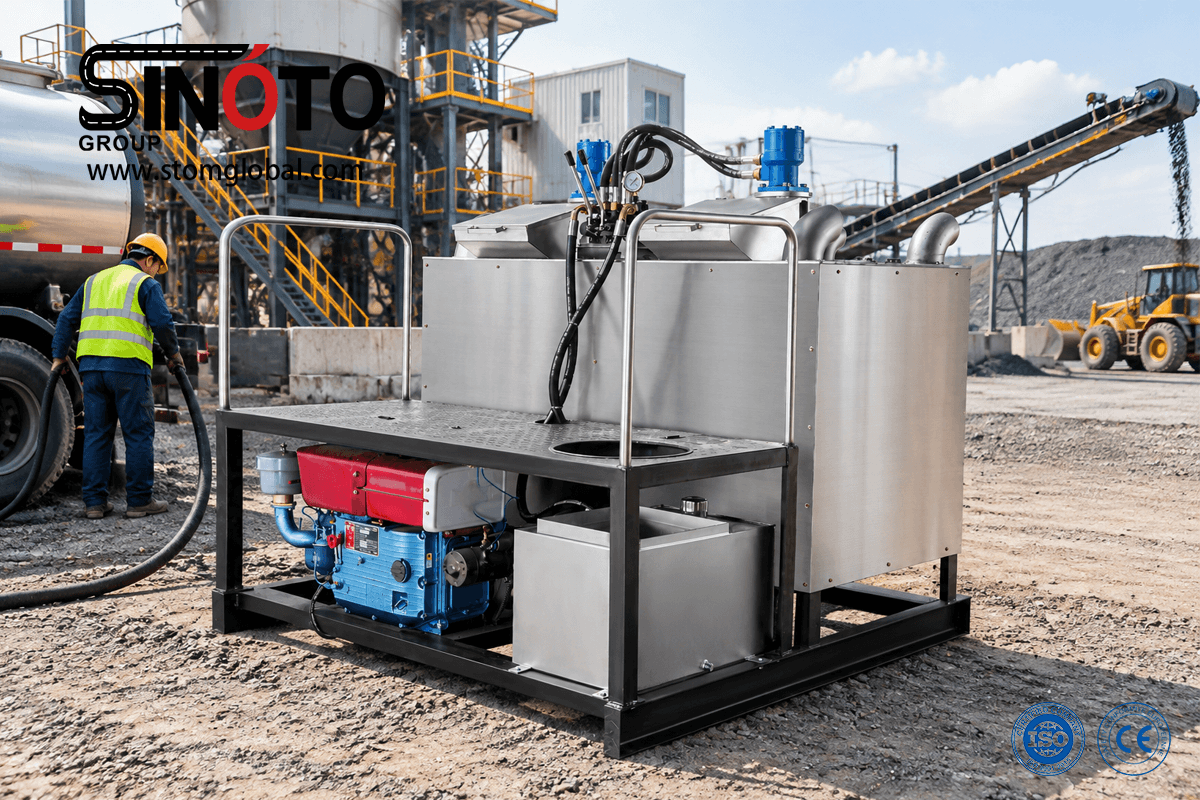
The most important buying factors can be divided into five areas: capacity, heating, mixing, temperature control and material supply.
Capacity directly affects how frequently operators need to reload thermoplastic material.
For smaller contractors or maintenance teams, a 300kg hot melt kettle can be a practical starting point. For larger projects, double-cylinder equipment can provide substantially greater working capacity.
| Typical Configuration | SINOTO Example | Cylinder Configuration | Typical Buyer Focus |
|---|---|---|---|
| Small | STW-300 | Single cylinder | Small road marking jobs |
| Medium | STW-400 | Single cylinder | Flexible project use |
| Medium-Large | STW-600 | 300 kg × 2 | Higher continuous demand |
| Large | STW1200B | 600 kg × 2 | Large road projects |
| High Capacity | STW1500B | 750 kg × 2 | High-volume construction |
| Heavy Duty | STW2000B | 1000 kg × 2 | Large-scale road marking |
SINOTO’s specifications show models ranging from the mechanical STW-300 to the hydraulic STW2000B. The STW2000B uses two 1000 kg cylinders, giving contractors a 1000kg thermoplastic kettle configuration on each cylinder and a total nominal kettle capacity of 2000 kg.
📊 Capacity Selection Tip: A 2000kg hot melt kettle is designed for high-volume operations, while a smaller model may be more economical when daily thermoplastic consumption is limited. Oversizing can increase investment and operating requirements without improving project efficiency.
Temperature control is one of the most important considerations when choosing a thermoplastic melting kettle.
Thermoplastic material needs sufficient heat to melt completely, but uncontrolled heating can create quality and operational problems. SINOTO’s product information specifies a melting temperature range of 180-220℃ and describes temperature control designed to maintain suitable material viscosity during construction.
The machine should therefore provide:
Heat → Melt → Mix → Maintain → Supply
This process helps contractors maintain a more stable material condition from melting through application.
For buyers comparing a road marking kettle price, temperature-control performance should therefore be evaluated alongside the initial equipment cost.
Yes. Heating alone does not guarantee uniform material.
A good Hot Melt Kettle uses mechanical or hydraulic agitation to keep the material moving. SINOTO offers both mechanical and hydraulic mixing configurations, including forward/reverse stirring and stepless speed variation on hydraulic models.
Continuous agitation can help:
Improve heat distribution
Reduce material settling
Reduce localized overheating
Maintain more consistent material composition
Support stable material supply during marking
This is particularly valuable when contractors need continuous production rather than repeatedly stopping the operation to manually remix or reheat material.
The answer depends on the project and operating preference.
Mechanical models use a diesel engine and mechanical transmission to drive the stirring shaft. Hydraulic models use an integrated hydraulic drive system and can provide variable-speed stirring. SINOTO’s hydraulic range includes single- and double-cylinder designs.
| Factor | Mechanical Type | Hydraulic Type |
|---|---|---|
| Structure | Simpler mechanical drive | Integrated hydraulic system |
| Typical Application | Small/medium projects | Medium/high-volume projects |
| Mixing Control | Mechanical drive | Variable-speed control |
| Capacity Options | Compact configurations | Wider high-capacity range |
| Best For | Cost-conscious operation | Higher flexibility and productivity |
For a contractor searching for a thermoplastic paint machine, choosing the mixing system should be based on daily workload, required control, maintenance capability and project scale—not simply the lowest purchase price.
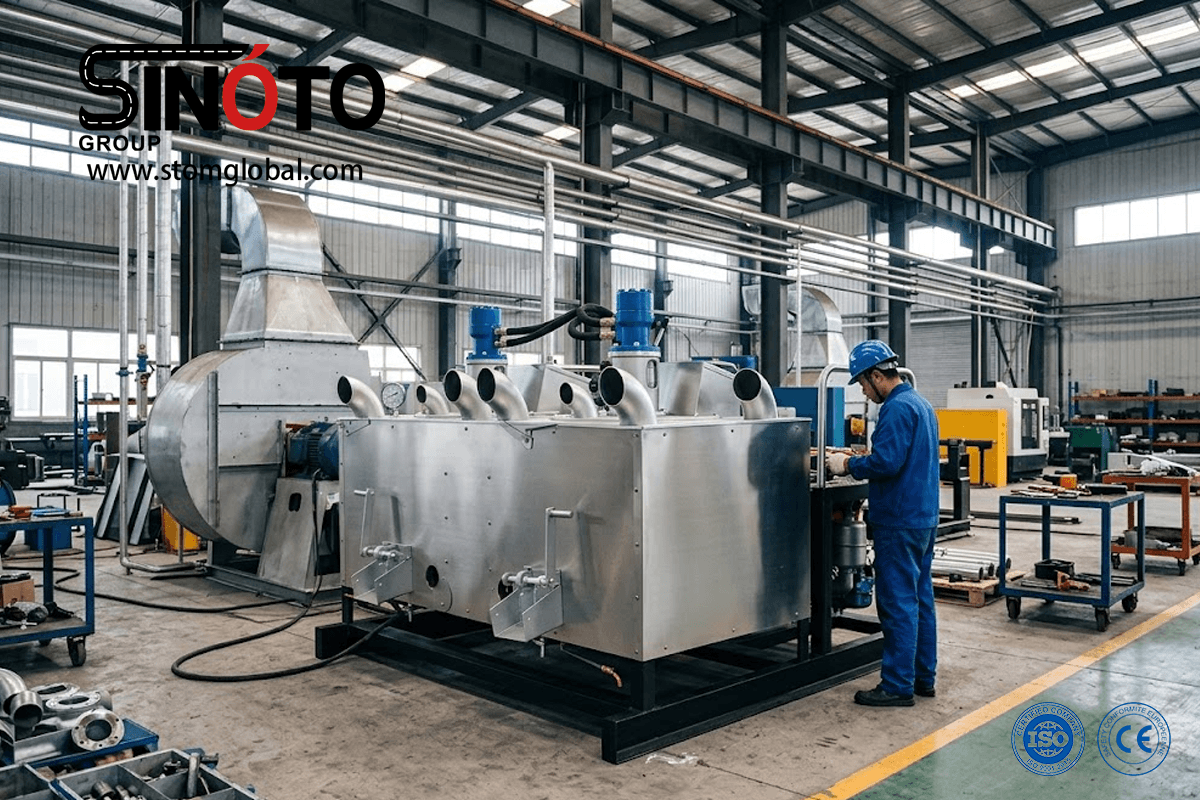
A reliable Road Marking Kettle can improve efficiency in several ways.
First, it reduces preparation delays by providing dedicated melting equipment rather than relying on improvised heating methods.
Second, insulated construction helps reduce unnecessary heat loss. SINOTO describes insulation between the inner chamber and outer wall, while its product advantages include reduced heat loss and fuel consumption.
Third, larger double-cylinder models can support continuous road marking operations by providing a greater volume of melted material.
Fourth, the conveying system can transfer melted material to the marking machine, reducing interruptions during application.
⚙️ Efficiency Principle: Melting speed is only one part of productivity. A better system combines fast heating, uniform mixing, stable temperature, sufficient capacity and reliable material transfer.
For contractors comparing a hot melt kettle for sale, this total workflow is more important than looking at the heating system alone.
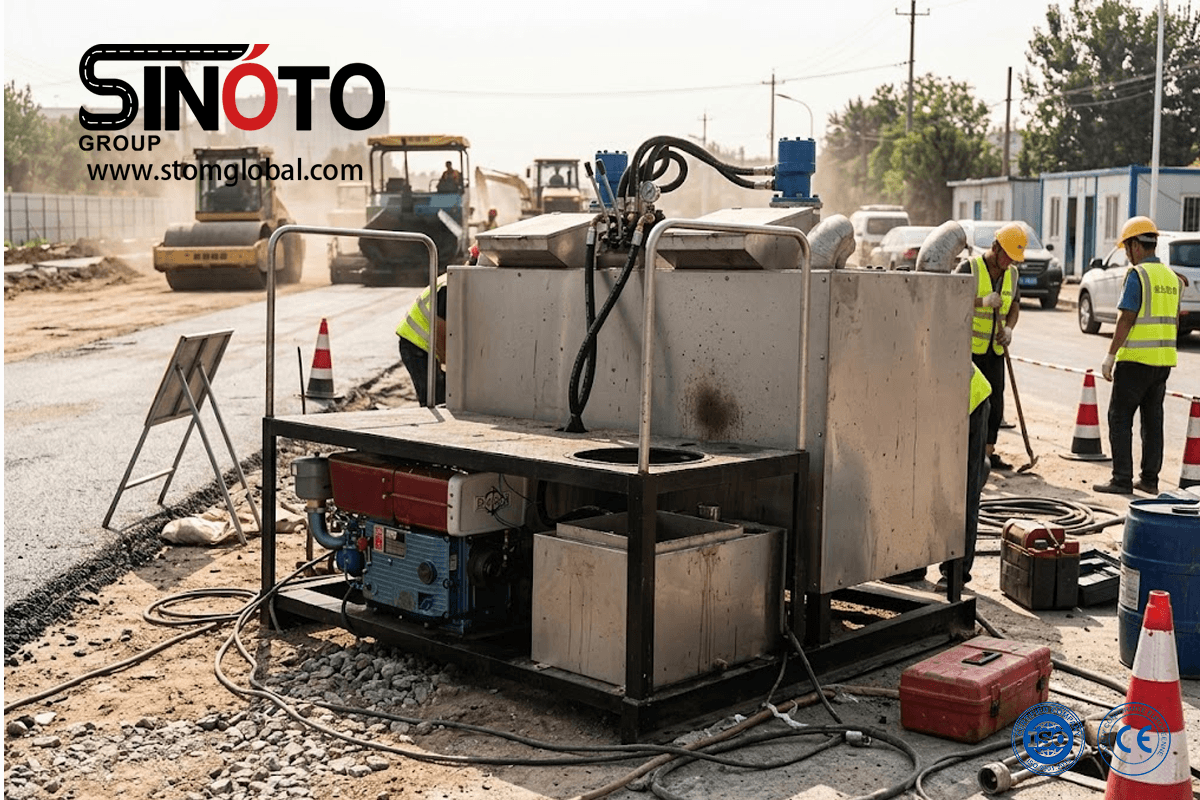
Price is naturally important, but a low thermoplastic melting kettle price does not always mean lower total cost.
Buyers should compare:
Kettle capacity
Heating method
Fuel compatibility
Mixing technology
Temperature-control system
Cylinder configuration
Insulation design
Material transfer system
Spare parts availability
Technical and after-sales support
SINOTO’s product range includes LPG heating and diesel-compatible configurations, while its FAQ also notes that fuel selection can depend on local availability and project-site conditions.
For international contractors, choosing a thermoplastic melting kettle manufacturer that can recommend the correct configuration is particularly important. The supplier should understand not only the machine itself but also the complete workflow between the kettle and road marking equipment.
A manufacturer should be able to answer practical questions such as:
What capacity do I need?
Which heating system is suitable for my site?
Should I choose mechanical or hydraulic mixing?
Can the equipment support continuous road marking construction?
What is the expected fuel and operating requirement?
Which model offers the best balance between investment and productivity?
These questions are often more valuable than asking only for a road marking kettle price.
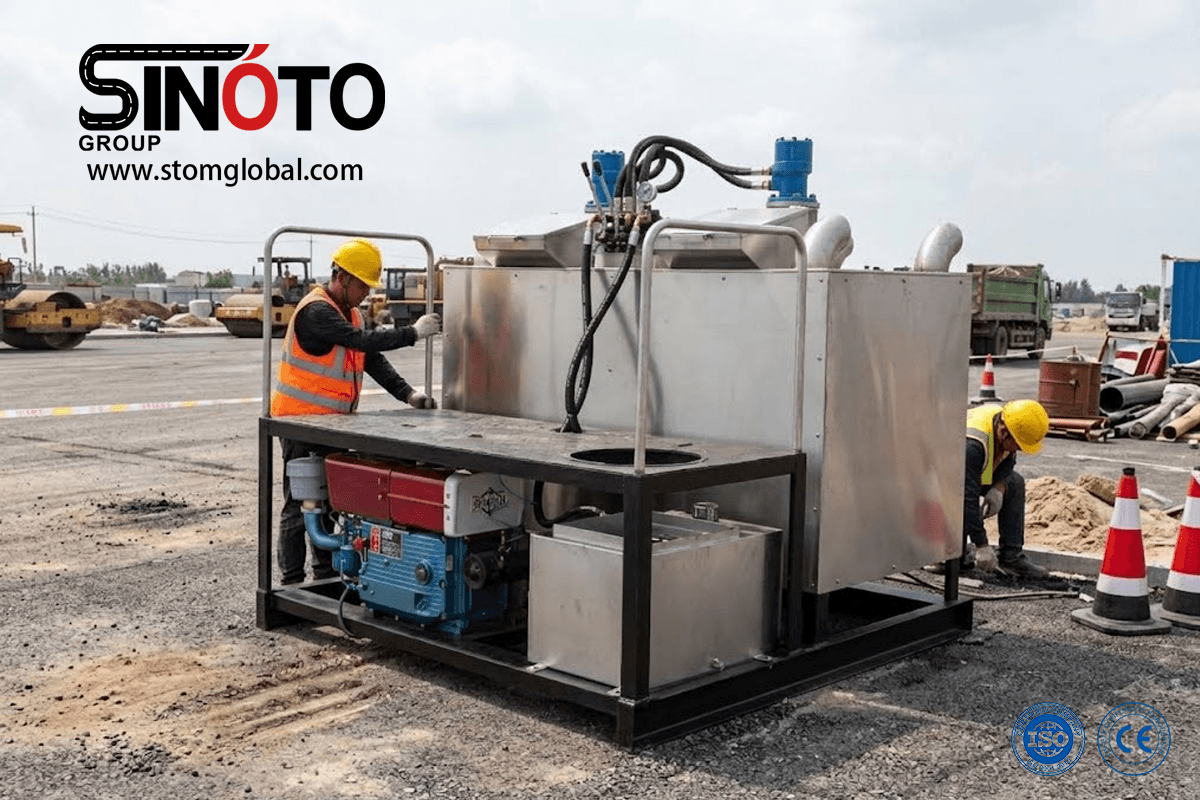
SINOTO’s Hot Melt Kettle range is designed around the complete thermoplastic preparation process, combining heating, mixing, temperature control, power and material conveying functions. The product line includes mechanical and hydraulic models, single- and double-cylinder configurations, and capacities from 300 kg to 2000 kg.
For smaller contractors, a 300kg hot melt kettle can provide a compact solution. For larger road marking contractors, double-cylinder models such as the STW2000B are designed for higher-volume operations.
The key value is not simply the ability to melt paint. It is the ability to provide stable, repeatable and manageable material preparation before the marking process begins.
Whether you are searching for a Hot Melt Kettle, Asphalt Melting Kettle, Road Marking Paint Melter, paint melting machine or thermoplastic paint machine, the correct equipment should be selected according to your actual construction requirements rather than a single specification.
If you are planning a new road marking construction project or upgrading your existing thermoplastic preparation system, tell SINOTO your required capacity, thermoplastic material, heating fuel and project application.
Request a customized quotation and technical recommendation:
Request a Quote for Hot Melt Kettle
📱 WhatsApp: +86 190 5958 1045
📧 Email: info@stomglobal.com
🌐 Website: stomglobal.com
#HotMeltKettle #ThermoplasticMeltingKettle #RoadMarking #RoadConstruction #ThermoplasticPaint #RoadMarkingEquipment

Whatsapp ID: 8619059581045

WeChat ID: +8619059581045