When contractors and fleet buyers compare an asphalt synchronous chip sealer, the conversation almost always circles back to one deceptively simple question: what actually powers the spraying and spreading system? On paper, two trucks can look identical — same tank volume, same sealing width, same chassis brand — yet perform completely differently on a hilly detour or a slow-moving urban lane. The answer lies underneath the cab, in whether the hydraulic and pump system draws its power from the chassis engine through a Power Take-Off (PTO), or from a fully independent auxiliary diesel engine such as a Cummins unit. This single design choice affects everything from upfront chip sealer truck price to long-term reliability on real job sites, and it deserves far more attention than it usually gets during the sourcing process.
In this article, we break down exactly how PTO-driven and auxiliary-engine-driven synchronous chip sealing equipment differ, which of our own models use each configuration, and how to match the right power system to your project conditions and budget.
A chip seal machine is only as good as the hydraulic system driving its asphalt pump, chip spreader shaft, conveyor belts, and heating circulation. There are two proven ways to generate that hydraulic power:
Both approaches are widely used across the road maintenance industry, and neither is universally “better.” The right choice depends on tank size, sealing width, terrain, and how the truck will actually be driven on site. Within our own product line, this split is visible directly in the technical specification sheet: smaller and mid-size asphalt synchronous chip sealer models rely on a chassis PTO, while our largest 8-wheel configuration is equipped with a dedicated Cummins auxiliary engine.
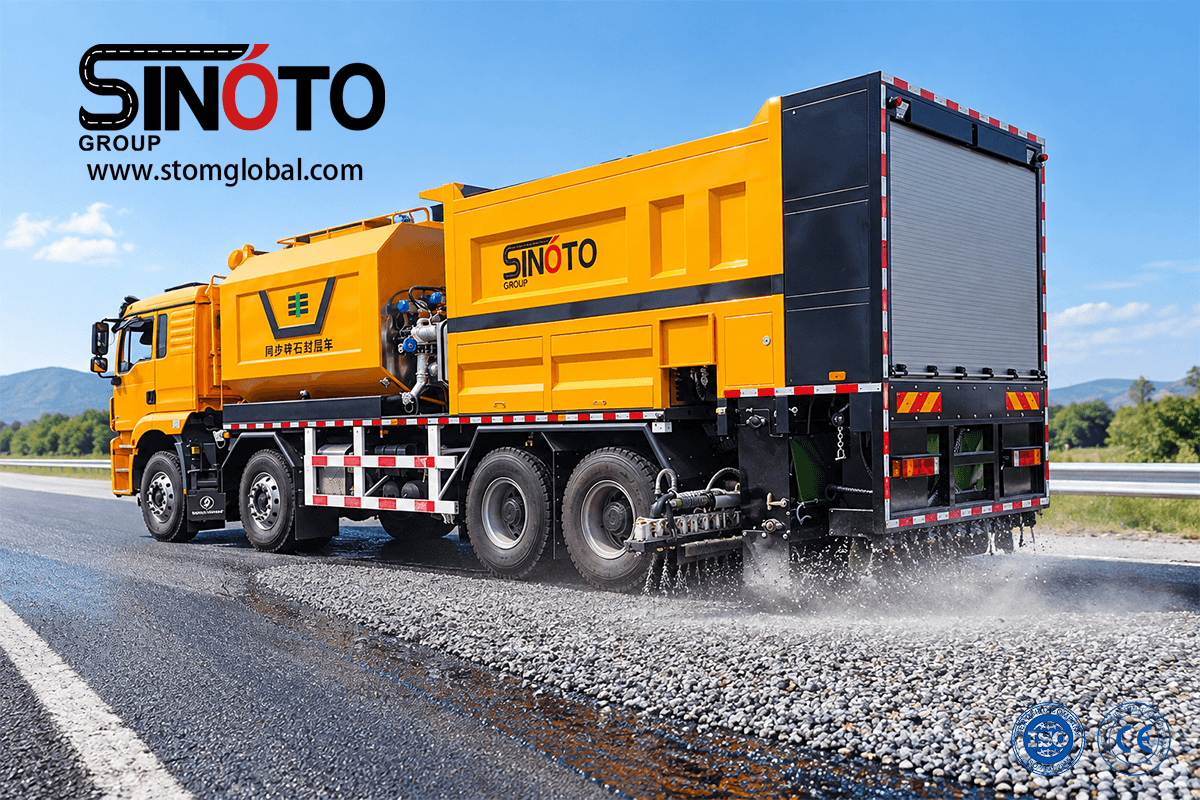
For contractors running a 5000L chip sealer truck such as our STCS5180TFC, a chassis PTO system is the natural fit — and for good reason. Because the hydraulic pump draws power directly from the existing gearbox, there is no second engine block, no separate fuel tank, no additional cooling radiator, and no extra set of service intervals to track. That translates into three concrete advantages:
This is precisely why our 5000L (STCS5180TFC) and 8000L (STCS5252TFC and STCS5318TFC) models all use a PTO system as standard. For municipal maintenance crews, mid-size contractors, and operations where the truck spends most of its time at moderate, fairly consistent working speeds, PTO power delivers everything the hydraulic system needs without unnecessary complexity.
“A well-matched PTO system gives a chip sealer everything it needs for standard resurfacing work — the trade-off only becomes visible once the truck is asked to hold a steady spray rate while creeping uphill in low gear.”— Field engineering perspective on road maintenance equipment design
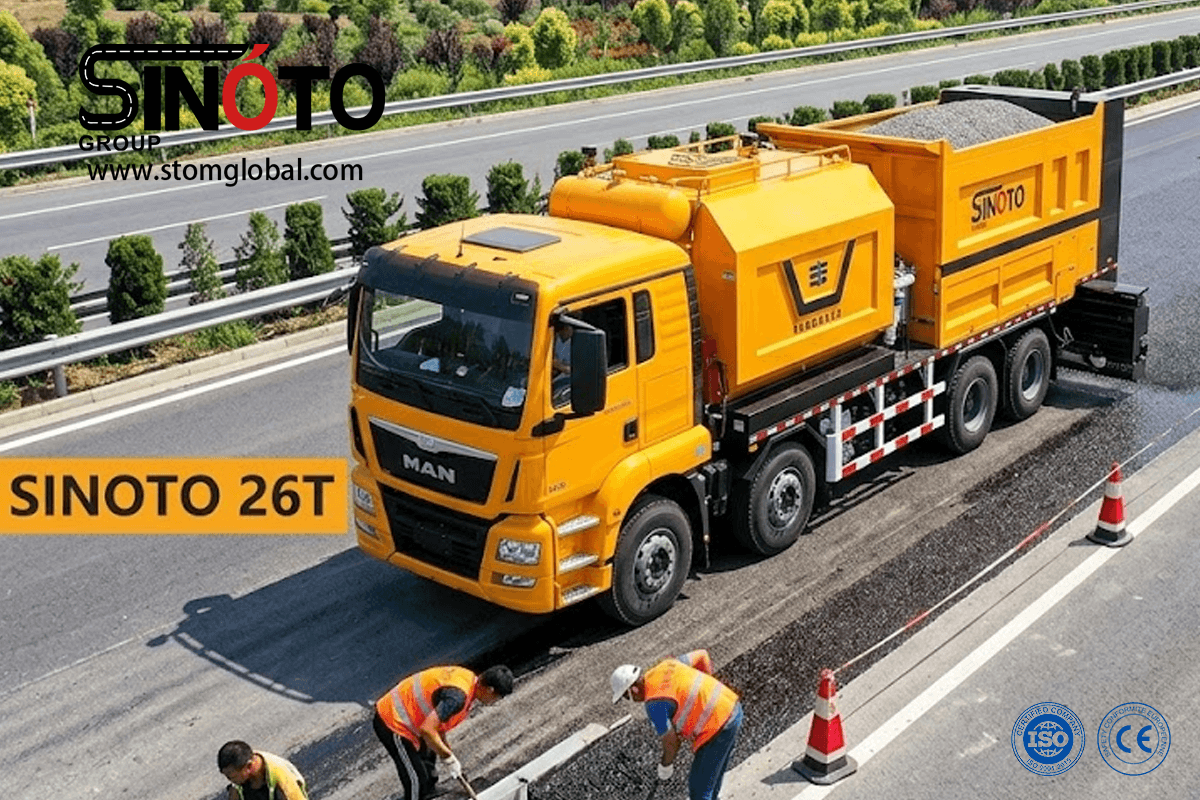
As tank volume and sealing width scale up, so does the hydraulic demand — and so does the sensitivity of the system to chassis speed variation. This is where a dedicated auxiliary engine earns its place. Our largest model, the STCS5317TFC, is built on an 8×4 chassis with a full 8000L synchronous chip sealer tank and a 4200mm sealing width, and it is equipped with a Cummins auxiliary engine rather than a chassis PTO.
The core issue a PTO cannot fully solve is this: hydraulic output through a PTO is tied to chassis engine RPM. If the truck has to slow down — for a steep uphill grade, a tight urban corner, or simply to creep along a busy road at 3 km/h — the PTO’s hydraulic output drops with it, unless the driver actively compensates with engine RPM management. On a wide, high-volume machine like the STCS5317TFC, even small inconsistencies in spray rate or chip spread density can create visible streaking or uneven coverage across a 4.2-meter working width.
A dedicated auxiliary engine removes that dependency entirely. Because it runs completely independently of the chassis transmission, the hydraulic and pump systems maintain constant, stable output regardless of how slowly — or unevenly — the truck itself is moving. For large-format synchronous chip sealing equipment tackling highway-grade projects, mountainous routes, or jobs requiring exceptionally tight tolerance on binder application (our spec sheet lists a distributing accuracy of ±1%), this consistency is not a luxury — it is what keeps the finished surface uniform from edge to edge.
| Model | Chassis Type | Bitumen Tank | Max. Sealing Width | Power System |
|---|---|---|---|---|
| STCS5180TFC | 4×2 | 5000L | 2500–3800mm | Chassis PTO |
| STCS5252TFC | 6×4 | 8000L | 4000–4200mm | Chassis PTO |
| STCS5318TFC | 8×4 | 8000L | 4200mm | Chassis PTO |
| STCS5317TFC | 8×4 | 8000L | 4200mm | Cummins Auxiliary Engine |
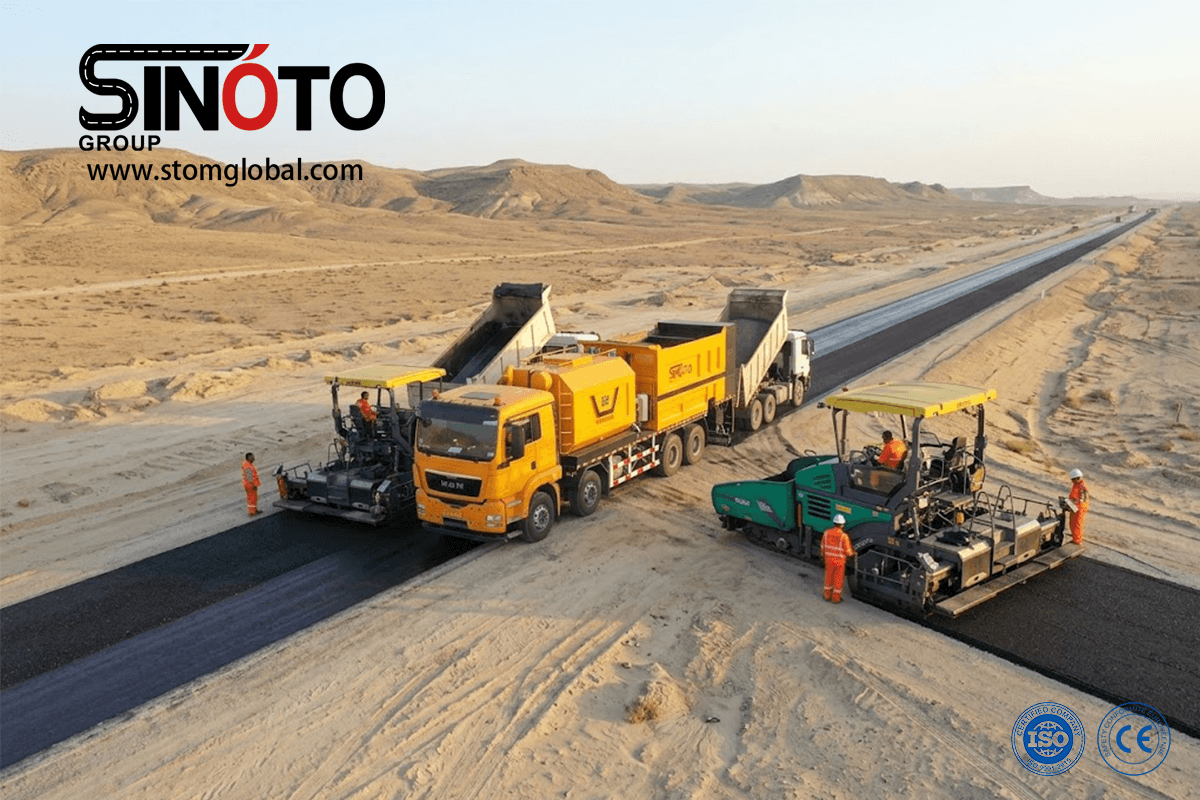
Choosing between a PTO and an auxiliary engine isn’t about which technology is more advanced — both are mature, proven solutions used across the global chip sealer market. It is about matching the power system to how and where the truck will actually work. A few practical questions can guide the decision:
It’s also worth noting that the auxiliary engine itself is not a generic add-on — our STCS5317TFC uses a Cummins unit specifically for its reliability record in continuous-duty industrial applications, paired with Permco hydraulic pumps and Hydraforce proportional valves to keep the entire hydraulic circuit responsive and precise even under sustained independent operation.
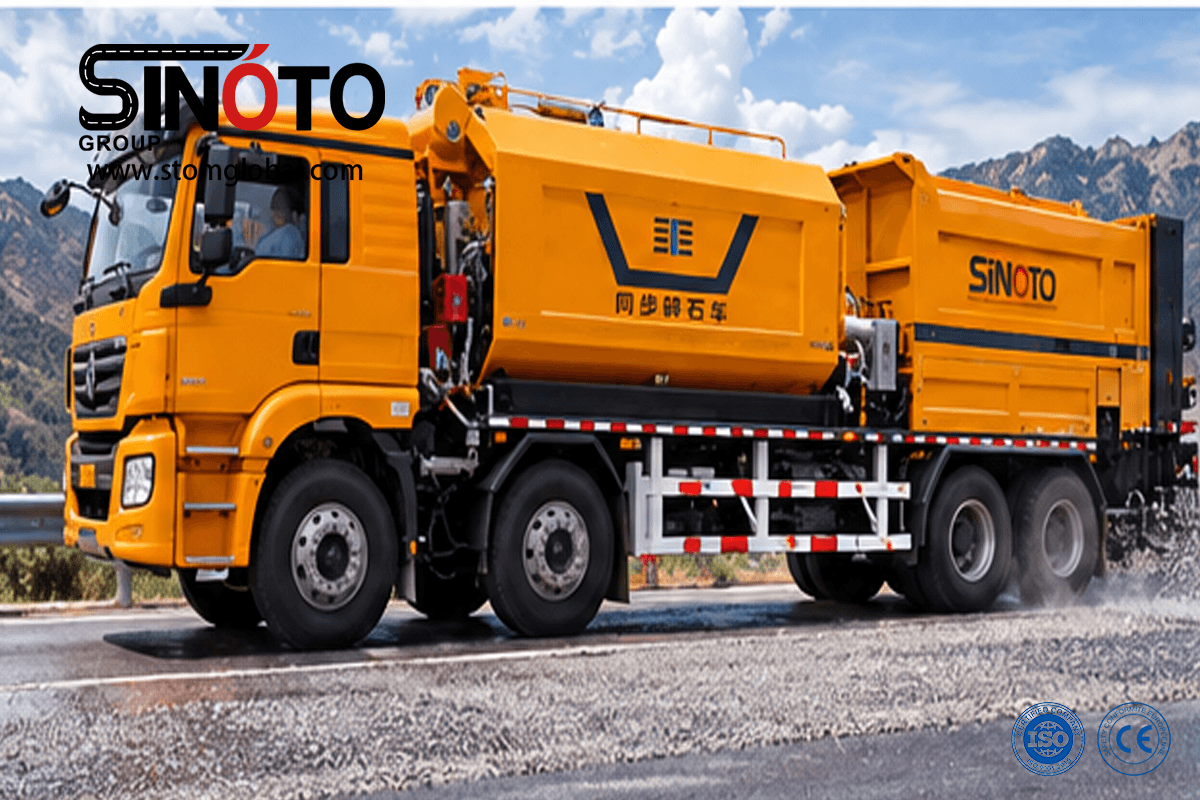
There is no single “correct” answer between a chassis PTO and an auxiliary diesel engine — only the answer that’s correct for your specific fleet, routes, and budget. If your operations center on standard municipal and highway preventive maintenance with mostly consistent driving speeds, a PTO-driven chip seal machine like the 5000L STCS5180TFC or 8000L STCS5252TFC/STCS5318TFC delivers excellent value, a lower entry price, and a leaner maintenance routine. If your work regularly involves grade changes, congested traffic, or you simply want the widest possible safety margin on binder and chip application accuracy at the full 4200mm working width, the Cummins auxiliary-engine STCS5317TFC removes chassis speed as a variable altogether.
Either way, understanding this one specification — PTO or auxiliary engine — before comparing quotes will save you from evaluating machines on tank size and sealing width alone, while missing the detail that most affects real-world performance and long-term cost.
Not sure which power system — and which tank size — fits your project? Talk to our engineering team and get a tailored recommendation and quote.
Request a Free Quote →
Whatsapp ID: 8619059581045

WeChat ID: +8619059581045

