When contractors plan a road base stabilization or foundation treatment project, one question comes up again and again: what materials can a cement spreader actually handle beyond ordinary cement? The answer determines whether a single machine can serve multiple project types, or whether a fleet needs several dedicated units. This guide breaks down the materials, technology, and value proposition behind a modern cement spreader truck, using real specifications from a working 18 m³ unit as reference.
A cement spreader, sometimes called a cement distributor or powder spreader, is purpose-built machinery mounted on a truck chassis that evenly distributes cement — or blends of cement with other powdered materials — across a construction surface. It is typically paired with soil stabilizers and road rollers to build cement-stabilized layers, such as cement-stabilized crushed stone base courses, or to support broader soil improvement work.
📊 Reference specifications (18 m³ model):
| Parameter | Value |
|---|---|
| Cement Bins Capacity | 18 m³ |
| Spreading Capacity | 0.9–60 kg/m² |
| Max. Spreading Width | 2500 mm |
| Engine Power | 257 kW (350 hp) |
| Emission Standard | Euro V |
| Total Weight | 23 t |
| Chassis Brand | SinoTruck / Shacman |
The core working principle is straightforward: material is loaded into the storage tank, moved by an internal conveyor and measuring system, then released through a controlled discharge gate at a rate the operator sets on a touchscreen. This is what separates a true cement spreading machine from a simple tipping trailer — the output stays consistent regardless of how fast or slow the truck is moving.
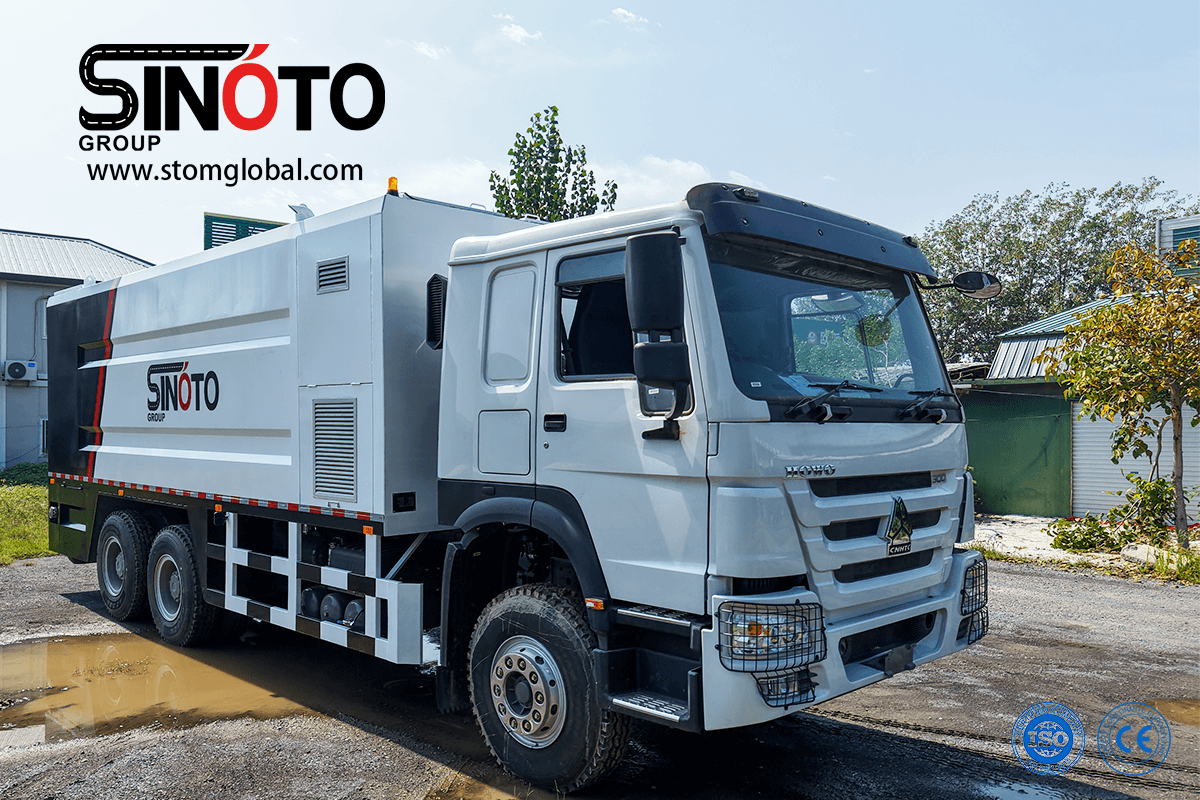
This is the heart of the question. A well-engineered cement spreader truck is not limited to Portland cement alone. Depending on the hopper design, feeding system, and dust control setup, this type of powder spreader can typically handle:
✅ Portland cement — the standard material for cement-treated base and stabilized subgrade layers
✅ Lime — commonly used for soil improvement and moisture control before compaction
✅ Fly ash — a frequent additive in cement-stabilized layers and industrial road projects
✅ Cement–additive blends — mixed powders formulated for specific soil stabilization requirements
✅ Other fine, free-flowing powdered binders used in cold recycling operations, where cement is spread as part of the road reclamation process
“The cement spreader is also suitable for cold recycling of roads involving cement spreading, as well as the distribution of various powdered materials such as lime and fly ash.”
Because the machine is designed around a general-purpose powder handling system rather than a single-material hopper, it functions equally well as a cement distributor for highway subgrade work and as a broader powder spreader for municipal and railway construction projects. This versatility is one of the main reasons buyers search for a cement spreader for sale rather than settling for single-purpose spreading trailers.
Material versatility only matters if the spreading is accurate. This is where an automatic cement spreader distinguishes itself from manual or semi-automatic alternatives — particularly for soil stabilization and road base stabilization projects where over- or under-application directly affects pavement performance.
🔧 Key technical advantages:
For engineers overseeing cement treated base and subgrade improvement work, this level of automation reduces material waste, shortens crew requirements to a single driver, and improves the uniformity that stabilized layers depend on for long-term durability.
Buyers comparing a cement spreader truck price or requesting a cement distributor price should look beyond the base cost and evaluate the full configuration, since tank capacity, automation level, and component sourcing all affect long-term value.
| Factor | Impact on Price |
|---|---|
| Tank capacity (15–25 m³ range) | Larger bins cost more but reduce refill downtime |
| Weighing/metering system | Automatic ±1% accuracy systems add cost but cut material waste |
| Imported hydraulic components (e.g. Danfoss) | Improves reliability, raises upfront price |
| Chassis brand and emission standard | Euro V compliance and brand reputation affect resale value |
| Dust control system | Adds cost but is often required for regulated sites |
A machine positioned purely as a low-cost cement spreader for sale may lack the metering precision or dust control needed for regulated highway and municipal projects. Buyers evaluating cement spreader truck price against project requirements typically find that the automation and imported hydraulic components pay for themselves through reduced material overspend.
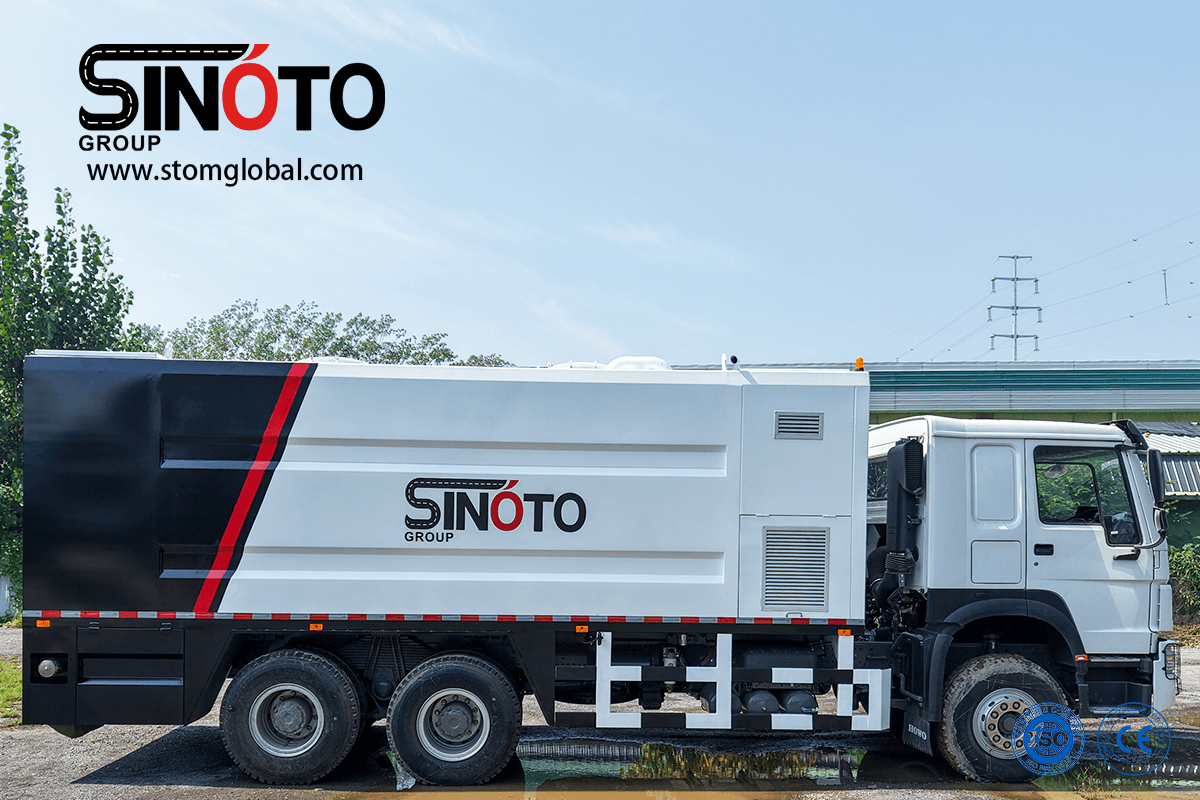
Selecting between spreader models comes down to matching capacity and features to the job:
A modern cement spreader is built to do more than distribute cement — it is a multi-material powder spreader engineered for accurate, dust-controlled, speed-independent application across cement, lime, fly ash, and blended stabilization materials. Whether the project involves a cement treated base, cold recycling, or general soil improvement, matching tank capacity, automation, and dust control to the job is the difference between an efficient build and a wasteful one.
Ready to get project-specific specs and a quote? Request a Free Quote for a Cement Spreader Truck →
#CementSpreader #CementDistributor #SoilStabilization #RoadBaseStabilization #PowderSpreader #RoadConstruction

Whatsapp ID: 8619059581045

WeChat ID: +8619059581045

