Yes, provided the plant is engineered for it. A modern polymer modified bitumen plant can produce high-viscosity, terminal-grade binders in the PG 76-22 class and above, as long as it delivers ultra-fine polymer dispersion, precise dosing, stable temperature control and enough development time. The plant does not “create” a PG grade on its own. Your base bitumen, polymer type and polymer content set the recipe. The equipment decides whether that recipe is hit consistently, batch after batch.
This guide explains what PG 76-22 demands, how an SBS modified bitumen plant like the STMB series from Henan Sinoto (STOM Global) meets those demands, and what buyers should verify before requesting a quote.
💡 Quick Answer
Yes. The STMB range of PMB plant models (5–20 tph) combines high-torque colloid mills, spiral-plate heat exchange, static-weighing SBS dosing and PLC control. These are the core ingredients for stable, high-viscosity modified bitumen. Final PG compliance should always be confirmed in a lab with your own base bitumen and polymer.
📊 STMB Series at a Glance
| Item | STMB Series Data |
|---|---|
| Productive capacity | 5–20 tph |
| Modifier types | SBS, SIS, PE, EVA (also SBR and rubber powder) |
| Fineness | More than 85% of particles below 10 microns |
| Control system | Manual or PLC automatic (model dependent) |
| Continuous operation | Up to 24 hours |
| Design | Modular, container-friendly transport |
PG 76-22 means the binder resists rutting at a 76 °C high-temperature grade while staying flexible down to −22 °C. “Terminal-grade” means the binder is blended at a terminal or dedicated plant, stored, and shipped hot to the asphalt mixing site. It must therefore stay homogeneous through storage and transport. Any weakness in blending shows up as polymer separation, which is exactly what specifications test for.
That puts five practical demands on any PMB plant:
📋 Requirement Checklist for Terminal-Grade Production
| Requirement | Why It Matters | What to Look for in the Plant |
|---|---|---|
| Polymer dispersion | Prevents separation during hot storage | High-shear colloid mill with published fineness data |
| Temperature control | Protects the polymer and the base bitumen | Thermal oil furnace, heat exchanger, PID control |
| Dosing accuracy | Keeps elasticity and viscosity on target | Static weighing, PLC-linked feeding |
| Development time | Ensures full polymer swelling | Dedicated swelling/development tank |
| Output stability | Delivers consistent grade at volume | Dual mills, continuous 24-hour capability |
“A PG grade is proven in the laboratory, but it is earned on the production line.”
If a plant cannot meet all five demands, PG 76-22 becomes a lucky result rather than a repeatable one. That is why buyers should evaluate the machine, not only the recipe.
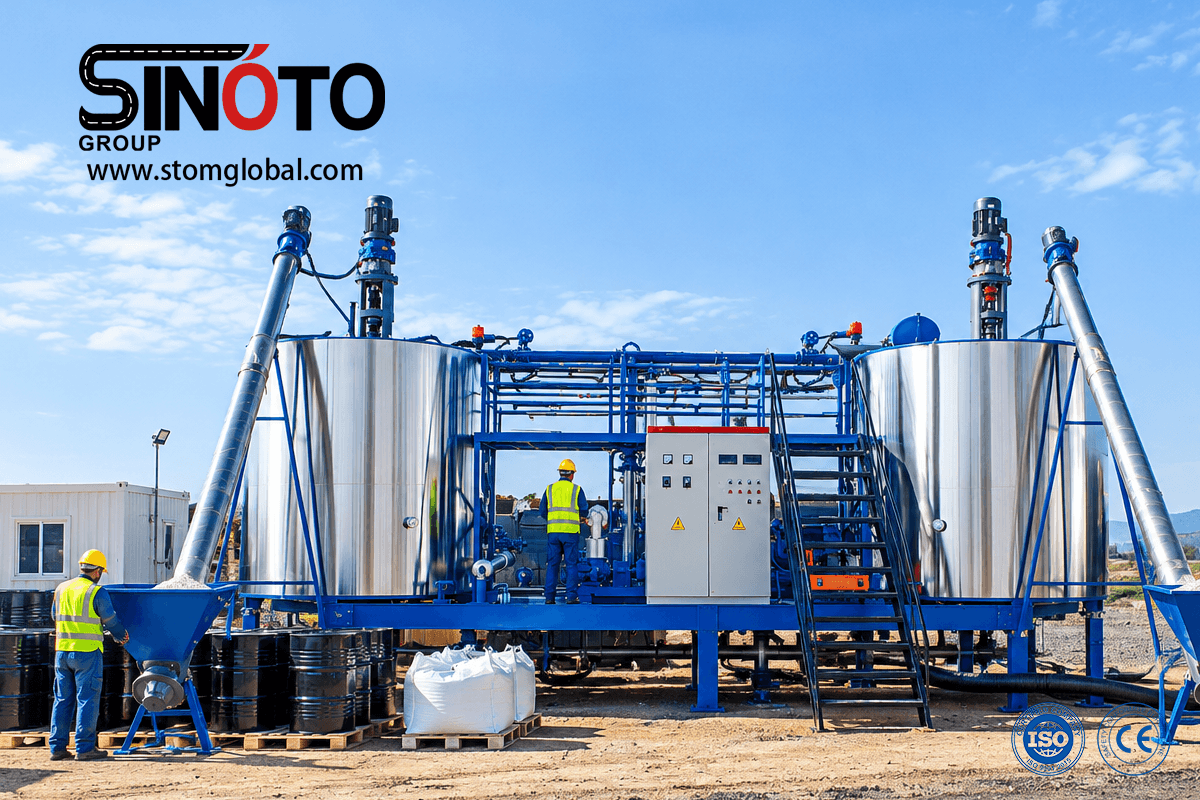
An SBS modified bitumen plant built for demanding binders works as a controlled sequence, not a simple mixer. The STMB design follows this flow:
🛢️ Base Bitumen → 🔥 Rapid Heating → ⚖️ SBS Dosing → ⚙️ Colloid Mill → ⏳ Swelling Tank → 🏭 Maturation & Storage
1. Rapid, sealed heating. Base bitumen is heated quickly in an air-sealed system using a spiral-plate heat exchanger and thermal oil furnace. Fast heating with limited air contact reduces oxidation and aging before the polymer is even added.
2. Metering and static-weighing dosing. Base bitumen is metered accurately, and the modifier is fed by screw with static weighing, which is more accurate than dynamic weighing. At the polymer contents typical of high-grade binders, this accuracy directly affects the final PG result.
3. High-shear milling. The colloid mill grinds the polymer into fine particles, with the plant targeting more than 85% below 10 microns. This dispersion is what gives the modified binder its thermal stability and elasticity.
4. Swelling and development. Dedicated tanks with thermal oil heating and specialized paddles give the polymer time to swell and react fully in the bitumen.
5. Maturation and storage. The finished binder is held in a maturation and storage system before dispatch, which supports the terminal-blending model.
High-content SBS makes bitumen thick and hard to shear. A standard mixer will struggle, and a lightweight mill will wear out or leave coarse polymer particles behind. STOM’s modified bitumen plant design addresses this in several ways:
“High viscosity is not just a recipe problem. It is a torque, heat-transfer and control problem.”
Beyond SBS, the same SBS bitumen plant platform handles SIS, PE and EVA, and can be used for waterproofing-grade modified bitumen as well as road binders. That flexibility lets one polymer modified bitumen plant serve several product lines.
Capacity should match your binder demand, not simply the largest machine on offer. The table below compares the three STMB models.
⚙️ STMB Series Technical Comparison
| Productive capacity | 5–6 t/h | 8–10 t/h | 15–20 t/h |
| Colloid mill | 45 kW / 75 kW | 75 kW | 2 × 75 kW |
| Mixing tank | 7 m³ | 5 m³ | 6 m³ |
| Swelling tank | 7 m³ | 5 m³ | 6 m³ |
| Spiral-plate heat exchanger | — | 100 m² | 2 × 100 m² |
| SBS adding system | 2 × 2 tph | 2 × 3 tph | 2 × 4 tph |
| Thermal oil furnace | 6×10⁵ kcal | 8×10⁵ kcal | 12×10⁵ kcal |
| Control system | Manual | Manual / Automatic | Manual / Automatic |
| Total power | 65 kW | 100 kW | 200 kW |
| Total weight | 6.5 t | 10 t | 25 t |
🏗️ The 10 tph PMB plant (STMB-10) is a strong fit for regional contractors, mid-sized asphalt producers and projects that need steady PMB supply for one or two mixing plants. It offers a heat exchanger, a 75 kW colloid mill and automatic control in a compact 10-ton package. For a buyer targeting PG 76-22 with moderate volumes, a 10 tph PMB plant is usually the practical entry point.
🏭 The 20 tph polymer modified bitumen plant (STMB-20) suits terminals, large highway programs and suppliers serving multiple customers. Its dual colloid mills, twin heat exchangers and higher SBS feeding capacity give more shearing power and thermal headroom. That headroom matters when formulations push toward higher polymer content and higher viscosity. Confirm with the engineers how to configure the two mills (series or parallel) for your target grade.
🧰 The STMB-6 is the lowest-output option and is manual-control only. It can serve smaller or pilot operations, but for repeatable terminal-grade quality we would recommend automatic control. That means stepping up to the 10 or 20 tph models.
📌 Practical tip: Whatever the capacity, ask for a trial blend or reference data using your own base bitumen and SBS grade. A machine’s rated output is not the same as its output at PG 76-22 viscosity.
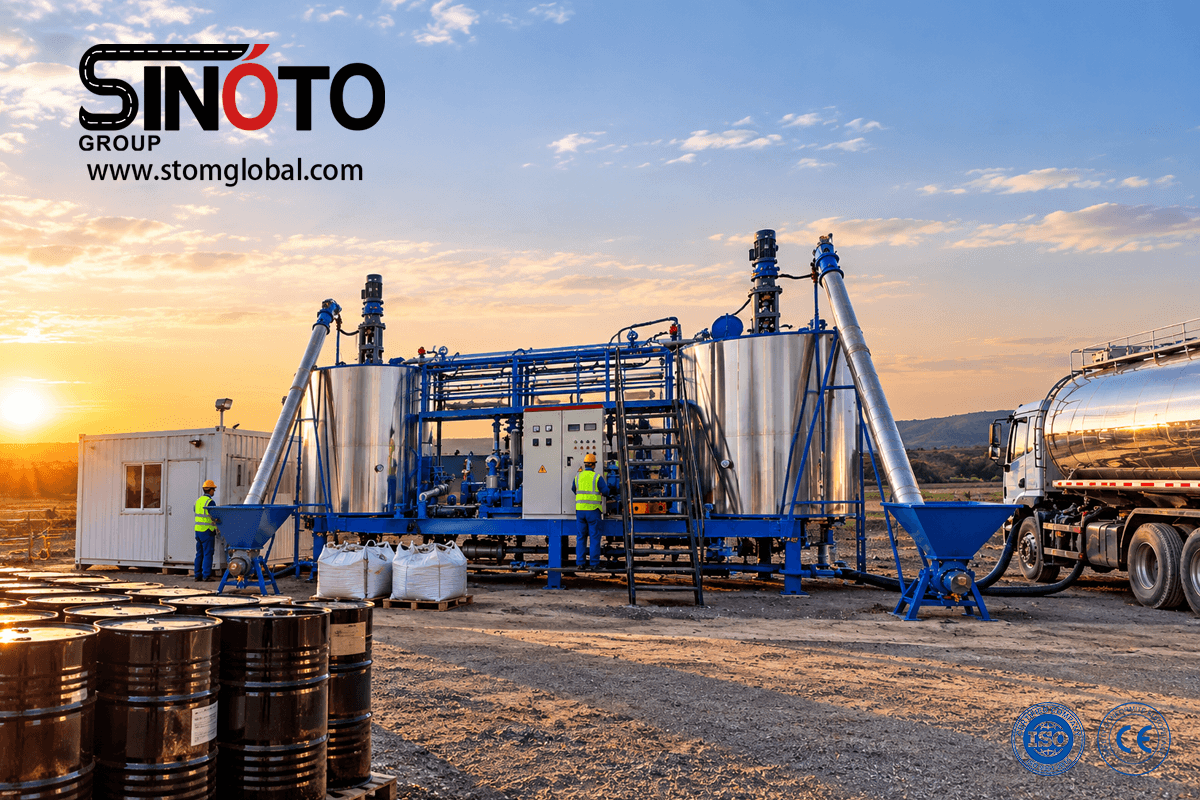
Searching for a PMB plant for sale returns many options, and specifications on paper often look alike. These are the points that separate a reliable supplier from a risky one.
The polymer modified bitumen plant price is driven by configuration, not just tonnage. The main factors are:
Because these variables change the final quote, any PMB plant price published without a specification is only a rough guide. Request a written quotation that lists mill power, heat exchanger area, control level and included components. Comparing two PMB plant quotes on price alone, without matching those items, is the most common buying mistake.
| Check | Question to Ask |
|---|---|
| Fineness data | Can you provide particle-size results for a comparable binder? |
| Polymer compatibility | Has the plant processed my SBS brand and content? |
| Control system | Is dosing PLC-controlled with static weighing? |
| Wear parts | What is the mill’s rated lifespan, and are spares in stock? |
| Transport and setup | Is the plant modular and container-shippable? |
| After-sales | Who handles commissioning, training and troubleshooting? |
| References | Can you share cases from countries similar to mine? |
Choosing an SBS bitumen plant manufacturer with direct engineering capability makes a real difference. Custom heat-exchange sizing, control tuning and mill selection all affect whether you reach PG 76-22 consistently. Henan Sinoto Machinery Technology Co., Ltd., based in Zhengzhou, China, positions itself as a specialist manufacturer and global supplier of asphalt machinery and road construction equipment, with a multilingual customer base. The company also supplies related equipment, including emulsion bitumen plants, barrel and jumbo-bag bitumen melting machines, and asphalt mixing plants, so a complete bitumen processing line can come from a single source.
The modular, skid-mounted STMB design also simplifies logistics. Pipelines carry rock wool insulation for both bitumen and thermal oil, and production can begin after connecting pipework and power. That helps contractors who need to relocate between project sites.
An experienced SBS modified bitumen plant manufacturer will also discuss limits openly. Be cautious of any supplier that guarantees a specific PG grade without asking about your base bitumen and polymer.
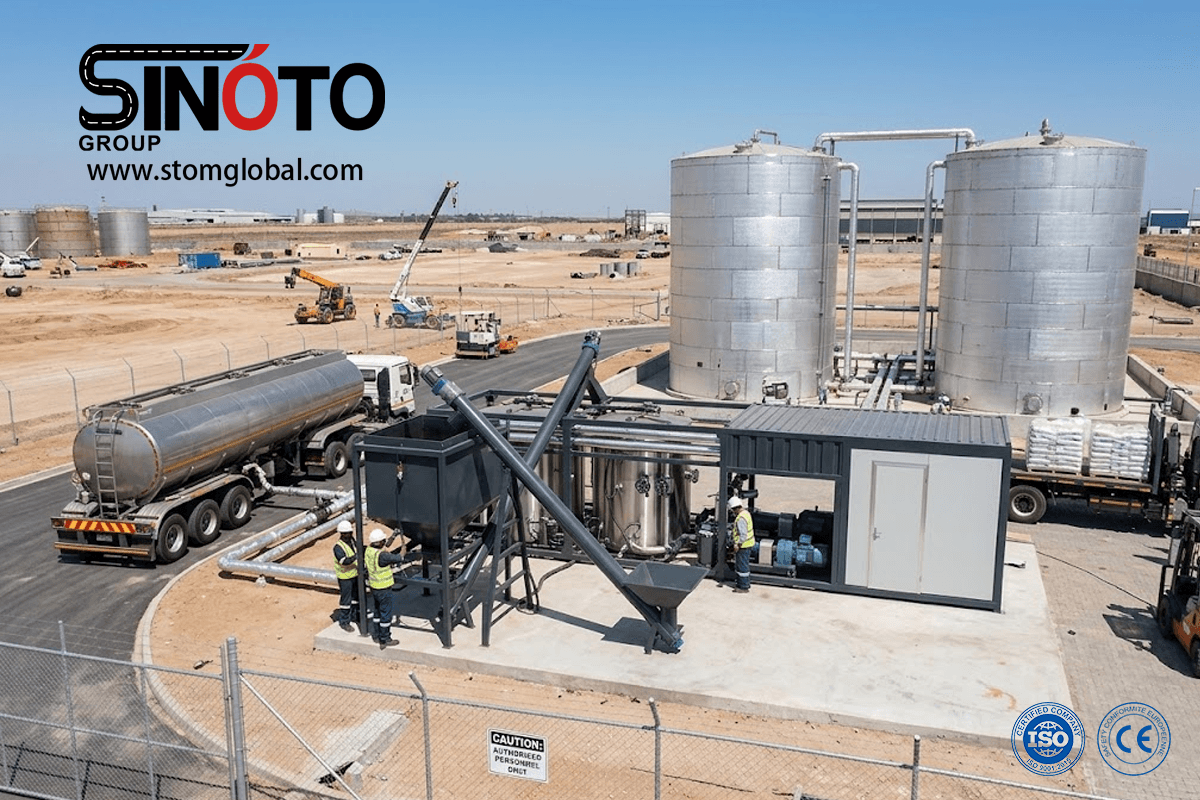
The plant is necessary but not sufficient. Reaching PG 76-22 or higher depends on four things working together:
The STMB series addresses the third point directly, with fine dispersion, high-torque milling, controlled heating, static-weighing dosing and 24-hour continuous operation. For buyers who need high-viscosity, terminal-grade output, this SBS bitumen plant design gives the equipment foundation to get there. The final PG result should always be validated through laboratory testing on your own materials.
✅ Bottom line: A well-specified polymer modified bitumen plant can produce PG 76-22-class binders and beyond. Choose the capacity that matches your demand, insist on automatic control and fineness data, and verify performance with your own materials before committing.
Tell us your target PG grade, base bitumen source, polymer type and daily output, and our engineers will recommend the right STMB configuration.
👉 Request a Free Quote for Your Polymer Modified Bitumen Plant
📧 info@stomglobal.com | 📱 WhatsApp: +86-190 5958 1045
#PolymerModifiedBitumenPlant #PMBPlant #SBSModifiedBitumen #ModifiedAsphalt #RoadConstruction #AsphaltEquipment

Whatsapp ID: 8619059581045

WeChat ID: +8619059581045

