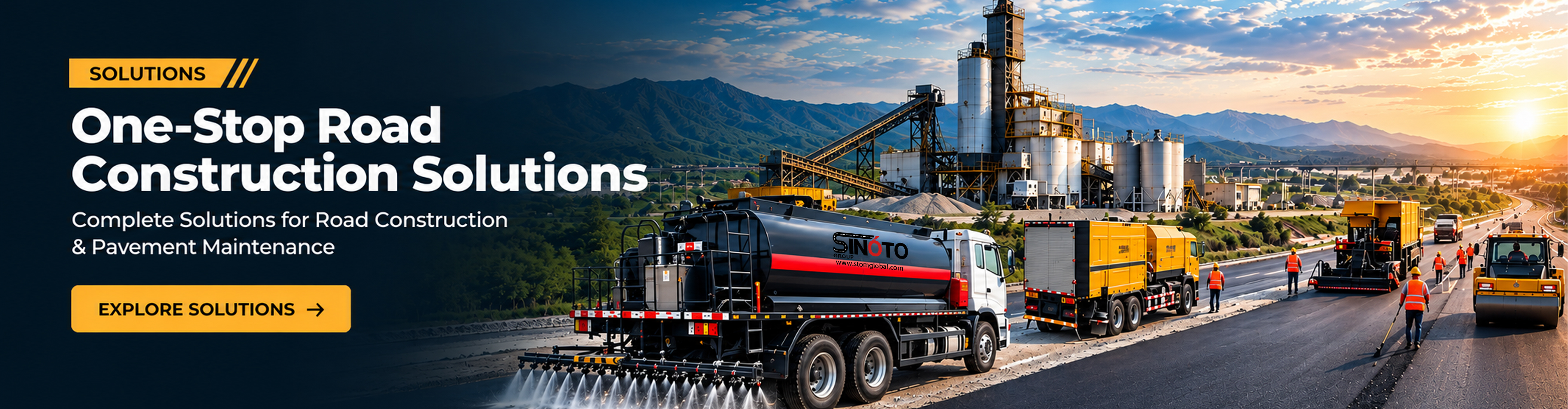
Even the best of materials may not last long without appropriate adhesion of pavement layers and the result is cracks, potholes and expensive fixing. It goes into the importance of the tack coat which is the invisible glue in the construction of the road and the specialized machine that is needed to apply it perfectly the asphalt distributor.
We know them, the terrible potholes, the spider web cracks, the top layer of a road that has peeled, and it has been peeling much earlier than it was supposed to. A deficiency in proper adhesion of the various layers of the pavement is often the real culprit. This critical bond is attained in road construction with a tack coat and it is a task requiring a special machine: an asphalt distributor.
By surface layer, we are referring to the top layer of the pavement structure, which the drivers deal with directly. A general flexible pavement construction is however constructed in several layers all with specific purposes:
1. Subgrade:
This is the natural soil at the bottom of the road the last layer of soil that has been prepared and compacted in order to support all the soil above. The stability of the road is ultimately based on it.
It is a layer laid on the subgrade which is normally composed of crushed stones or gravel. It gives extra structural support and drainage and serves as a buffer to the layers of the subgrade and those lying above.
This is the primary load-bearing layer which is mostly composed of dense and good quality crushed aggregate. It makes sure that the loads of the traffic are distributed evenly to the subgrade underneath and this helps to avoid ruts and collapse.
This is the last layer, which normally consists of asphalt concrete. It’s what we see and drive on. It is designed to offer the flow of a skid-free surface, seal the lower layers against water infiltration, and to resist the continual erosion of traffic.

The success of this multi-layered system is determined by only one thing; the ability of each layer to adher to the layer beneath it. Lacking a tight connection, the layers may move without each other, causing premature exhaustion, fissure, and rapid deterioration of the state of the road.
The key bonding agent is the tack coat – a fine spay of asphalt emulsion applied to the surface of a pavement or a base layer of asphalt binder, prior to the second layer of asphalt concrete being placed. This coating is a thin and sticky surface which guarantees that the new surface layer will perfectly adhere to the old one. This sticking allows the uppermost layer not to slide past the underlying one.
In case of slippage, the pavement is unable to distribute the traffic loads. This causes early weariness resulting in the cracking and crumbling of surface. One of the factors that are usually a direct consequence of this failure to bond is potholes, and alligator cracking. An ideal tack coat is not a luxury and that is the basic key to a long lasting, durable and safe road.
The application of a tack coat should be absolutely accurate. Not enough and the bond will be weak. Excessive and excess asphalt may result in fat spots and therefore, slipperiness and instability. This is where the distributor of asphalt comes in.
What then is an asphalt distributor?
It is a highly focused road construction equipment that is used to heat and spray a liquid asphalt product some type of asphalt emulsion, cutback asphalt or hot asphalt binder onto an existing surface in a precise, uniform and controlled way.
Though commonly referred to as an asphalt distributor, it can also be a bitumen distributor, asphalt sprayer, bitumen distributor or asphalt spreader.
This machine is usually a truck-mounted or a trailer-mounted one. The tank is insulated with the asphalt material at its core. Good heating system commonly having oil or propane burner maintains the asphalt at the correct application temperature that is vital in attaining the best viscosity and spray pattern. The flow is controlled by a powerful pump and complicated set of pipes and valves to a spray bar at the rear of the truck. This spray bar has a nozzle series which can be adjusted individually to get the required spray width and rate.
The asphalt distributors at present are loaded with the state of the art controls, such as computer based controls and GPS technology, that enable the operator to pre-set the desired specific rate to be sprayed, depending on the specifications of a project. This automation makes sure that there is a consistent and flawless application, and there is no guesswork or human error.

The preparation of the surface starts with a clean surface. The former pavement should be well cleaned and dusted out, as well as may be wiped with wet water.
Asphalt emulsion is heated to a certain temperature that typically ranges between 150degF and 180degF, which is determined by the specifications of the material. The heating system of the asphalt distributor maintains this temperature to the rest of the application.
Uniform spraying consists of forcing the hot asphalt to pass through the spray bar as the distributor truck travels at an adjusted pace. The control system provides the operator with a fine and even spray rate, forming a smooth film evenly across the entire surface.
Once the tack coat has been applied, it has to be left to break or dry. This is what is referred to as the evaporation of the water in the emulsion and the sticky asphalt is left behind. Such drying time may be varied with weather conditions.
The second layer of asphalt is paved over the first layer of asphalt which has become tacky, forming an indissoluble bond between the two layers.
All these steps are vital, and a superior asphalt distributor is the solution to ensure that the outcome is successful.
Although an asphalt distributor might appear to be a huge investment, it is an investment that will give back in the long-run. A tack coat that has a well-known, accurate distributor will guarantee the result of your long-term and durability projects on the road. This translates into reduced pre-mature failures, reduced expensive call-backs to repair the systems, and a reputation of having quality and long lasting infrastructure.
The price of a good quality bitumen spreader is insignificant in an industry where each and every dollar matters when it comes to the possible expense of road failure, either in terms of costly resurfacing or damaged reputation. It is a little outlay that insures a very big one.
In addition, you can use our asphalt synchronous chip sealer to achieve synchronous spraying of asphalt and gravel to improve efficiency.

Whatsapp ID: 8619059581045

WeChat ID: +8619059581045