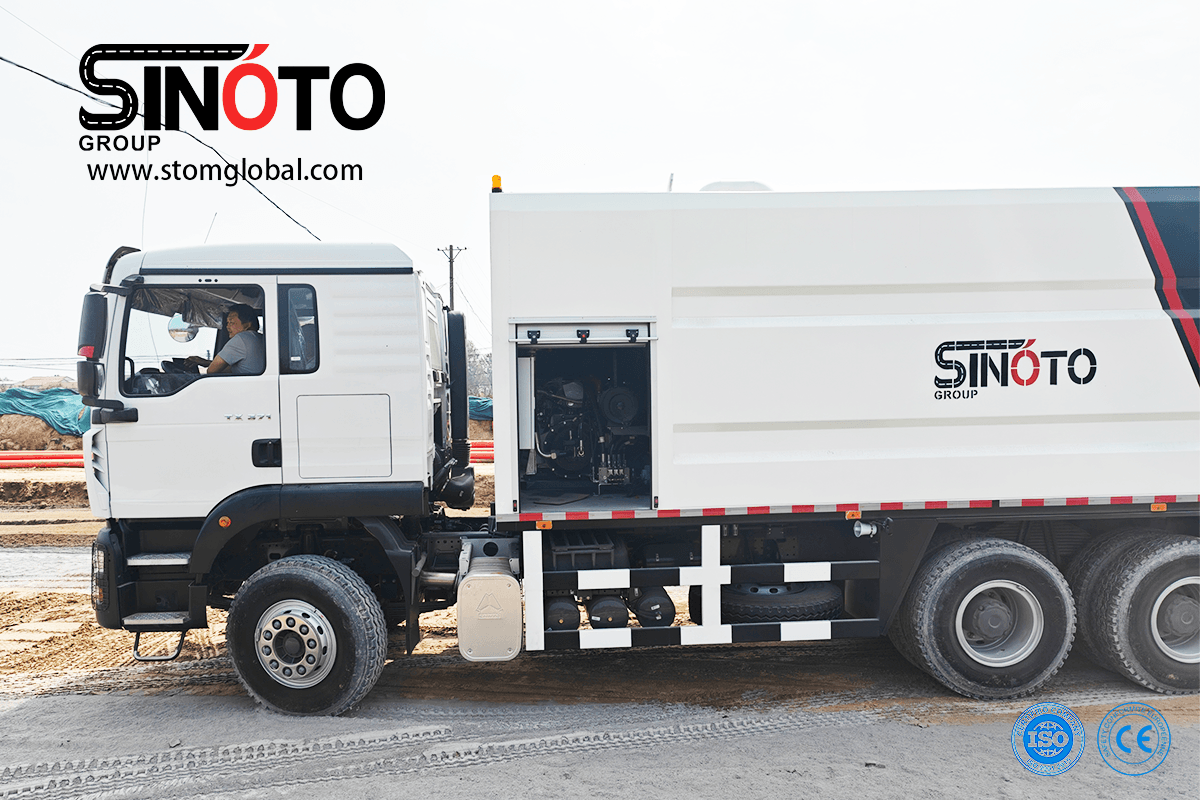
Anyone shopping for road construction equipment eventually asks the same question: how much does a cement spreader truck cost? The honest answer is “it depends” — but buyers deserve more than that. This guide breaks down the real cement spreader truck price, the features that drive the number up or down, and what to check before you commit to a cement spreader for sale, so you can budget with confidence and avoid overpaying for the wrong machine.
A cement spreader is purpose-built mechanical equipment used in road construction, foundation treatment, and subgrade engineering. Mounted on a truck chassis, it uniformly distributes cement — or blends of cement with lime, fly ash, and other powdered materials — across the construction surface. It’s typically paired with soil stabilizers and road rollers to build cement-stabilized crushed stone base courses, and it’s equally useful for cold recycling projects that call for precise cement spreading.
Key working components of a modern cement spreading machine include:
Quick Answer: Spreading accuracy on a quality automatic cement spreader with a weighing system can reach ±1%, meaning operators simply enter the target kg/m² on a touchscreen and the machine handles the rest — virtually eliminating material waste.
There’s no single figure that answers “how much does a cement spreader truck cost” for every buyer, because the final cement spreader truck price depends on several variables. Below is a breakdown of the components that most influence the quote you’ll receive.
| Cost Factor | Impact on Price | Notes |
|---|---|---|
| Chassis brand | Medium–High | SinoTruck, Shacman, and other established brands vary in cost and availability |
| Cement bin capacity | High | Common range 15–25 m³; larger tanks cost more but cover more ground per load |
| Spreading width | Medium | Wider spreading widths (up to 2500 mm) speed up projects but raise unit cost |
| Weighing & control system | Medium | Automatic weighing systems with ±1% accuracy add value and price |
| Hydraulic components | Medium | Imported hydraulic pumps/valves (e.g., DANFOSS) push cost higher than domestic parts |
| Emission standard | Low–Medium | Euro V/III compliant engines may carry a premium in some markets |
| Destination & logistics | Medium | Shipping, import duties, and local certification add to the landed cost |
A typical heavy-duty unit — for example, an 18 m³ bin, 2500 mm spreading width model — sits at the higher end of the market because it combines a large chassis, an automatic weighing system, and imported hydraulic components. Smaller-capacity spreaders or push-type/attachment versions cost significantly less but move less material per pass.
Practical tip: When comparing a cement distributor price or a cement spreader truck price across suppliers, always confirm whether the quote includes the chassis, the weighing system, dust control, and after-sales support — these line items can swing the total by tens of thousands of dollars.
The terms “cement spreader” and “cement distributor” are sometimes used interchangeably, but buyers researching a powder spreader should understand the distinction before requesting quotes:
| Aspect | Cement Spreader | Cement Distributor (general term) |
|---|---|---|
| Primary material | Cement, lime, fly ash (powder) | Often used loosely for any bulk powder distribution unit |
| Core application | Road base stabilization, cement treated base construction | Broader — can include agricultural or industrial powder handling |
| Key mechanism | Auger/conveyor with weighing system, controlled discharge width | Varies by design and manufacturer |
| Typical buyers | Highway, railway, and municipal contractors | Contractors and equipment rental fleets across industries |
Understanding this overlap matters when you’re searching for a cement distributor price online, since search results often blend listings for both categories. If your project involves soil stabilization or building a cement-treated base, you specifically want a machine engineered for that task — not a generic bulk powder handler.
Before finalizing any cement spreader for sale, run through this checklist. These are the features that separate a durable, accurate machine from one that will cost more in downtime and rework than it saved upfront.
“A well-specified automatic cement spreader pays for itself through reduced material waste alone — ±1% accuracy on an 18 m³ load is a meaningful saving over a full construction season.”
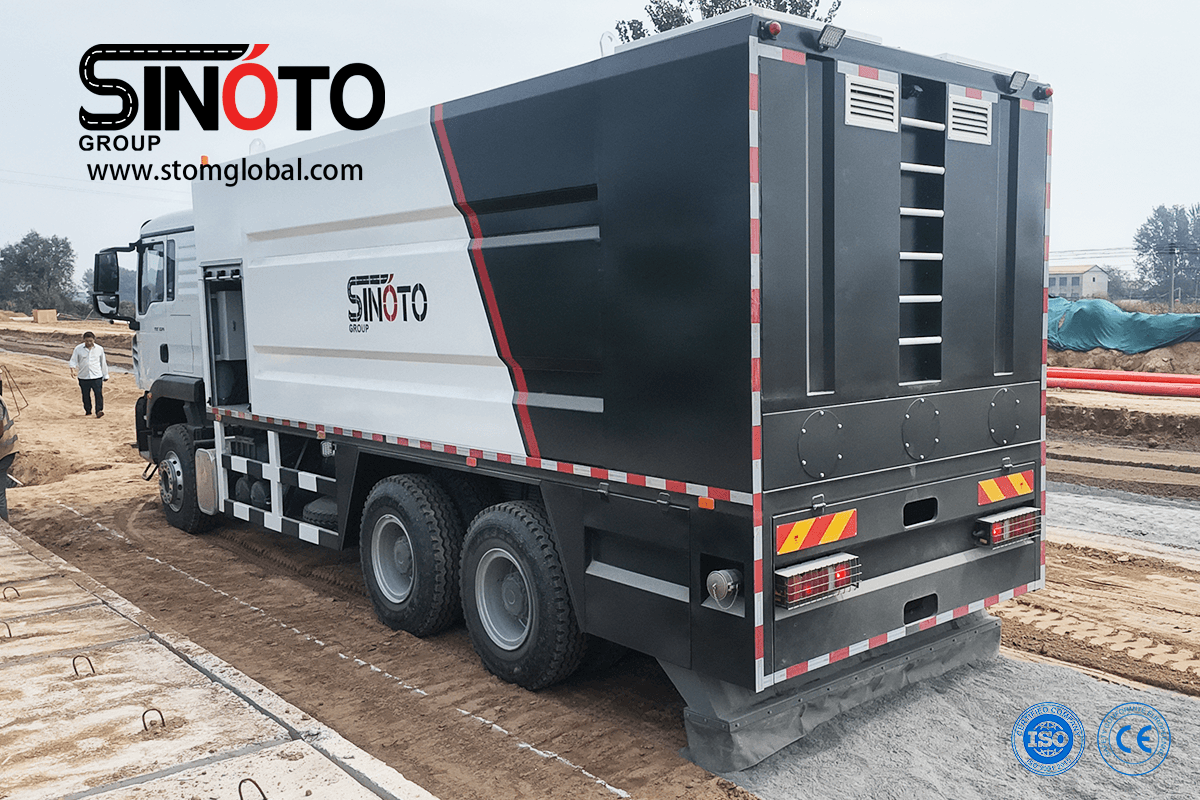
Most buyers researching cost are ultimately working on a specific application: road base stabilization. A dedicated cement spreader truck for soil stabilization projects delivers a controlled, even layer of cement across the subgrade before mixing equipment blends it into the soil. This uniformity is what gives a cement treated base its long-term strength and load-bearing consistency — inconsistent spreading leads to weak spots, premature cracking, and costly rework.
For highway, railway, and municipal projects, the spreading capacity (commonly ranging from roughly 0.9 to 60 kg/m²) needs to match the specification of the base course design. A machine with a wide spreading width (up to 2500 mm) and a large bin capacity reduces the number of passes needed, which directly affects project timelines and, ultimately, total cost of ownership — not just the sticker price of the truck.
So, how much does a cement spreader truck cost? The real number depends on bin capacity, spreading width, automation level, chassis brand, hydraulic components, and where the machine is headed. Rather than chasing the lowest quoted cement spreader truck price, buyers doing road base stabilization or cement-treated base work should prioritize spreading accuracy, dust control, and chassis reliability — the features that protect your investment over years of service.
Ready to get an exact quote for your project specs? Request a Free Quote for a Cement Spreader Truck →
#CementSpreader #CementSpreaderTruck #SoilStabilization #RoadConstruction #CementDistributor #RoadBaseStabilization

Whatsapp ID: 8619059581045

WeChat ID: +8619059581045