If you’re planning a highway construction or pavement preservation project that uses waste-tire binder technology, you’ve probably already typed “crumb rubber asphalt plant price” into a search bar more than once. It’s the right question to ask — but the honest answer is: it depends on capacity, automation level, and how the reactor system is engineered. This guide breaks down real cost drivers, typical price ranges, and what buyers should check before requesting a quote for a Crumb Rubber Modified Bitumen Plant.
Rubberized asphalt has moved from a niche “green” material to a mainstream specification on highway resurfacing contracts, airport runways, and municipal pavement preservation programs. Tire recycling regulations, quieter-road initiatives, and life-cycle cost analysis have all pushed more contractors toward a crumb rubber modified asphalt plant as a core piece of equipment rather than a specialty add-on. Below, we’ll walk through pricing logic, technical specs, and buyer priorities so you can evaluate a rubber modified bitumen plant for sale with confidence.
Unlike a simple hot-mix batching unit, a crumb rubber modified bitumen plant is a reaction system, not just a mixer. Pricing is shaped by several engineering variables:
“The initial investment and material cost for rubberized asphalt may be slightly higher than conventional binder — but across the full pavement life cycle, longer service life and fewer maintenance cycles make the economics clearly favorable, especially at scale.” — Industry engineering note on rubberized asphalt life-cycle economics
Because these variables interact, two plants both labeled “10 tph” can carry noticeably different price tags depending on whether they include frequency-converting pumps, remote-transmission flow meters, and optional reactors.
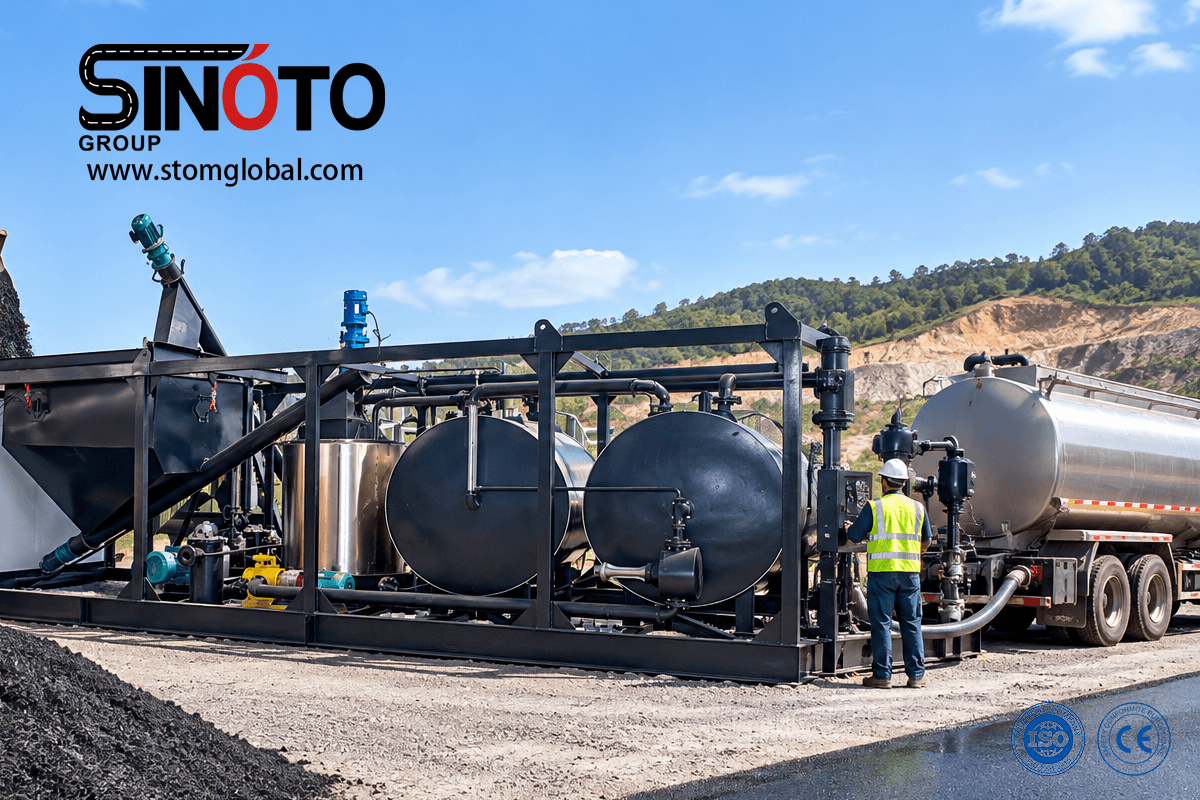
To give buyers a realistic frame of reference, here’s a side-by-side technical comparison of three common crumb rubber modified bitumen plant configurations. Actual rubber modified bitumen plant price quotes will vary by region, shipping terms, and optional components, but capacity and equipment specification are the two biggest cost levers.
| Specification | CRMB-6 | CRMB-10 | CRMB-15 |
|---|---|---|---|
| Capacity | 6 t/h | 10 t/h | 15 t/h |
| Rapid Heat Exchanger | 100 m² | 80 m² × 2 | 100 m² × 2 |
| Rapid Mixing Tank | 1.5 m³ | 2 m³ | 2.5 m³ |
| Mixer Motor Power | 5.5 kW | 7.5 kW | 11 kW |
| Rubber Powder Silo | 4 m³ | 6 m³ | 5 m³ × 2 |
| Bitumen Pump (frequency-converting) | 9.89 m³/h, 3 kW | 16.8 m³/h, 5.5 kW | 24 m³/h, 7.5 kW |
| Optional Rubberized Bitumen Reactor | 10 m³ × 2 | 15 m³ × 2 | 20 m³ × 2 |
As capacity scales up, so does motor power, tank volume, and heat-exchange surface area — which is why entry-level 6 tph units are priced lowest, while a fully optioned 15 tph line for large-scale highway construction sits at the top of the range. A 10 tph rubber asphalt plant is often the “sweet spot” many mid-size contractors choose, balancing output against upfront capital cost.
Because pricing depends on your target output, jobsite location, and optional add-ons like a rubberized bitumen reactor, the most reliable way to get an accurate crumb rubber asphalt plant price is a direct, project-specific quote rather than a generic listing figure.
Buyers comparing a rubber modified bitumen plant for sale against conventional or SBS polymer-modified systems usually weigh the following:
1. Intelligent Control System PLC and industrial-computer control with both automatic and manual operating modes means production can continue even if an instrument fault occurs. A dedicated thermal-oil regulating valve, paired with PID control and temperature sensors, precisely manages bitumen temperature — critical for consistent CRMB quality.
2. High Economic Benefits While initial equipment and material costs for crumb rubber modified asphalt can be somewhat higher than conventional binder, waste rubber powder is typically cheaper than SBS and other polymer modifiers — especially at large production volumes. Combined with a longer pavement service life and fewer maintenance interventions, the total life-cycle cost often favors rubberized asphalt over standard mixes.
3. Adaptive, Continuous Production Compatibility with both new and recycled rubber powder, quick parameter switching between asphalt grades, and sealed rapid-heating that limits asphalt aging all support uninterrupted, 24-hour operation without batch-interval downtime.
4. Modular, Transport-Friendly Design An integrated, container-transportable layout with insulated piping simplifies installation — many buyers can be producing rubberized binder shortly after connecting pipelines and power.
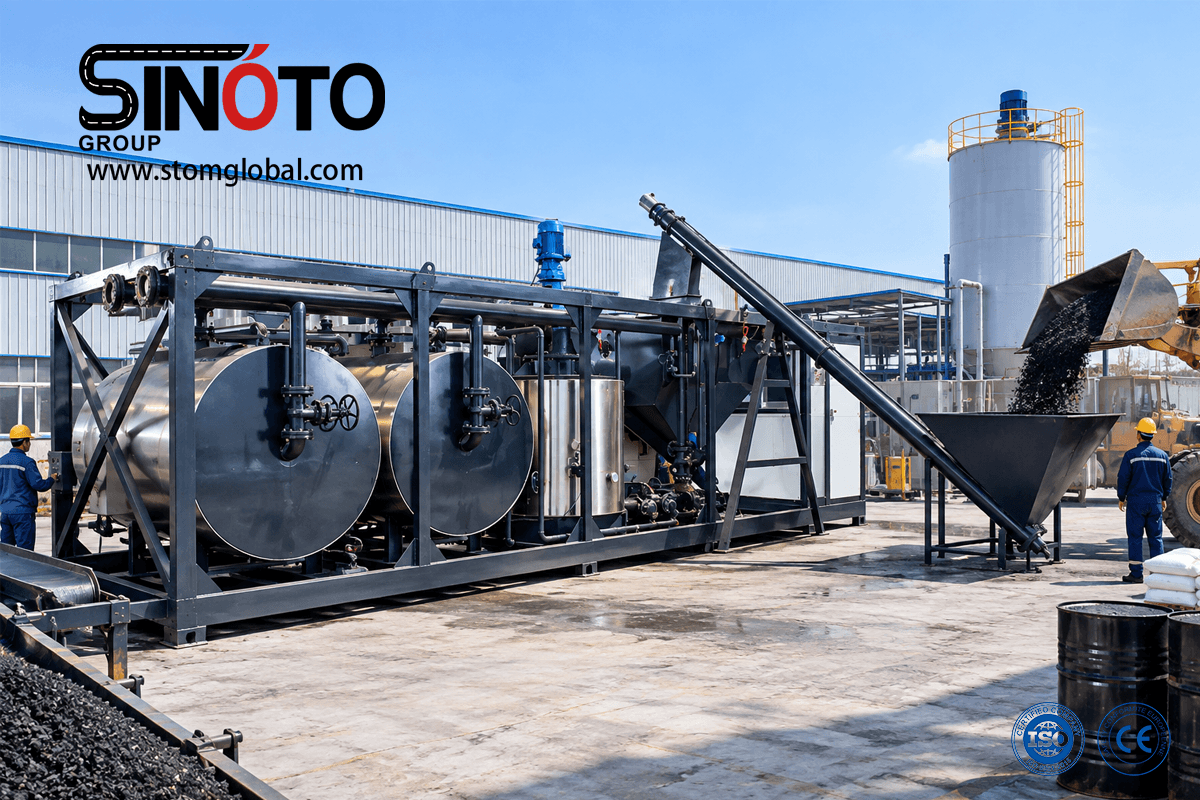
A crumb rubber modified bitumen plant isn’t a single-purpose machine — its output serves multiple layers of pavement structure and beyond:
| Application | Function |
|---|---|
| Road surface layer | Improves skid resistance, reduces road noise, limits rutting |
| Base and sub-base layers | Adds durability and long-term stability under traffic loads |
| Pavement preservation / resurfacing | Extends service life of aging roadways, reduces maintenance frequency |
| Waterproofing membranes | Used in basements, underground structures, and roofing systems |
| Airport runway paving | High-precision rubber dosing meets strict specification tolerances |
Tire recycling is the raw-material engine behind this entire category: converting end-of-life tires into crumb rubber modifier turns a disposal liability into a performance-enhancing pavement material, which is a major reason public agencies increasingly favor rubberized asphalt in bid specifications for highway construction and pavement preservation programs.
Once you’ve narrowed down capacity needs, evaluate suppliers on these points:
Getting several crumb rubber asphalt plant price quotes side by side, using the same tph capacity and control-system specification, is the most reliable way to compare value rather than headline price alone.
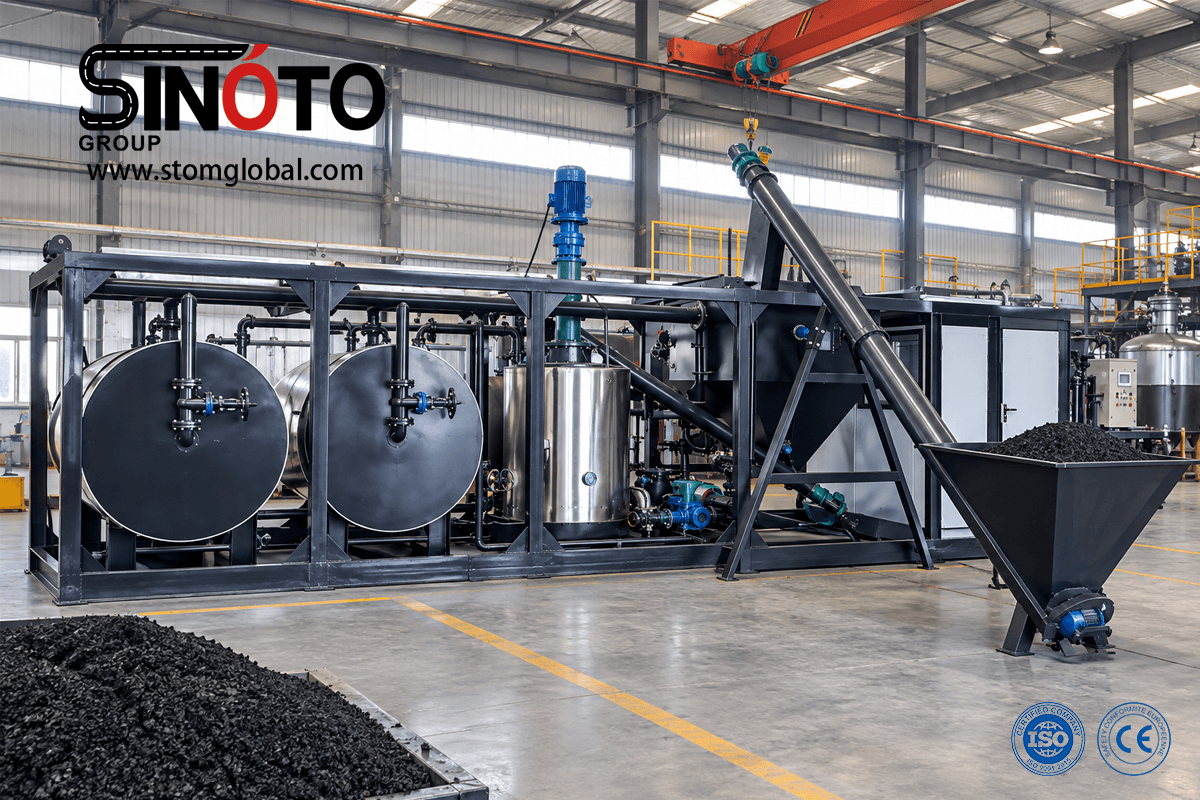
Pricing for a Crumb Rubber Modified Bitumen Plant depends on your required output, automation level, and optional reactor configuration — so the number that matters most is the one built around your actual project. Whether you need a compact 6 tph unit or a full 15 tph line for large-scale highway construction, sharing your target capacity and application lets a supplier build an accurate proposal instead of a generic estimate.
👉 Request a Free Quote for Your Crumb Rubber Modified Bitumen Plant
#CrumbRubberModifiedBitumenPlant #RubberizedAsphalt #TireRecycling #HighwayConstruction #PavementPreservation #RubberModifiedAsphalt

Whatsapp ID: 8619059581045

WeChat ID: +8619059581045

