If you are researching highway construction equipment or planning a pavement preservation project that relies on recycled tire rubber, the first question your procurement team will ask is simple: how much does a crumb rubber modified bitumen plant actually cost? The honest answer is “it depends” — but not in a vague way. The crumb rubber asphalt plant price is shaped by a handful of measurable factors: capacity, automation level, tank configuration, and after-sales support.
This guide breaks down exactly what drives the rubber modified bitumen plant price, compares capacity options (including the popular 10 tph rubber asphalt plant), and explains why more contractors and government road agencies are switching to crumb rubber modified asphalt plant systems for durable, eco-friendly pavements.
💡 Quick Answer: A crumb rubber modified bitumen plant for sale typically ranges from mid five figures to low six figures (USD), depending on capacity (6–15 tph), reactor configuration, and control automation. Contact a manufacturer directly for a project-specific quote, since freight, customization, and local installation requirements all affect the final number.
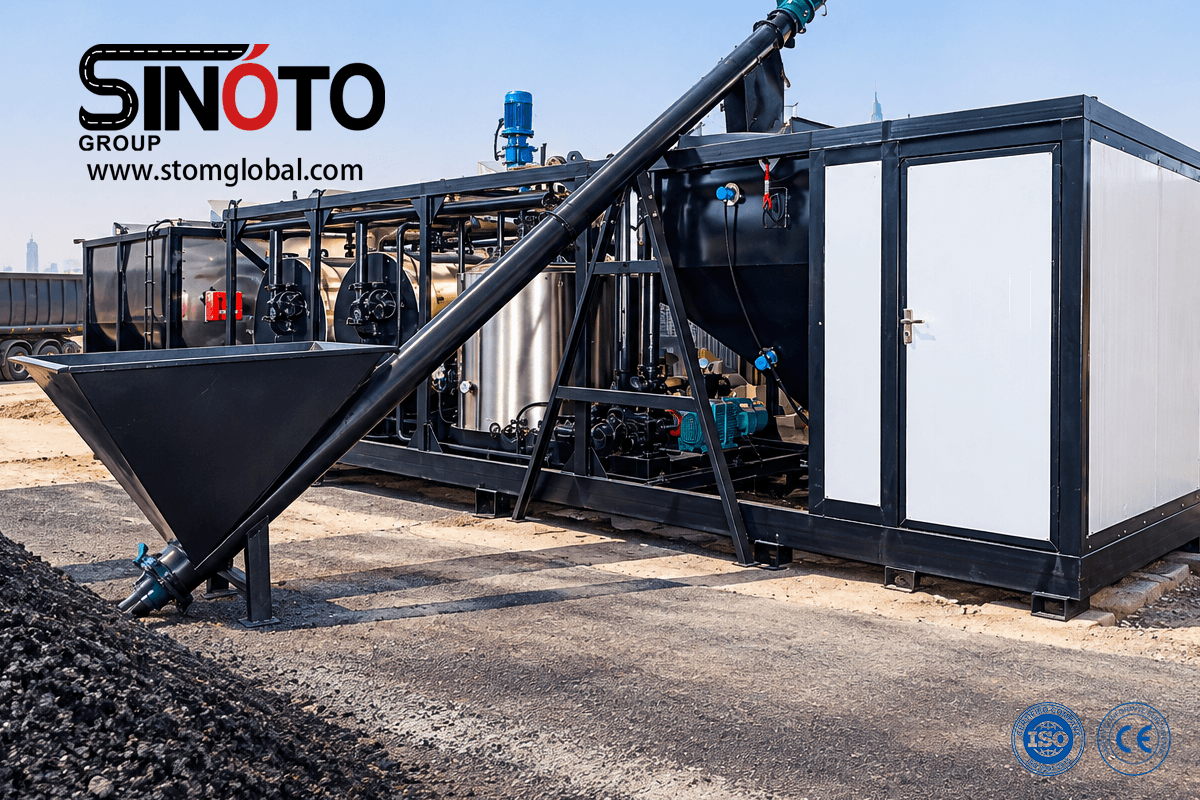
Unlike a standard hot-mix plant, a crumb rubber modified bitumen plant integrates a specialized digestion and high-shear mixing system, which means pricing is never a flat number. Buyers requesting a crumb rubber asphalt plant price quote should expect manufacturers to ask about the following variables first:
ℹ️ Info: Because the crumb rubber “digestion” phase (typically 45–60 minutes of controlled heating) is central to product quality, cutting corners on reactor size or control precision to save money often backfires — resulting in inconsistent binder elasticity and costly rework on highway construction projects.
| Price Driver | Lower-Cost Configuration | Higher-Cost Configuration |
|---|---|---|
| Capacity | 6 tph | 15 tph |
| Control System | Basic PLC | PLC + Industrial Computer, remote data output |
| Rubber Dosing | Standard weighing | High-precision loss-in-weight dosing |
| Reactor Tanks | Not included | Optional 10–20 m³ x 2 reactors |
| Mixing Tank | 1.5 m³ | 2.5 m³ |
Many buyers use “rubberized asphalt plant” and “crumb rubber modified bitumen plant” interchangeably, but a genuine industrial-grade unit needs to do more than blend materials — it needs to digest rubber into the bitumen matrix under precisely controlled heat and shear. This is what separates a true crumb rubber modified asphalt plant from a basic mixer.
Key technical distinctions worth checking before you compare any rubber modified bitumen plant price:
“CRMB significantly improves pavement durability and noise reduction. Asphalt rubber blending technology transforms waste tires into high-value binders, making it an eco-friendly choice for sustainable road construction.” — Technical FAQ, STOM Global
This is precisely why tire recycling through CRMB production has become one of the more commercially attractive uses of scrap tires worldwide: the recycled material becomes a performance-enhancing input rather than industrial waste.
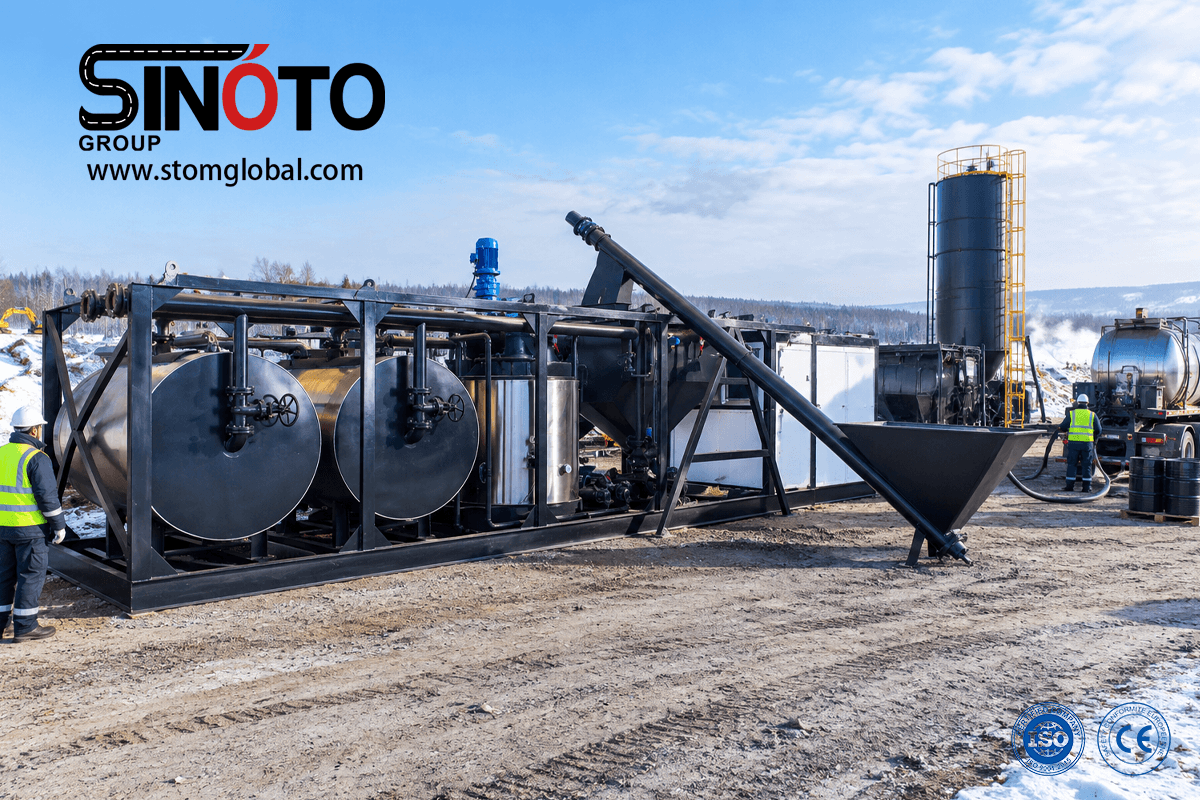
Beyond the sticker price, buyers evaluating a crumb rubber modified bitumen plant for sale should weigh total lifecycle value. Several performance and economic advantages consistently come up in project evaluations:
✅ Better long-term economics. While initial equipment and material costs can be modestly higher than conventional bitumen, rubberized asphalt pavements last longer and require fewer maintenance cycles — improving return on investment across the full highway construction lifecycle.
✅ Lower raw material cost at scale. Waste rubber powder is generally cheaper than SBS and other polymer modifiers, especially for large-volume pavement preservation programs.
✅ Continuous, 24-hour operation. Spiral plate heat exchangers rapidly raise bitumen temperature under sealed conditions, supporting continuous production without batch-interval downtime.
✅ Modular, container-friendly design. Integrated piping layouts and rock-wool insulated lines mean the plant can be transported and installed with minimal site work — connect the pipelines and power, and production can begin.
✅ Noise and safety benefits on the road. Pavements built with rubberized asphalt reduce tire noise and improve skid resistance, both valued by highway agencies managing high-traffic corridors.
ℹ️ Info: Applications extend beyond road surfacing. Modified bitumen produced by these systems is also used as a base material for waterproofing in basements, underground structures, and roofing systems — often blended with stone paint or fiberglass for enhanced performance.
Capacity is the single biggest lever on crumb rubber asphalt plant price, so it’s worth comparing the standard model range side by side. The table below summarizes the three most commonly ordered configurations.
| Model | Capacity | Mixing Tank | Mixer Motor Power | Bitumen Pump | Rubber Powder Silo |
|---|---|---|---|---|---|
| CRMB-6 | 6 t/h | 1.5 m³ | 5.5 KW | 9.89 m³/h, 3 KW | 4 m³ |
| CRMB-10 | 10 t/h | 2 m³ | 7.5 KW | 16.8 m³/h, 5.5 KW | 6 m³ |
| CRMB-15 | 15 t/h | 2.5 m³ | 11 KW | 24 m³/h, 7.5 KW | 5 m³ x 2 |
The 10 tph rubber asphalt plant tends to be the most popular mid-range choice for contractors balancing throughput against upfront investment — large enough for regional highway resurfacing programs, yet still compact enough for containerized shipping and modular site installation. All three models share the same core control philosophy: PLC and industrial-computer-based automatic and manual operation, frequency-converted bitumen pumping, and dual-mode thermal oil regulation that keeps temperature stable even if the heating furnace runs at reduced power.
📊 Data Point: Optional rubberized bitumen reactors scale with plant size — 10 m³ x 2 for the CRMB-6, 15 m³ x 2 for the CRMB-10, and 20 m³ x 2 for the CRMB-15 — allowing buyers to extend digestion capacity without upgrading the entire plant.
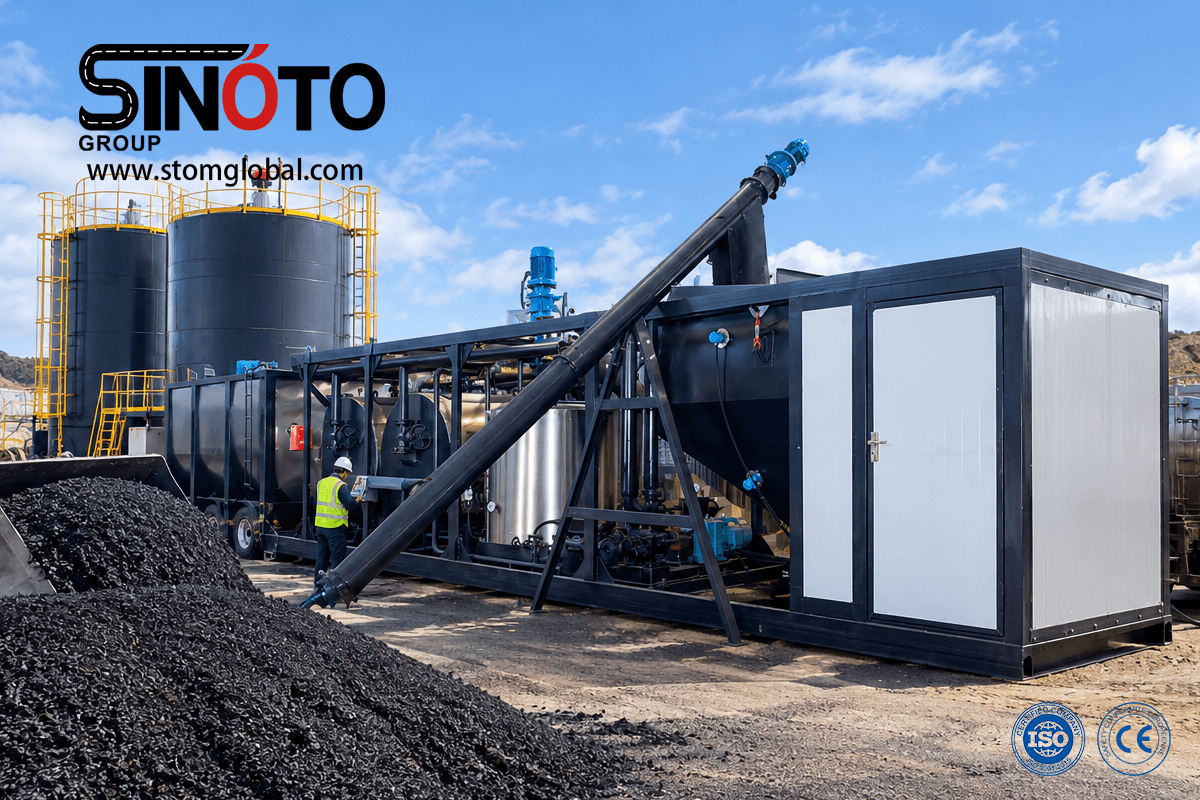
Because every project site, climate, and rubber powder source is slightly different, the most reliable way to determine an accurate rubber modified bitumen plant price is a direct technical consultation rather than a generic price list. When requesting quotes for a crumb rubber modified bitumen plant for sale, prepare the following information to get the most accurate figure quickly:
Sharing these details upfront typically shortens the quoting cycle from days to hours, since the manufacturer can match a model — CRMB-6, CRMB-10, or CRMB-15 — directly to your throughput needs instead of sending a generic price range.
Crumb rubber modified bitumen plant pricing depends on your specific capacity, automation, and reactor requirements — the fastest way to get an accurate number is to talk to the manufacturer directly.
#CrumbRubberModifiedBitumenPlant #RubberizedAsphalt #TireRecycling #HighwayConstruction #PavementPreservation #AsphaltPlant

Whatsapp ID: 8619059581045

WeChat ID: +8619059581045

