Short answer: yes. A continuous forced asphalt mixing plant adds a weighing system and a continuous twin-shaft mixer to the proven drum design. That upgrade lets it serve expressways, airports and other demanding projects, not only low-grade roads. For contractors who want reliable highway construction quality without the capital burden of a large batch plant, this hybrid deserves a serious look.
This guide uses the specifications of SINOTO’s DHL series to explain why the design works, what buyers usually worry about, and what to verify before you order.
📌 At a Glance
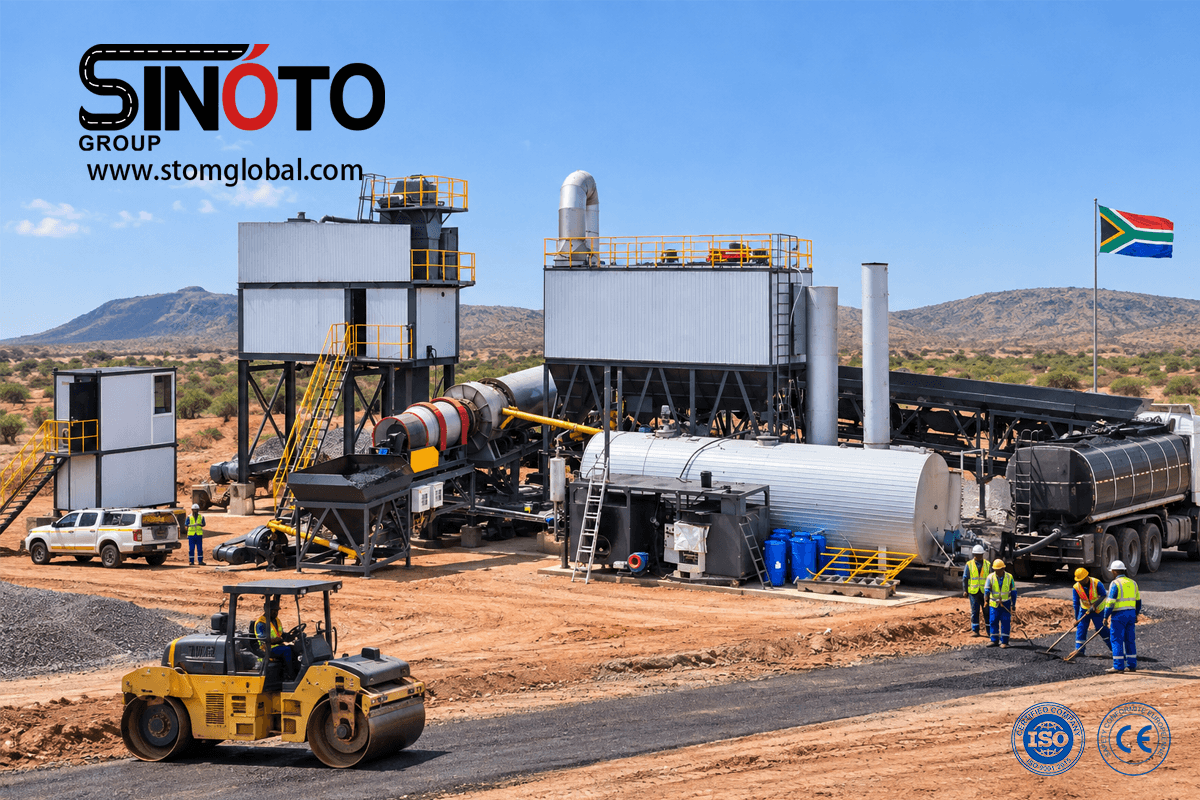
In a standard continuous asphalt plant, drying, bitumen spraying and mixing all happen inside the drying drum. This makes the design simple, compact and productive. However, it leaves little room for independent metering or a dedicated mixing stage. The twin-shaft upgrade separates those tasks and gives operators tighter control over the recipe.
Two changes matter most:
Because material keeps flowing without the pauses of batch cycles, continuous mixing also keeps output steady. That suits large highway jobs, where the paver should never wait for trucks.
💡 Key Insight
Highway mixtures rarely fail because of one big mistake. They fail through small inconsistencies: filler dosage that drifts, aggregate that is coated unevenly, temperature that swings. Better metering and forced mixing target exactly these problems.
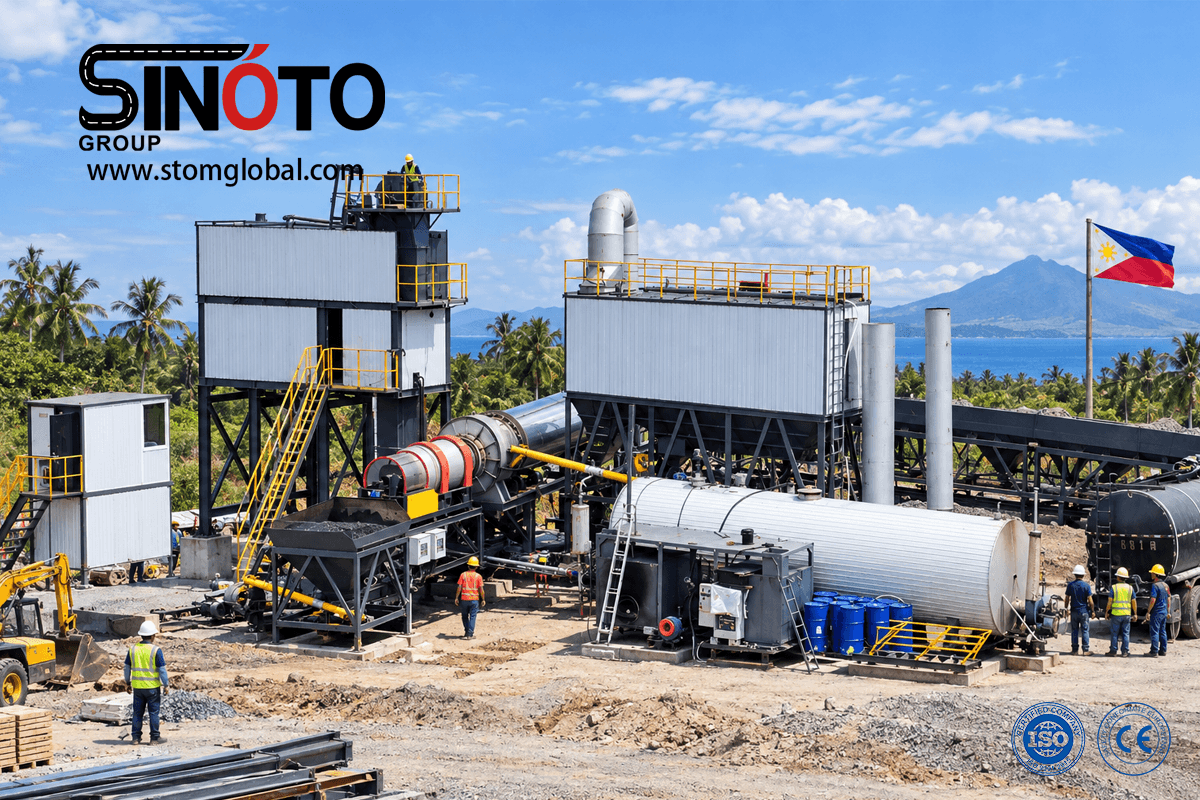
Buyers on highway tenders tend to raise the same five concerns. The table shows how the DHL series answers each one.
| Buyer Concern | What the DHL Series Offers |
|---|---|
| 🧪 Mix quality | Mineral powder weighing plus twin-shaft mixing for thorough, consistent blending |
| ⏱️ Output reliability | Continuous assembly-line operation with no waiting between intermediate steps |
| 💡 Operating cost | High thermal efficiency; lower fuel and electricity use per tonne than batch-type plants |
| 🌿 Environment | Dust collection at or above traditional forced plant levels; noise ≤70 dB |
| 🚚 Mobility and upkeep | Compact structure, quick installation and relocation, fewer wear-prone parts |
A few practical details are worth noting. The burner system accepts diesel, heavy oil, fuel oil, coal or natural gas, so you can match the plant to the cheapest local fuel. The dust system combines a primary gravity or cyclone collector with a baghouse. Voltage is adjustable across 220V, 380V and 440V at 50/60Hz, which simplifies overseas projects.
Control is also a choice. The plant is offered with manual operation or automatic computer control. For highway work with tight specifications, automatic control is usually worth specifying.
Buyer tip: ask any supplier how feed rates are calibrated and how the plant handles recipe changes. Continuous plants regulate material flow rather than weighing discrete batches, so calibration discipline matters. A well-specified continuous forced asphalt plant answers these questions clearly.
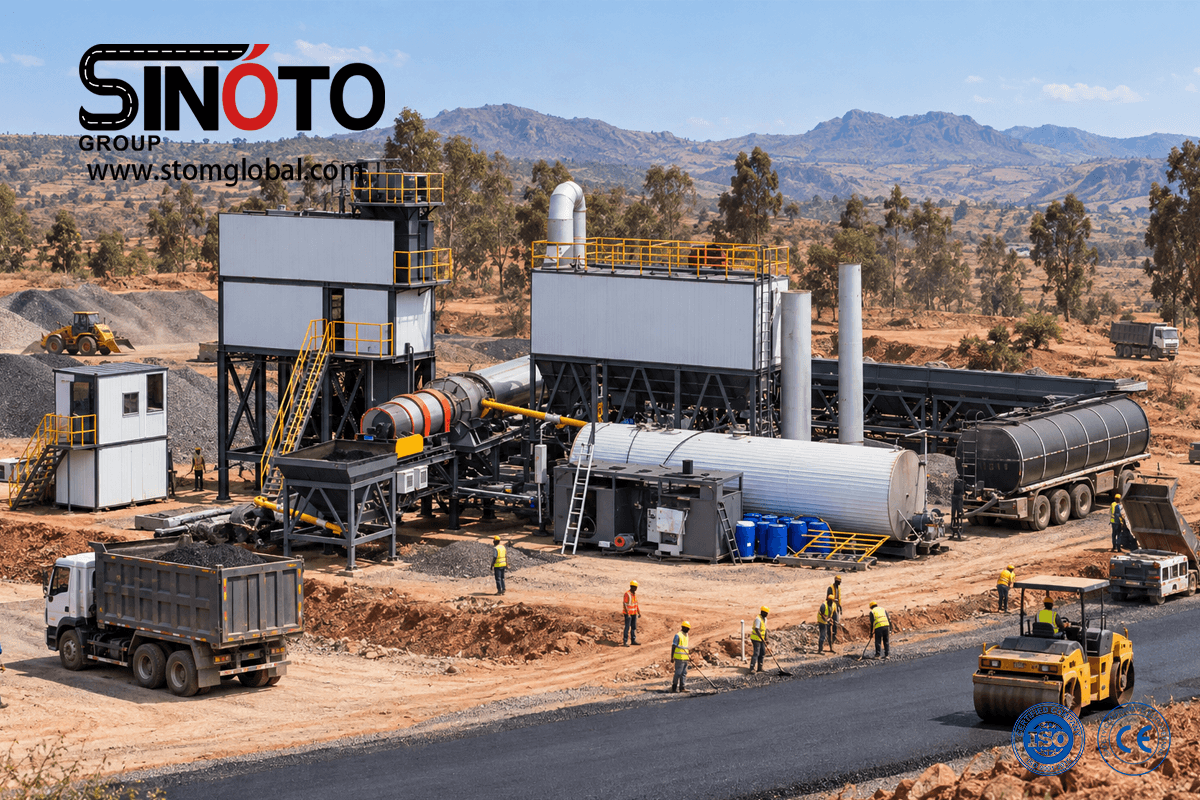
Many buyers search for a 120 tph asphalt plant because it matches mid-size project output. SINOTO’s DHL range does not list a model at exactly that figure. However, the DHL100 and DHL130 bracket it, and the DHL160 covers larger jobs. The product page also lists a 200 t/h option, so ask for its configuration if your schedule demands more.
| Parameter | DHL100 | DHL130 | DHL160 |
|---|---|---|---|
| ⚡ Capacity (t/h) | 100 | 130 | 160 |
| 🔌 Total Power (kW) | 223 | 290 | 354 |
| 🥁 Dryer Drum (mm) | Φ1500×7600 | Φ1800×8000 | Φ1980×10000 |
| 🌀 Mixer Capacity | 1.5 m³ | 2 m³ | 2.2 m³ |
| 🔧 Mixer Motor (kW) | 30 | 37 | 45 |
| 🏗️ Hot Mix Silo (m³) | 5.5 | 7.5 | 12 |
Specifications are for reference only; the manufacturer reserves the right to make changes.
All three models share the same core layout: cold aggregate feed system, drying drum, burner, dust collection, bitumen supply, twin-shaft mixer, pneumatic system and control system. Choose by matching hourly output to your paver speed and truck cycle, not by headline capacity alone. An oversized plant wastes fuel, while an undersized one leaves the paving crew idle. The larger hot mix silo on the DHL160 also gives extra buffer for long haul distances.
The product page does not publish prices, and that is normal. An asphalt mixing plant is configured to order, so any forced asphalt plant price quoted without specifications should be treated with caution. These factors move the twin shaft asphalt plant price most:
Before requesting quotes, prepare your target daily output, fuel type, site voltage and environmental requirements. Then compare offers line by line rather than by the bottom-line number.
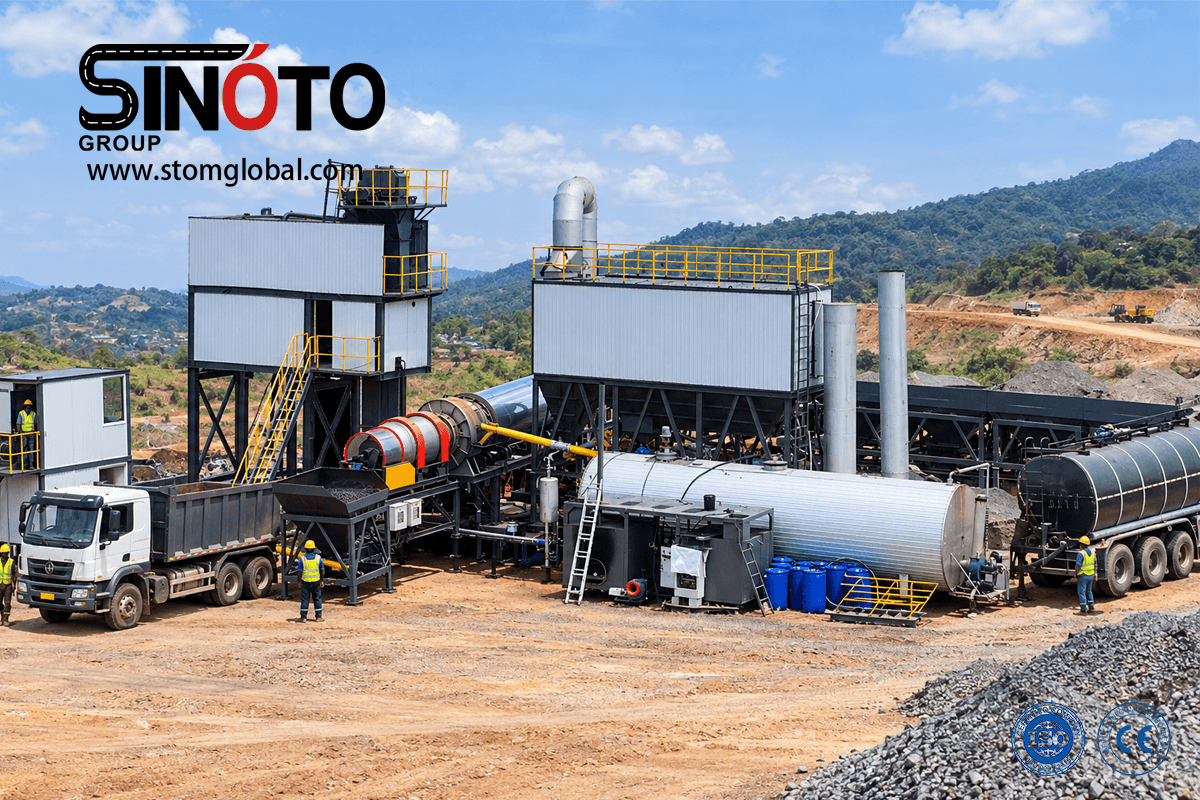
So, can a continuous forced asphalt mixing plant handle high-grade highway construction? Yes, provided it includes precise weighing, twin-shaft forced mixing, proper dust collection and a control system suited to your specifications. Choosing the right model and configuration is what turns low investment and continuous output into consistent high-quality asphalt production on real projects.
👉 Request a Free Quote and Technical Proposal from SINOTO
Send us your capacity target, fuel type and project location, and our engineers will recommend the right configuration.
#ContinuousForcedAsphaltPlant #AsphaltMixingPlant #HighwayConstruction #TwinShaftAsphaltPlant #AsphaltPlantForSale

Whatsapp ID: 8619059581045

WeChat ID: +8619059581045

