Every road-building contractor eventually asks the same question when scoping out a crumb rubber modified bitumen plant: how much crumb rubber should actually go into the bitumen? Get the ratio wrong, and you end up with a binder that separates, clogs pumps, or fails to deliver the elasticity that makes rubberized asphalt worth the investment in the first place. Get it right, and you unlock a pavement material that resists rutting, reduces noise, and dramatically extends the service life of highways.
This article breaks down the ideal crumb rubber modified bitumen plant ratio, why it matters for buyers evaluating a rubber modified bitumen plant for sale, and what to look for in equipment that can hold that ratio steady, batch after batch.
💡 Quick Answer: Most rubberized asphalt specifications call for a crumb rubber content of 18–24% by weight of bitumen (commonly referred to as the “wet process” or Arizona/PlusRide-style dosing), though this can range from 15% to 25% depending on regional standards, rubber gradation, and reaction/digestion conditions.
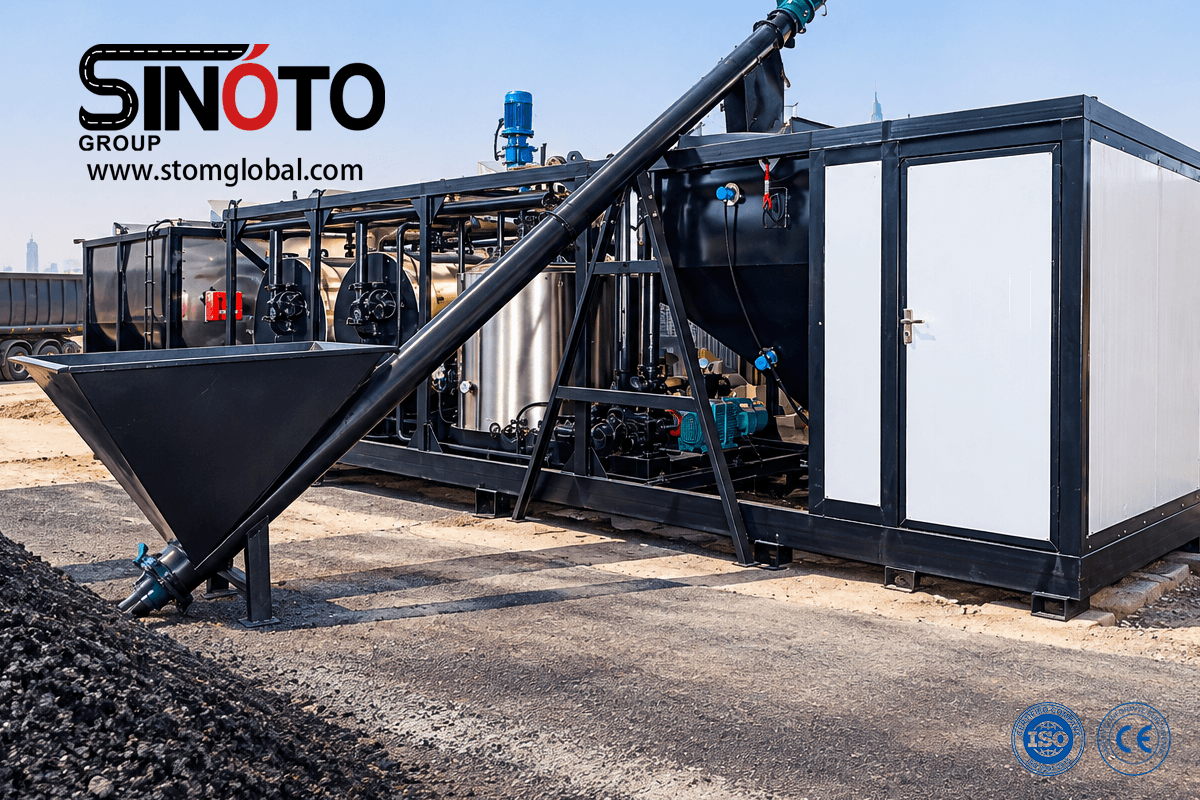
The rubber-to-bitumen ratio isn’t just a formula — it’s the difference between a binder that performs and one that fails on the road. When crumb rubber from recycled tires is blended into base asphalt inside a crumb rubber modified bitumen plant, the rubber particles absorb the lighter fractions (oils and resins) of the bitumen, swelling and softening under heat and shear. This “digestion” process is what gives rubberized asphalt its signature elasticity and crack-resistance.
If the ratio is too low (under 15%), the modified binder won’t develop enough elasticity to resist thermal cracking or rutting — you’re essentially paying for a specialty process without getting the performance benefit. If the ratio is too high (above 25%), the mixture becomes overly viscous, difficult to pump, and prone to rubber settling in storage tanks, which shortens equipment life and increases maintenance downtime.
✅ Key takeaway: The ratio directly determines:
Across global highway specifications, the most widely adopted range for a crumb rubber modified asphalt plant is:
|
Application |
Crumb Rubber Content (by bitumen weight) | Typical Reaction Time | Typical Reaction Temp |
|---|---|---|---|
| Surface course (wearing layer) | 18–22% | 45–60 minutes | 180–200°C |
| Base/binder course | 15–20% | 45–60 minutes | 175–195°C |
| Waterproofing membranes | 20–25% | 60–90 minutes | 180–200°C |
| Chip seal / crack sealing binder | 20–24% | 45–60 minutes | 180–200°C |
“The rubber powder dosing must meet exact project specifications for highway and airport runway paving — this is not a process where ‘close enough’ is acceptable.” — a principle echoed across CRMB technical standards worldwide.
Buyers comparing a rubber modified bitumen plant price across suppliers should ask a simple question: does the equipment use static (loss-in-weight) dosing or dynamic dosing? Static weighing systems are generally more accurate for holding the ratio steady at scale, which matters enormously once you’re running continuous 24-hour production for a major highway construction contract.
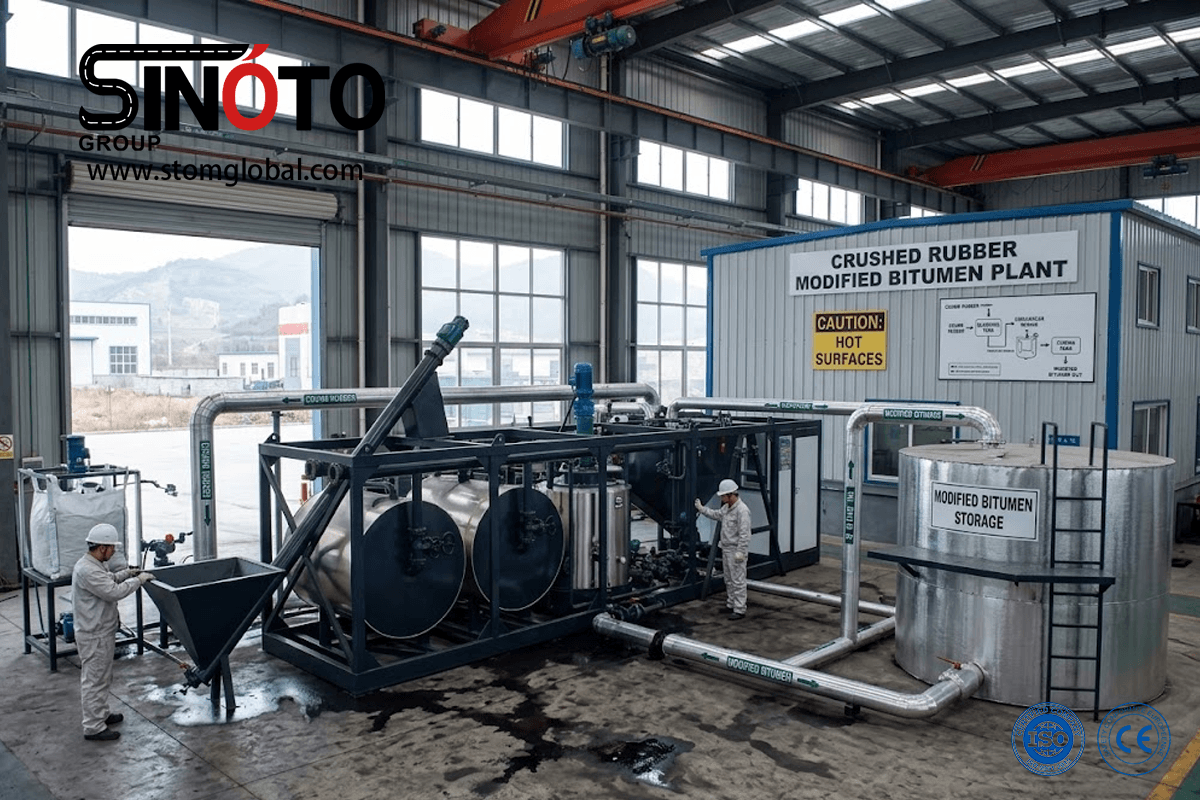
A 10 tph rubber asphalt plant — one of the most popular capacities for mid-size contractors and regional producers — relies on several integrated systems to hold the rubber-to-bitumen ratio within tolerance:
⚙️ PLC-Controlled Dosing: The rubber powder silo (typically 6m³ on a 10 TPH unit) feeds crumb rubber through a frequency-converting weighing elevator, ensuring the exact proportion is metered into the reactor batch after batch.
⚙️ High-Shear Mixing Tank: A 2m³ rapid mixing tank with a 7.5KW motor ensures the rubber particles are fully dispersed into the bitumen rather than clumping — a common failure point in lower-quality rubberized asphalt plant designs.
⚙️ Anti-Settling Agitation: High-torque paddles keep rubber particles in suspension throughout the digestion phase, so the ratio measured at dosing is the ratio that actually ends up in the finished binder — not skewed by settling before it reaches the paver.
⚙️ Rapid Heat Exchange: A spiral-plate heat exchanger can raise bitumen temperature by more than 50°C quickly, keeping the reaction on schedule without over- or under-cooking the rubber.
⚠️ Buyer’s tip: When evaluating any crumb rubber modified bitumen plant, ask the supplier to confirm whether rubber dosing is static or dynamic, and whether the reaction tank includes anti-settling agitation. These two features have an outsized impact on whether your plant consistently hits its target ratio.
Contractors often assume the ratio question is purely technical, but it has a direct financial dimension too. A well-controlled crumb rubber asphalt plant price calculation isn’t just about the upfront capital cost — it’s about total lifecycle economics:
📊 Capacity comparison for planning your investment:
| Model | Capacity | Mixer Motor | Rubber Powder Silo | Rubber Bitumen Pump |
|---|---|---|---|---|
| CRMB-6 | 6 t/h | 5.5KW | 4m³ | 30m³/h, 7.5KW |
| CRMB-10 | 10 t/h | 7.5KW | 6m³ | 30m³/h, 7.5KW |
| CRMB-15 | 15 t/h | 11KW | 5m³ × 2 | 30m³/h, 7.5KW |
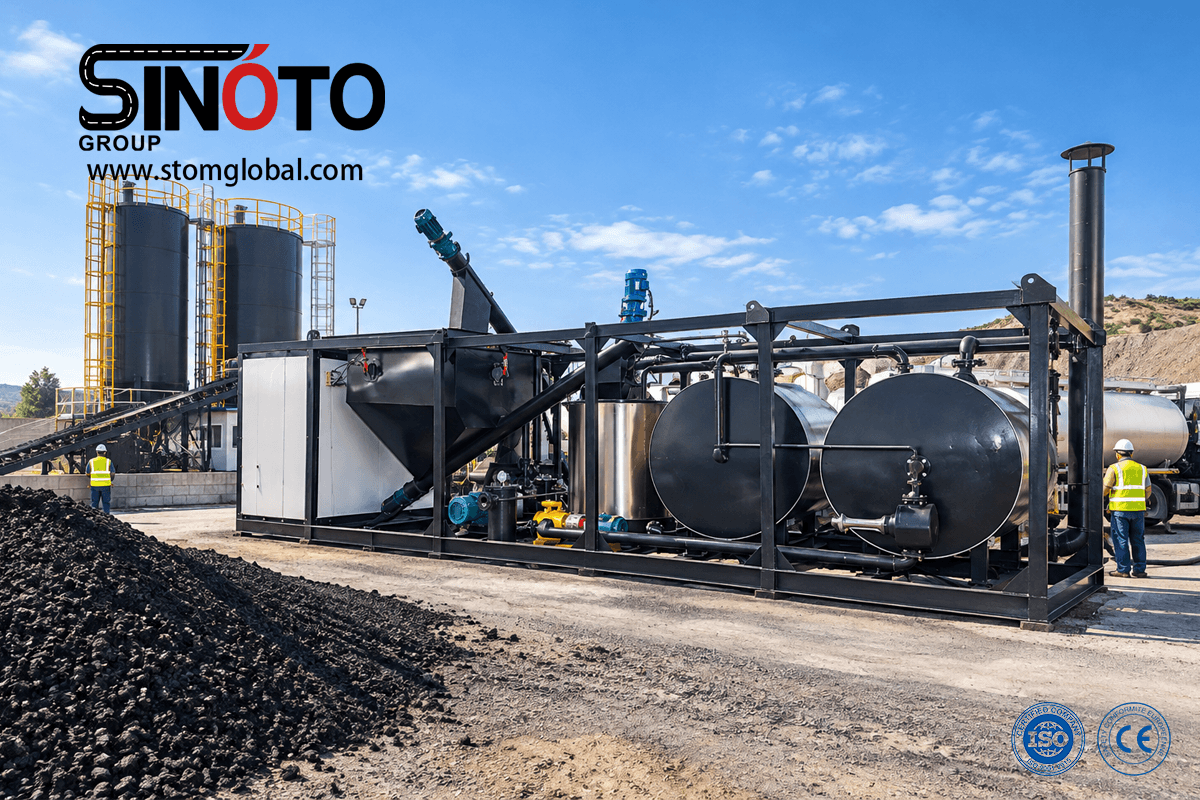
Beyond the ratio itself, it’s worth stepping back to ask why so many transportation departments are shifting toward crumb rubber asphalt in the first place. Pavement built with properly-modified binder shows measurably better performance in three areas that matter most for highway construction and pavement preservation programs:
For agencies and contractors weighing a rubberized asphalt plant investment, the ratio question ultimately comes back to equipment reliability: a plant that consistently hits the 18–24% target range, batch after batch, is what turns the theoretical performance benefits of CRMB into real-world results on the road.
If you’re comparing options for a crumb rubber modified bitumen plant, rubberized asphalt plant, or need an accurate crumb rubber asphalt plant price quote based on your target capacity — from 6 TPH up to 15 TPH — our engineering team can help you match the right dosing and reaction system to your project specifications.
👉 Request a Free Quote for Your Crumb Rubber Modified Bitumen Plant
#CrumbRubberModifiedBitumenPlant #RubberizedAsphalt #TireRecycling #HighwayConstruction #PavementPreservation #CrumbRubberAsphalt

Whatsapp ID: 8619059581045

WeChat ID: +8619059581045

