Anyone who has run a batch of rubberized asphalt through an undersized mixing tank knows the problem: leave the tank idle for even twenty minutes and the crumb rubber drops out of suspension, leaving an uneven binder and a headache for the paving crew. This is the single most common technical objection buyers raise before investing in a Crumb Rubber Modified Bitumen Plant, and it’s worth answering in detail — because the answer determines whether your rubberized asphalt performs for fifteen years or fails within two.
Industry insight: Crumb rubber particles can absorb up to nine times their own volume in light bitumen fractions during the digestion phase. Until that swelling reaches equilibrium, the rubber remains denser or lighter than the surrounding binder — which is exactly when settling and phase separation occur.
Below, we break down why settling happens, how a properly engineered crumb rubber modified bitumen plant solves it mechanically rather than chemically, what to check before buying, and how the technology connects to real-world highway construction and pavement preservation budgets.
Settling isn’t a flaw in the rubber — it’s a physics problem. Crumb rubber and base bitumen are, at the start of the process, two different materials with different densities. Rubber powder milled from recycled tires only becomes chemically compatible with bitumen after it has been heated, agitated, and given time to “digest” — swelling as it absorbs aromatic oils from the binder.
If a rubberized asphalt plant lacks continuous agitation during this window, three things happen:
⚠️ Buyer red flag: If a supplier’s tank design relies on a single low-speed mixer or, worse, no in-tank agitation at all, ask directly how they prevent stratification during holding and transfer. This is one of the fastest ways to separate serious manufacturers from assembly-line copycats.
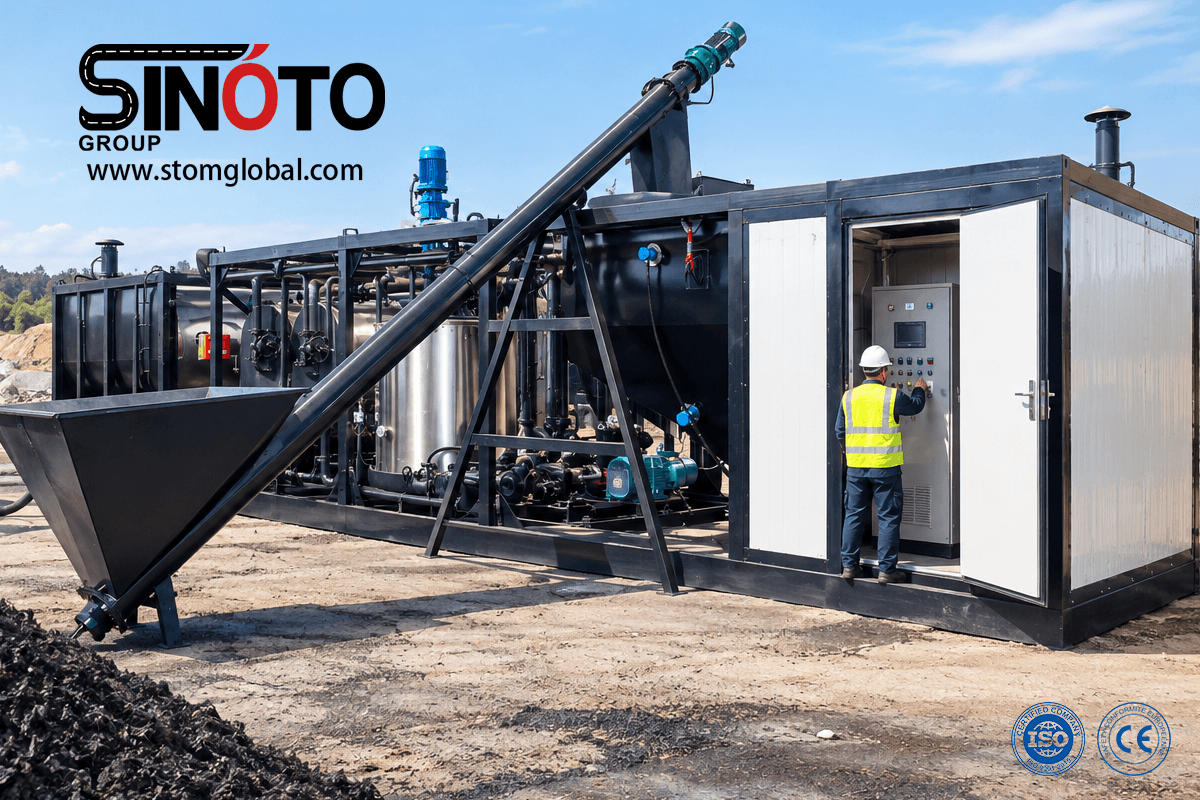
A well-designed crumb rubber modified asphalt plant solves settling through four integrated systems working together, not a single fix:
1. High-shear, high-torque mixing. Rather than a gentle stir, the mixer applies continuous shear force strong enough to keep rubber particles suspended throughout the entire reaction cycle — typically 45–60 minutes — while simultaneously accelerating the swelling process itself.
2. Anti-settling agitation in the holding and reaction tanks. Purpose-built paddles keep the mixture moving even during the digestion phase, when temptation is high to let the tank sit idle. This is what keeps the blend homogeneous from the first liter drawn to the last.
3. Precision temperature control. A PLC-controlled thermal oil system regulates bitumen temperature within a tight band. Too cold, and rubber won’t swell; too hot for too long, and rubber begins to depolymerize and lose the elasticity that makes rubberized asphalt valuable in the first place.
4. Frequency-converting pump control. Heavy-duty, high-viscosity rubber-bitumen pumps — engineered specifically for the thick consistency of modified binder — keep the blend circulating even during transfer, preventing the settling that often occurs in transit between tanks.
📊 Reference specifications (illustrative model range for a modular crumb rubber modified bitumen plant):
| Parameter | CRMB-6 | CRMB-10 | CRMB-15 |
|---|---|---|---|
| Capacity | 6 t/h | 10 t/h | 15 t/h |
| Mixer motor power | 5.5 kW | 7.5 kW | 11 kW |
| Rapid mixing tank | 1.5 m³ | 2 m³ | 2.5 m³ |
| Rubber powder silo | 4 m³ | 6 m³ | 5 m³ × 2 |
| Rubber bitumen pump | 30 m³/h, 7.5 kW frequency control | Same | Same |
| Reaction cycle | Automatic PLC-controlled, ~45–60 min | Same | Same |
A 10 tph rubber asphalt plant, for instance, sits in the sweet spot for mid-size contractors and regional road agencies — large enough for continuous highway resurfacing programs, compact enough to transport in modular, containerized sections.
Settling resistance is only one factor. When comparing any rubber modified bitumen plant for sale, buyers researching crumb rubber modified bitumen plant options consistently focus on a short list of decision points:
“The technology bottleneck for crumb rubber modified bitumen has never been the rubber itself — it’s achieving a stable, homogeneous blend without phase separation during storage and transport.” — a recurring theme across CRMB engineering literature over the past two decades.
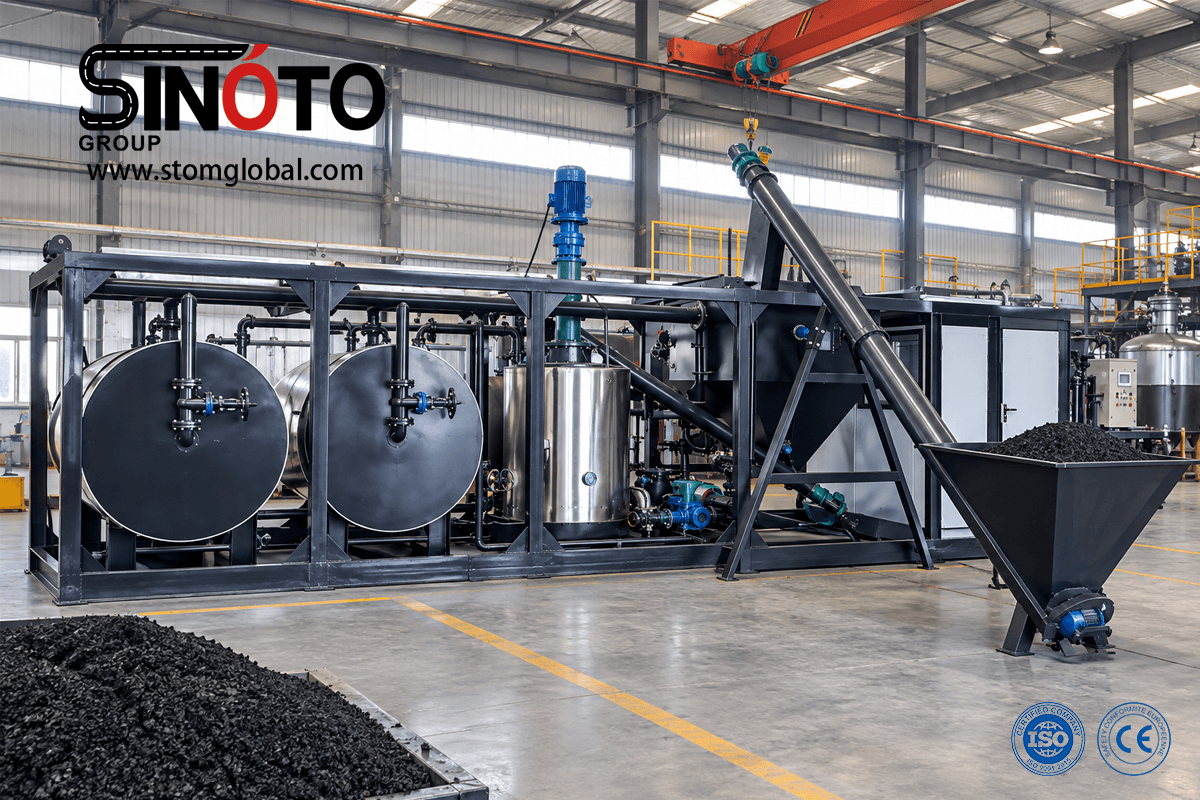
The crumb rubber asphalt plant price varies significantly by capacity, automation level, and optional equipment such as dedicated rubberized bitumen reactors. A few cost drivers buyers should factor into any comparison:
| Cost Factor | Impact on Price | Impact on ROI |
|---|---|---|
| Capacity (6 / 10 / 15 tph) | Higher capacity = higher upfront cost | Lower cost-per-ton at scale |
| Anti-settling / high-shear tech | Moderate premium | Prevents rejected batches, rework |
| PLC automation level | Moderate premium | Reduces labor, improves consistency |
| Rubberized bitumen reactor (optional) | Add-on cost | Increases digestion capacity for large jobs |
| Modular/containerized design | Slightly higher unit cost | Lower installation and relocation cost |
It’s worth noting that rubber modified bitumen plant price should always be evaluated against life-cycle cost, not just sticker price. Waste rubber powder is typically cheaper than SBS or other polymer modifiers, especially at scale, and rubberized pavement generally requires fewer maintenance cycles over its service life — which is precisely why road agencies increasingly specify it for pavement preservation programs where every maintenance cycle avoided translates directly into budget savings.
💡 Quick tip: When comparing quotes, ask each supplier to break down price by subsystem (mixing, heating, dosing, pumping) rather than accepting a single lump sum. This makes it far easier to compare a genuine rubber modified bitumen plant for sale against a stripped-down unit missing critical anti-settling components.
Beyond the mechanical case for stable, settling-free binder, there’s a broader argument driving adoption of crumb rubber modified asphalt plant technology worldwide: every ton of crumb rubber asphalt produced consumes a meaningful volume of scrap tires that would otherwise go to landfill. Tire recycling through asphalt modification turns an environmental liability into a performance-enhancing raw material — a genuine circular-economy story that increasingly matters to public-sector procurement decisions.
On the performance side, rubberized asphalt used in highway construction delivers several measurable advantages once settling and blend stability are properly controlled:
None of these benefits materialize, however, if the plant producing the binder can’t keep crumb rubber in suspension long enough for full digestion. That’s why the settling question isn’t a side detail — it’s the core engineering challenge that separates a plant capable of highway-spec output from one that produces inconsistent, off-grade material.
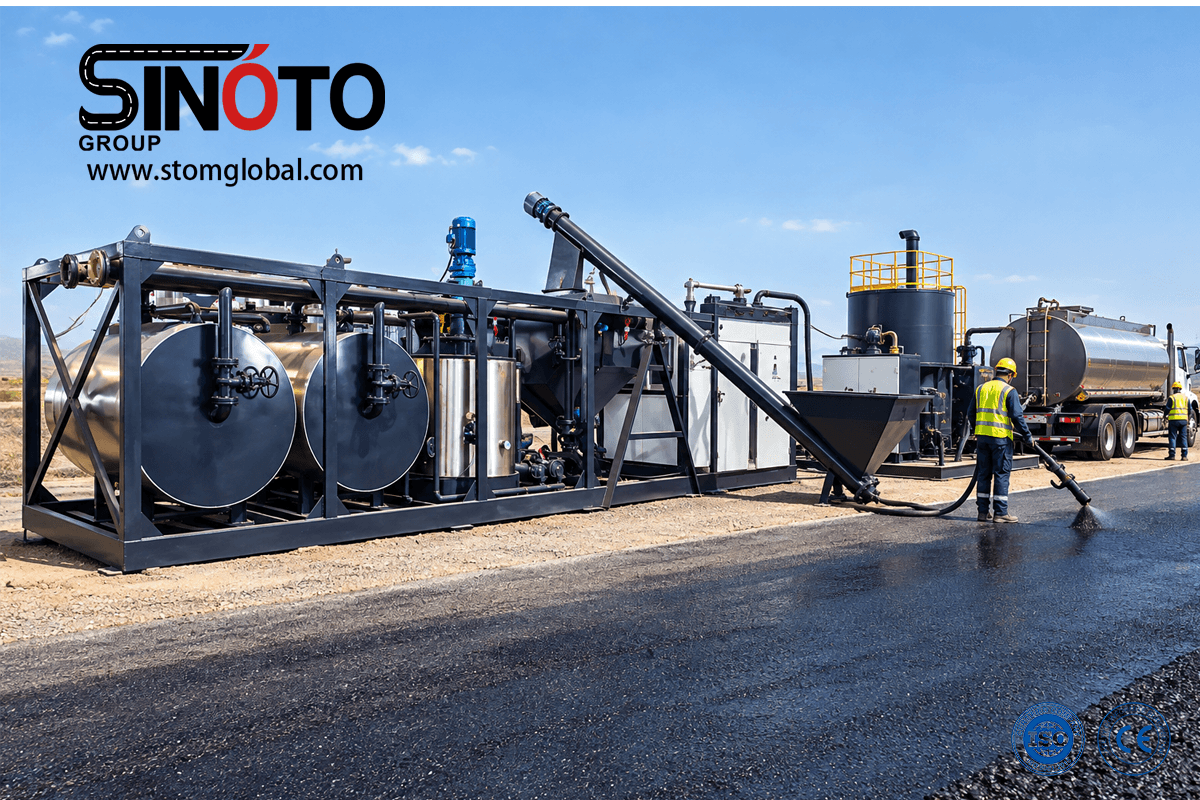
Preventing crumb rubber from settling comes down to four things working in concert: continuous high-shear agitation, precision temperature control, anti-settling paddle systems in every holding tank, and heavy-duty pumps built for high-viscosity transfer. Any crumb rubber modified bitumen plant worth buying should be able to explain, specifically, how each of these systems addresses stratification — not just that the equipment “prevents settling” in a spec sheet.
If you’re evaluating a rubberized asphalt plant, a 10 tph rubber asphalt plant for a regional paving program, or comparing crumb rubber asphalt plant price across suppliers, the settling question is the right place to start every technical conversation.
👉 Request a Free Quote and Technical Consultation
#CrumbRubberModifiedBitumen #RubberizedAsphalt #TireRecycling #HighwayConstruction #PavementPreservation #AsphaltPlantEquipment

Whatsapp ID: 8619059581045

WeChat ID: +8619059581045

