When contractors, asphalt plant operators, and road maintenance teams compare a jumbo bag bitumen melting machine, one question shows up in almost every inquiry: how long does it take to melt one ton of bitumen? The honest answer depends on rated capacity, heating design, and site conditions. For a modern jumbo bag bitumen melter rated at 5–12 tons per hour, throughput works out to roughly 5 to 12 minutes per ton once the system reaches working temperature.
This guide turns that figure into something you can plan around. We look at what changes melting time, compare the STBD-6 and STBD-10 models from Sinoto, and explain what to confirm before you request a jumbo bag bitumen melting machine for sale. If you are also planning bulk bitumen handling and bitumen storage for a new project, the sections below will help you frame that decision.
| ⏱️ Time per Ton | 🏭 Capacity | 📦 Bag Size | 🔥 Heating |
|---|---|---|---|
| ≈ 5–12 minutes* | 5–12 tph | 1-ton jumbo bags | Thermal oil / flue gas recovery |
*Theoretical throughput at rated capacity, once the system is at operating temperature.
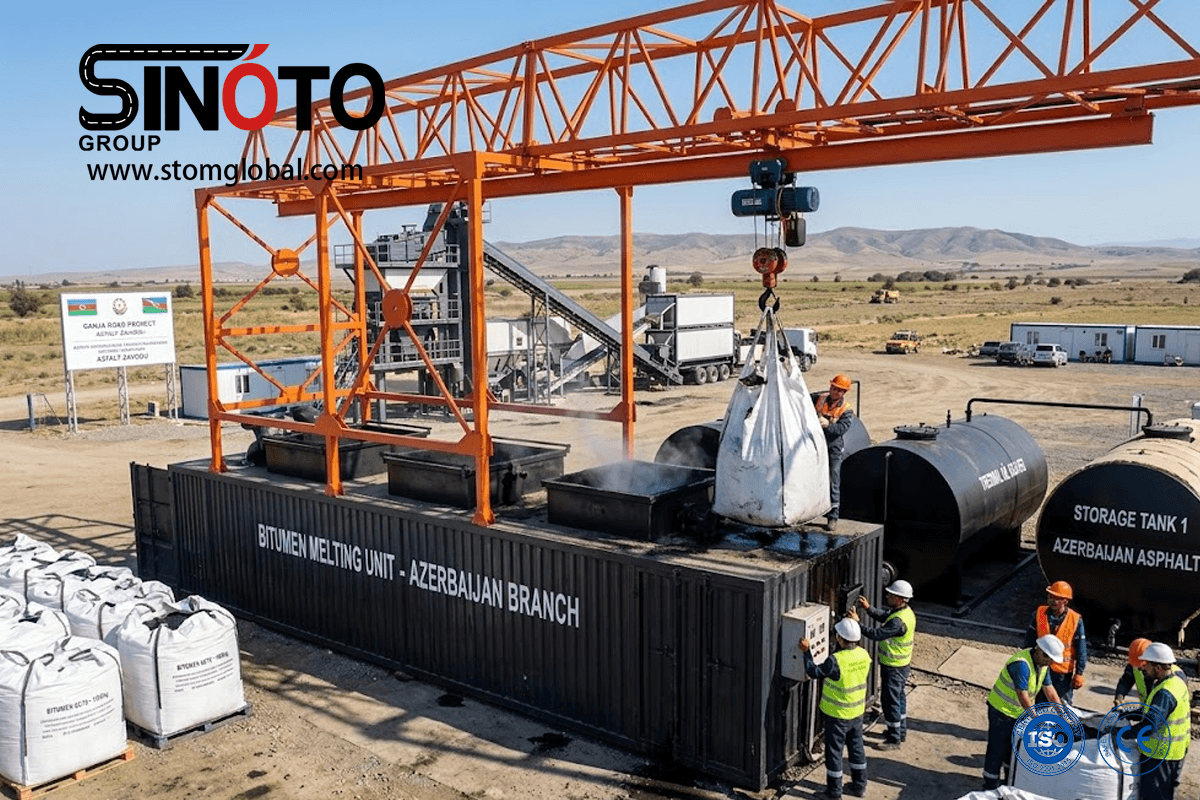
Start with simple arithmetic. Capacity for any bitumen melting machine is quoted in tons per hour (tph), so the time to melt one ton equals 60 minutes divided by the tph rating. Sinoto rates the STBD-6 at 5–6 tph and the STBD-10 at 10–12 tph, which gives these theoretical figures:
| Model | Rated Capacity | Time per Ton (Theoretical) | Output per 8-Hour Shift |
|---|---|---|---|
| STBD-6 | 5 tph | 12 minutes | 40 tons |
| STBD-6 | 6 tph | 10 minutes | 48 tons |
| STBD-10 | 10 tph | 6 minutes | 80 tons |
| STBD-10 | 12 tph | 5 minutes | 96 tons |
These are steady-state numbers. They assume the thermal oil circuit and melting pool are already at operating temperature and that bags are loaded without gaps. In real projects, the first ton of the day takes longer because the system must heat up first. Every ton after that follows the rated pace. Warm-up time varies with ambient temperature and heating configuration, so ask the manufacturer for a figure that matches your site.
💡 Key Takeaway: For planning, use 10–12 minutes per ton as the working benchmark for the STBD-6 and 5–6 minutes per ton for the STBD-10. Continuous bag loading matters as much as the heater rating.
Here is a practical example. Suppose a chip seal crew needs 30 tons of hot bitumen per day. An STBD-6 running at 5 tph needs about six hours of melting, or five hours at 6 tph. An STBD-10 covers the same volume in roughly three hours at 10 tph. That difference decides how many crews you can support from one machine.
Each jumbo bag holds about one ton, so the rated capacity also tells you how many bags to stage. At 6 tph, a crew hoists about six bags per hour, and at 12 tph about twelve. A 1 ton bag bitumen melter with a 2-ton electric hoist and several feeding ports is designed to keep that rhythm going. A smaller unit comfortably supports a slurry seal or micro surfacing crew. A larger jumbo bag bitumen melting machine can keep an asphalt mixing plant or a polymer modified bitumen plant supplied without interruption.
Two machines with the same headline capacity can perform differently in the field. These are the factors that matter most:
Heating method is another variable. Buyers can choose between an oil burner, a thermal oil furnace, an external thermal oil connection, or built-in diesel or gas burners. Customized electric heating is also available. If your site already runs a thermal oil furnace for an asphalt plant, connecting the melter to it may reduce capital cost and simplify operation.
Discharge matters too. A good bulk bag asphalt melter should recover the bitumen without leaving residue in the bag. The manufacturer states that its bag suspension and residual-free discharge system recovers all of the material. That protects both your melting rate and your material cost, since bitumen left in the bag is bitumen you paid for but cannot use.
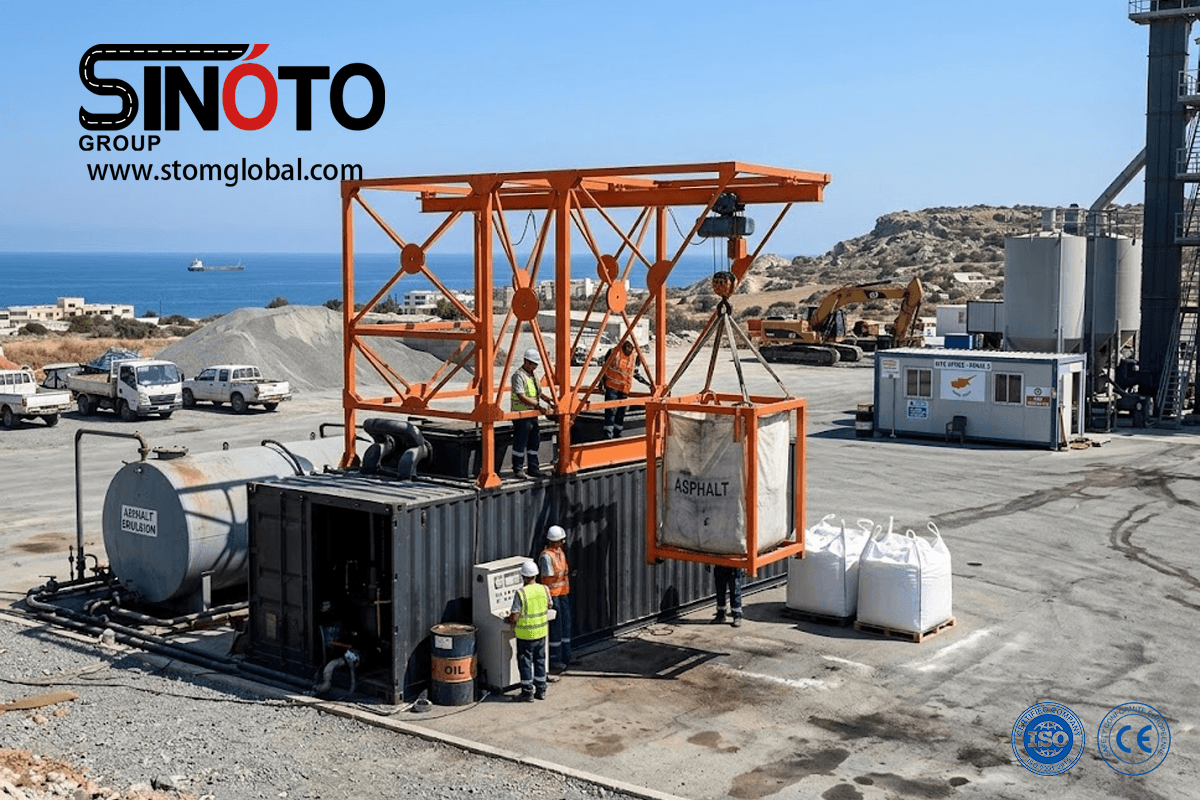
Choosing between the two models comes down to daily tonnage, available space, and how many bags your crew can realistically handle. Here is a side-by-side view of the published specifications:
| Parameter | STBD-6 | STBD-10 |
|---|---|---|
| Productive capacity | 5–6 tph | 10–12 tph |
| Feeding ports | 3 | 5 |
| Max. hoisting capacity | 2,000 kg | 2,000 kg with two hoists |
| Melting pool capacity | 32 m³ | 80 m³ (35 + 45) |
| Bitumen pump capacity | 16.8 m³/h | 24 m³/h |
| Total power | 15 kW | 22 kW |
| Total weight | 12,000 kg | 20,000 kg |
| Working dimensions (L×W×H) | 16,000×2,250×6,500 mm | 16,000×7,000×6,500 mm |
| Transport dimensions (L×W×H) | 11,500×2,250×2,450 mm | 11,500×2,250×2,450 mm, 2 pcs |
As a rule of thumb, the STBD-6 suits slurry seal, micro surfacing, and chip seal contractors, plus mid-size asphalt plants with demand around 40–48 tons per shift. The STBD-10 is built for larger asphalt mixing plants, modified bitumen production, and high-volume distribution, where 80–96 tons per shift is the target. Both models use a skid-mounted melting chamber, and the hoisting structure is bolted together, so they are easy to ship and relocate.
What about price? Buyers searching for a bitumen bag melter price or a jumbo bag bitumen melter price should know that no single figure applies. Cost varies with the model, the heating method, local power and fuel conditions, and shipping to your port. Instead of comparing only the sticker price, compare the cost per ton melted. Throughput, fuel consumption, labor, and bitumen recovery all feed into it. When you ask for a jumbo bag bitumen melter price, share the details below so the quotation is accurate:
Beyond speed, buyers usually raise five concerns. The jumbo bag format addresses each of them:
Compared with steel drums, which typically hold around 180–200 kg, one jumbo bag carries about a ton. That means fewer lifts, less packaging waste, and less manual handling. For crews working far from a bitumen terminal, a bulk bag asphalt melter with an integrated hoist also reduces the need for extra cranes on site. This is why so many buyers now treat the jumbo bag bitumen melter as the core of their bulk bitumen handling setup.
Storage completes the picture. Melted bitumen has to go somewhere, and the melter’s bitumen storage chamber and auxiliary tank hold it at temperature until your distributor, mixing plant, or modification unit needs it. Good bitumen storage design keeps production steady, so crews are not forced to stop when downstream demand changes. Since bitumen is supplied in bags, drums, or bulk in different regions, a flexible bitumen melting machine lets you buy from whichever source is most economical.
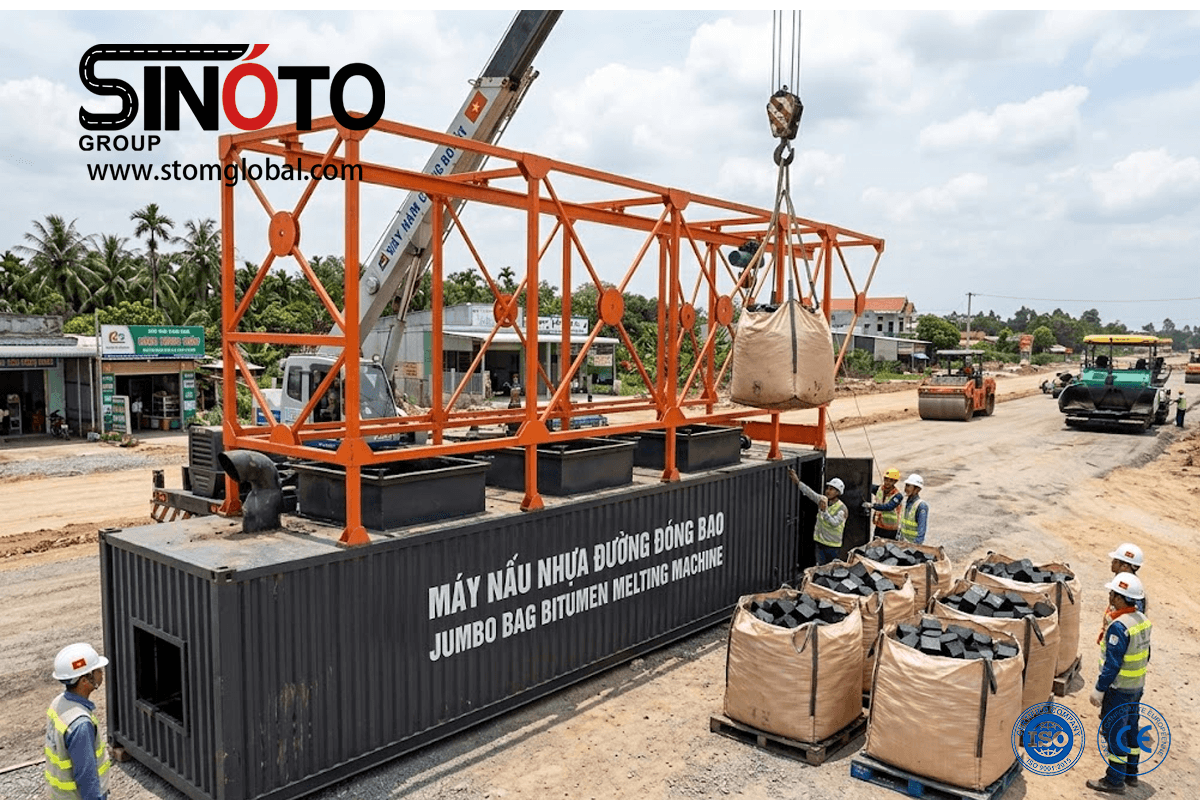
So, how long does it take to melt one ton of bitumen? With a Jumbo Bag Bitumen Melting Machine rated at 5–12 tph, the theoretical answer is about 10–12 minutes per ton for the STBD-6 and 5–6 minutes per ton for the STBD-10. Actual results depend on warm-up, heating method, bitumen grade, ambient temperature, and how steadily bags are loaded. The best way to confirm performance is to give the manufacturer your tonnage, site conditions, and heating preference.
📩 Ready to size your melter? Request a Quote for a Jumbo Bag Bitumen Melting Machine for Sale →
Ask about bitumen bag melter price, delivery, and customization. You can also email info@stomglobal.com or WhatsApp +86-190 5958 1045.
#BitumenMeltingMachine #JumboBagBitumenMelter #BulkBitumenHandling #BitumenStorage #RoadConstruction #AsphaltEquipment

Whatsapp ID: 8619059581045

WeChat ID: +8619059581045

