If you are evaluating a jumbo bag bitumen melting machine for a road maintenance, slurry seal, or asphalt plant project, fuel consumption is probably one of the first numbers you want to see. It decides your daily operating cost, the size of the burner you need, and how much diesel your crew must haul to site. Yet many supplier pages list only capacity and electrical power, and leave fuel out entirely. This guide closes that gap. We reviewed the specifications of the Sinoto STBD-6 and STBD-10 models, applied standard heat-transfer calculations, and converted the results into practical figures you can use for budgeting and equipment selection.
💡 Quick Answer: A well-designed jumbo bag bitumen melter typically burns about 10–16 litres of diesel per ton of bitumen (roughly 8.5–13.5 kg) to melt it and bring it to pumping temperature. For a 5–6 tph unit, that equals about 50–95 litres per hour at full load. These are engineering estimates: your exact figure depends on climate, target temperature, and burner type.
Fuel consumption is not one fixed number, because it depends on how much heat the bitumen must absorb and how efficiently the machine delivers that heat. The physics gives us a reliable starting point.
Bitumen has a specific heat of roughly 2.0 kJ/kg·K. Raising one ton of solid bitumen from 20 °C to a typical pumping temperature of 150–170 °C, including the energy needed to soften it, requires about 300–330 MJ of useful heat. Diesel contains about 36 MJ per litre, so at 100% efficiency the theoretical demand is only 8–9 litres per ton.
No bitumen melting machine is 100% efficient. Flue gas leaves the stack hot, thermal oil pipes lose some heat, and the melting pool radiates energy into the air. A modern jumbo bag bitumen melter with thermal oil heating, flue gas recovery, and good insulation usually reaches 65–85% overall efficiency. That brings real-world consumption to roughly 10–14 litres per ton, and up to 16 litres once start-up, holding, and cold-weather losses are included. Natural gas and LPG burners land in a similar range on an energy basis.
What does this mean per bag? For a 1 ton bag bitumen melter, each bag consumes approximately 10–16 litres of diesel. A crew processing 40 bags in one shift would therefore use about 400–640 litres, a useful number when sizing your on-site fuel tank.
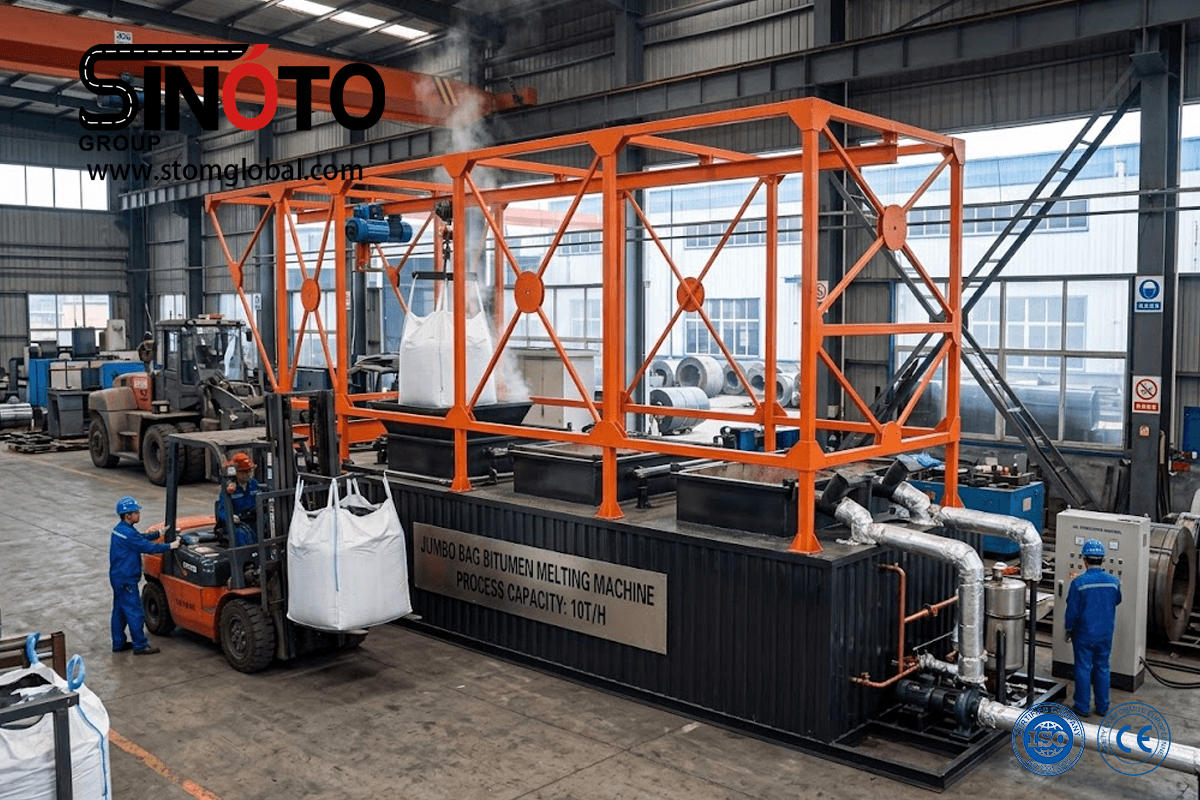
Two bitumen melting machines with the same rated output can produce very different fuel bills. Six factors matter most:
The heating source also changes the picture. The Sinoto jumbo bag bitumen melting machine can be configured with an external thermal oil connection, built-in diesel or gas burners, or a customised electric heating solution. If your site already runs a thermal oil furnace, for example at an asphalt plant, the melter can use that heat source instead of adding a separate burner.
When you shortlist a jumbo bag bitumen melting machine for sale, compare models on the same basis. The table below combines the published specifications with our estimated fuel figures, based on 10–16 litres per ton.
| Parameter | STBD-6 | STBD-10 |
|---|---|---|
| Productive capacity | 5–6 tph | 10–12 tph |
| Feeding mouths | 3 | 5 |
| Melting pool | 32 m³ | 80 m³ (35 + 45) |
| Bitumen pump capacity | 16.8 m³/h | 24 m³/h |
| Hoisting | 2,000 kg, 3 m height | 2,000 kg with two hoists, 3 m height |
| Total electric power | 15 kW | 22 kW |
| Total weight | 12,000 kg | 20,000 kg |
| Est. diesel use at full load | 50–95 L/h | 100–190 L/h |
| Est. diesel per 8-hour shift | 400–770 L | 800–1,540 L |
Fuel rows are estimates; all other rows are published specifications.
The electric power figure covers the hoists, bitumen pump, and controls in a typical configuration. Heat comes from the burner or thermal oil furnace, so the fuel line matters far more than the kilowatt rating when you calculate operating cost. The large melting pools also give you buffer capacity for bitumen storage, which lets the pump feed a distributor, emulsion plant, or mixing plant at a steady rate.
📌 Buyer tip: Ask every supplier to quote fuel consumption at your ambient temperature, bitumen grade, and discharge temperature, not at ideal test conditions. A figure without those three inputs cannot be compared fairly.
As a rule of thumb, the STBD-6 suits contractors handling roughly 40–50 tons per shift, such as municipal maintenance teams and slurry seal crews. The STBD-10, with five feeding mouths and two hoists, is built for large highway projects and central supply points that need 80–95 tons per shift.
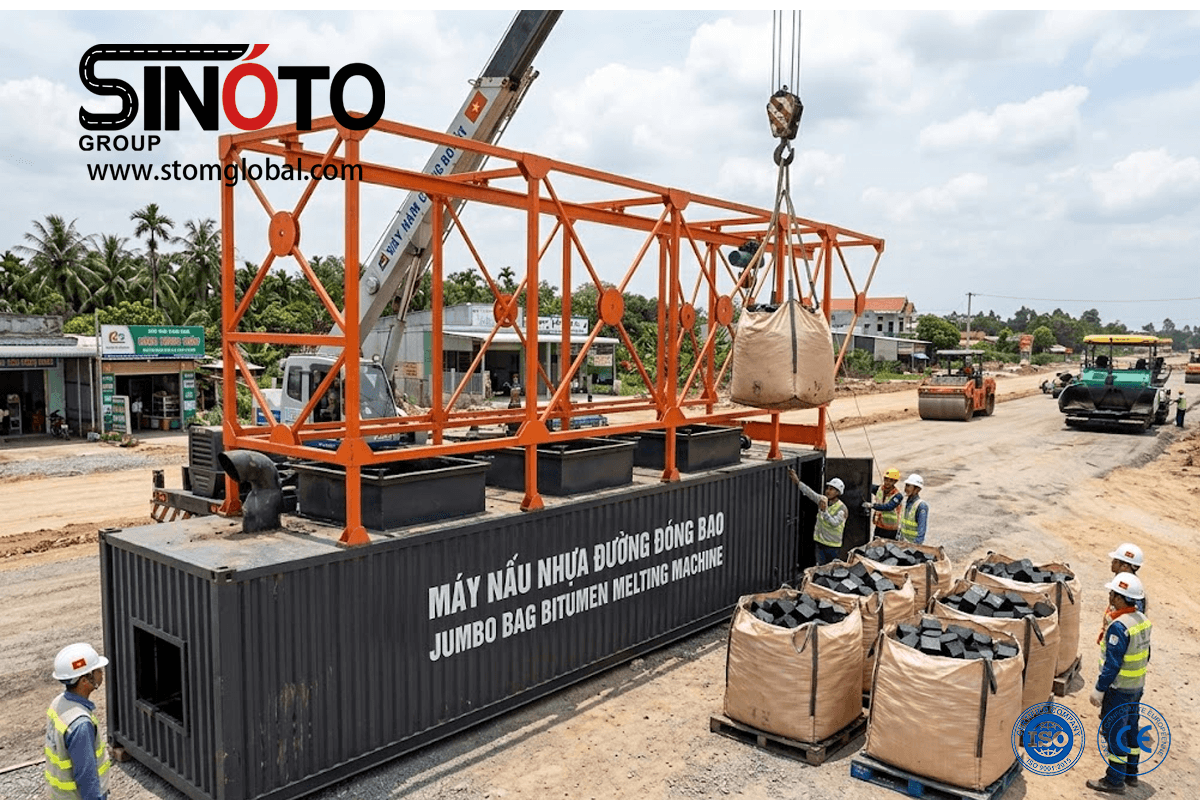
Many buyers search for a jumbo bag bitumen melter price first, but the purchase price is only one part of the story. A cheaper unit with poor insulation can cost more than a better-built one within a single season through fuel alone. Compare total cost of ownership instead.
The main drivers of any bitumen bag melter price are rated capacity (STBD-6 or STBD-10), the number of feeding ports, the heating method, the hoist configuration, the control system (centralised or PLC), and packing for shipment. Because configurations vary by project, quotes are prepared individually. To see how fuel fits into your budget, use the illustrative table below.
| Diesel price | 10 L/ton | 13 L/ton | 16 L/ton |
|---|---|---|---|
| US$0.80 per litre | US$8.0 | US$10.4 | US$12.8 |
| US$1.00 per litre | US$10.0 | US$13.0 | US$16.0 |
| US$1.20 per litre | US$12.0 | US$15.6 | US$19.2 |
Fuel cost per ton of bitumen melted (illustrative).
Even at the high end, fuel adds less than US$20 to each ton of bitumen melted. The larger savings come from avoiding waste and handling costs, which is why the jumbo bag bitumen melter price should always be judged alongside these benefits:
Sinoto’s design is built around one idea: move heat into the bitumen, not into the atmosphere. The machine has two parts. The first is a skid-mounted melting chamber with 3–5 feeding ports and a heating chamber. Heat-transfer oil pipes sit under each port, and a four-way high-temperature smoke pipe in the heating bin warms the bitumen quickly. The second is a bolt-together hoisting structure with a 2-ton electric hoist, assembled on site so the equipment can travel within standard transport height limits.
The result is a bulk bag asphalt melter that combines five practical advantages:
For contractors on remote or fast-moving projects, a bulk bag asphalt melter also reduces dependence on tankers and fixed heated tanks. Melted bitumen can be pumped into your existing bitumen storage tanks or fed straight to distributors, emulsion plants, and polymer-modified bitumen plants. Compared with a drum decanter, a bulk bitumen melting machine designed for 1-ton bags handles far more material per lift, which shortens loading time and lowers labour cost.
The bottom line: Expect roughly 10–16 litres of diesel per ton, or about 50–95 L/h for the STBD-6 and 100–190 L/h for the STBD-10 at full load. Insulation, heat recovery, and accurate temperature control decide where a machine falls in that range. When you compare any bitumen melting machine, ask for fuel data under your own site conditions, and weigh it alongside safety, residue recovery, and mobility.
📩 Want an exact fuel figure for your project? Send us your bitumen grade, ambient temperature, daily tonnage, and preferred fuel type. Our engineers will recommend the right Jumbo Bag Bitumen Melting Machine and prepare a tailored quotation.
👉 Request a Free Quote / Send Your Inquiry Now
✉️ info@stomglobal.com | 📱 WhatsApp: +86 190 5958 1045
#JumboBagBitumenMelter #BitumenMeltingMachine #BulkBitumenHandling #AsphaltEquipment #RoadConstruction

Whatsapp ID: 8619059581045

WeChat ID: +8619059581045

