Contractors evaluating a new slurry sealing paver almost always ask two practical questions before they ask about price: how many people does it take to run the machine, and how steep is the learning curve for the crew? These two questions matter more than most spec sheets admit, because labor cost and training time directly affect the return on investment of any slurry seal paver truck. A machine that needs a five-person crew and a month of training is a very different purchase from one that a two-person team can run confidently in a single week.
This article breaks down the real-world crew requirements, control systems, and ease-of-use factors for a modern bitumen slurry truck, using the SINOTO Slurry Sealing Paver line as the reference platform. Whether you are comparing an asphalt slurry seal machine for sale from several manufacturers or trying to plan staffing for your next micro-surfacing project, the answers below should help you budget both money and manpower correctly.
💡 Quick answer: A modern intelligent slurry seal paver truck, such as the SINOTO STSP series, typically requires only 2–4 operators — one driver/main operator and 1–3 support staff for material loading and finishing checks — thanks to automated ratio control and one-button start-stop systems.
A slurry sealing paver (also called a micro-surfacing paver) is a self-propelled or truck-mounted unit that mixes emulsified asphalt, graded aggregate, filler, additives, and water into a uniform slurry, then spreads that slurry onto the road surface at a controlled thickness. It is the core machine used for preventive maintenance treatments such as lower seal coats, standard micro-surfacing, and fiber-reinforced micro-surfacing — the fixes that address raveling, minor rutting, and reduced skid resistance before they turn into structural failures.
Crew size matters for three practical reasons:
ℹ️ Info: Older, manually-controlled slurry seal equipment often needed 4–6 crew members just to manage aggregate feed, binder ratio, and spreading box adjustments by hand. Automation has changed that math significantly on newer machines.
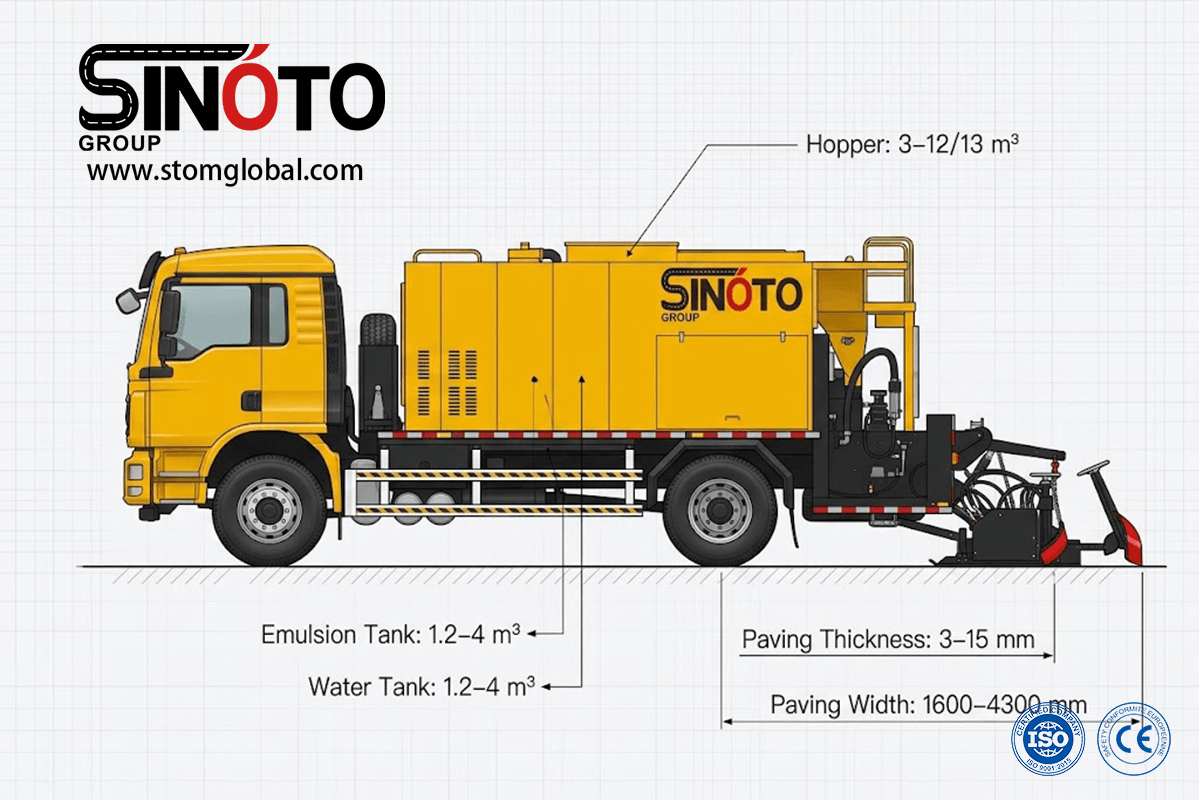
For the SINOTO slurry sealing paver range (models STSP5110TFC through STSP5139TFC1), the realistic operating crew breaks down as follows:
| Role | Number of People | Primary Responsibility |
|---|---|---|
| Main Operator / Driver | 1 | Controls truck movement, paving speed, and the central electronic control panel |
| Mixing & Material Attendant | 1 | Monitors aggregate hopper, emulsion tank, water tank, and filler feed levels |
| Ground/Finishing Support | 1–2 | Checks spreading width, edge lines, and surface finish behind the paving box |
| Loader Operator (optional, off-machine) | 1 | Feeds aggregate into the hopper from a separate loader, on continuous large-scale jobs |
In practice, most contractors run a sinoto slurry seal paver truck with a core crew of 2 to 4 people on the machine itself, plus a loader operator feeding material if the job requires continuous large-volume paving without stopping to reload.
This is possible because the truck’s automatic asphalt-aggregate ratio control system continuously adjusts material output to match driving speed in real time. That single feature removes the need for a dedicated technician to manually recalculate and adjust mixing ratios every time the truck accelerates or slows down — a task that used to require its own skilled operator on older-generation asphalt slurry seal truck models.
Ease of operation comes down to how much of the process is automated versus manually controlled. Several design features on the SINOTO slurry seal paving machine are specifically built to shorten the learning curve for new crews:
“The goal of an intelligent slurry sealer isn’t just speed — it’s making sure a two-person crew can achieve the same consistency an experienced five-person crew used to deliver on manual equipment.” — Industry perspective on micro surfacing slurry equipment automation trends.
Combined, these features mean that most road maintenance crews can become reasonably proficient with the machine within a few days of hands-on training, rather than the weeks sometimes required for fully manual asphalt slurry equipment.
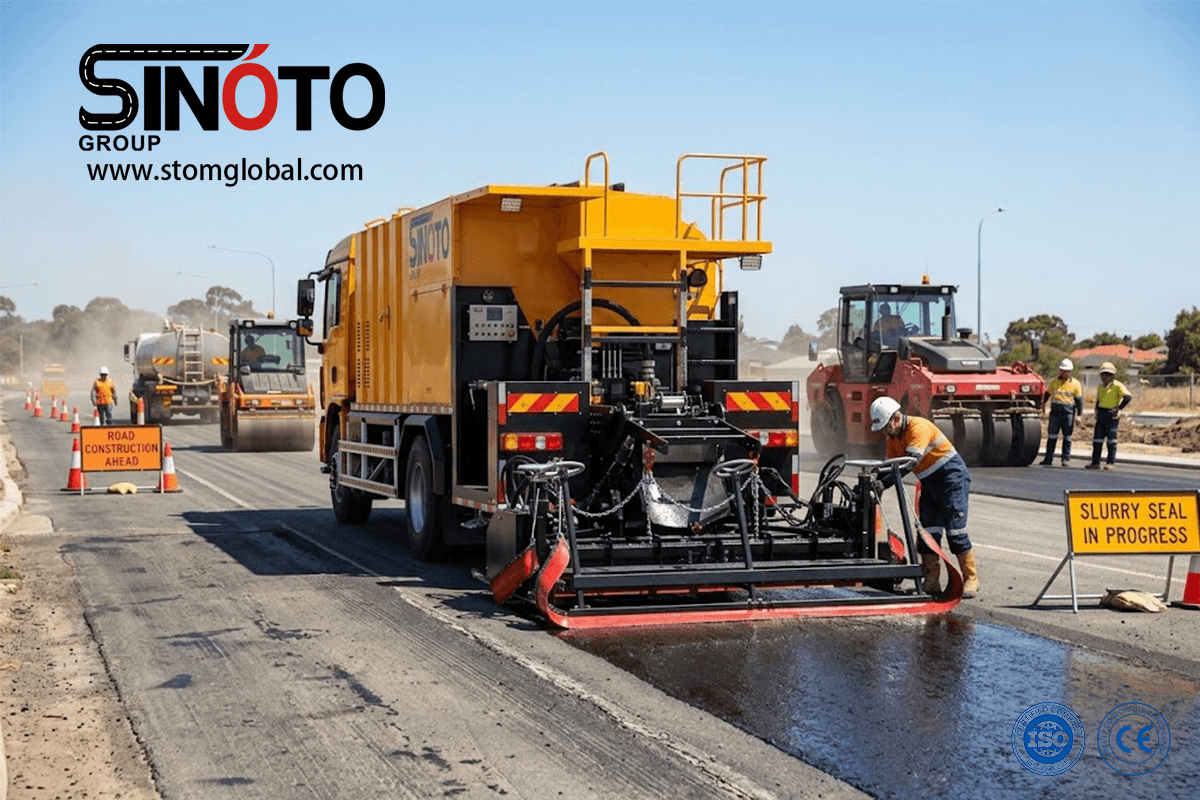
It helps to see the contrast directly. Here’s how a modern intelligent bitumen slurry truck compares operationally to older, manually-controlled slurry seal trucks still common in some fleets:
| Factor | Traditional Manual Slurry Seal Truck | Modern Intelligent Slurry Seal Truck (e.g., SINOTO STSP Series) |
|---|---|---|
| Typical crew size | 4–6 operators | 2–4 operators |
| Ratio control | Manual adjustment required at each speed change | Automatic, real-time adjustment |
| Startup/shutdown | Multi-step manual sequence | One-button start-stop |
| Training time for new hires | 2–4 weeks | Several days to 1–2 weeks |
| Mix consistency | Dependent on operator skill and attentiveness | Controlled by electronic feedback system |
| Paving width adjustment | Manual mechanical adjustment | Pre-set, control-panel adjustable |
ℹ️ Info: This comparison assumes similar hopper and tank sizes. Larger machines — such as the 8×4 chassis STSP5138TFC or STSP5139TFC with 11–13 m³ aggregate hoppers — may still benefit from an additional ground support worker simply because of the larger paving width (2500–4300mm) and higher material throughput (up to 3.5T/min mixer discharge), not because the controls themselves are harder to use.
If you’re comparing multiple options for an asphalt slurry seal machine for sale, crew size and ease of use should be evaluated alongside the usual specs — hopper capacity, paving thickness range, and chassis type. A few practical questions to ask any supplier:
For contractors and municipalities weighing a slurry seal truck purchase, these questions often matter more for total project economics than the sticker price alone. A slightly more expensive machine that lets you run a 2-person crew instead of a 5-person crew will typically pay for the difference within one or two seasons of continuous use.
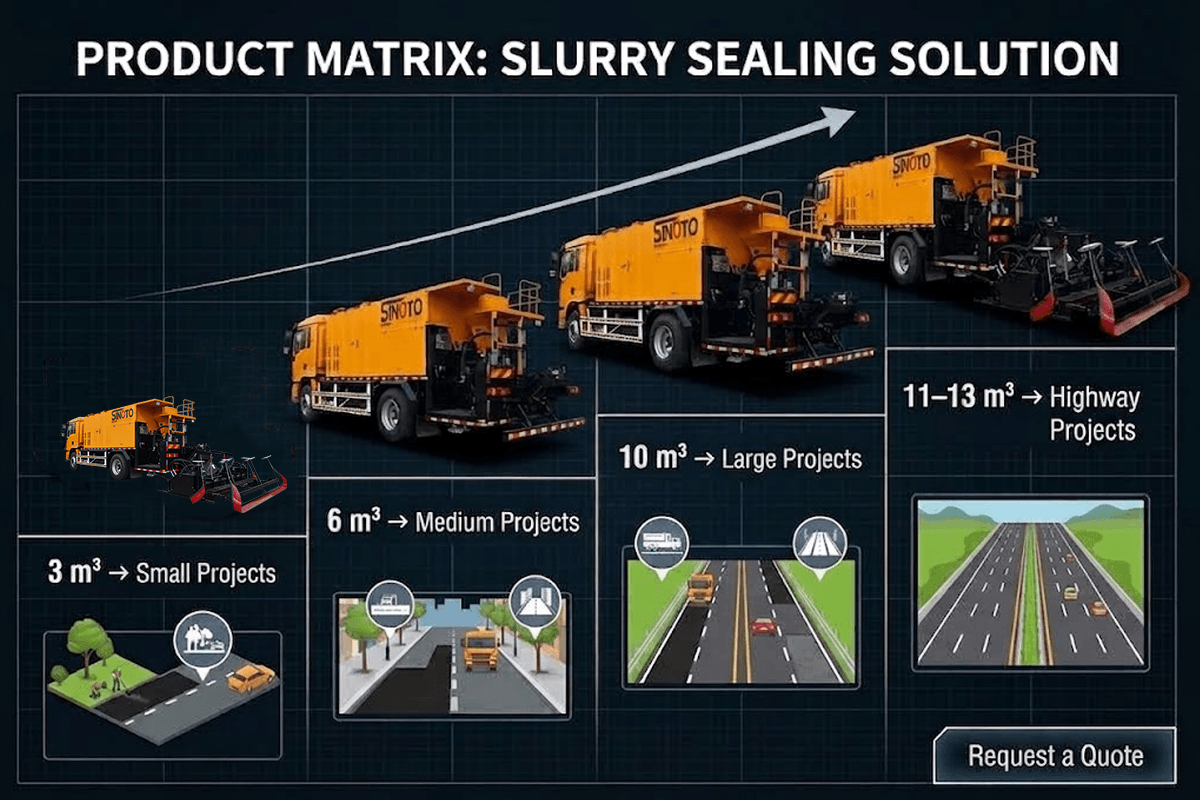
A modern slurry sealing paver like the SINOTO STSP series is designed to minimize crew requirements without sacrificing paving quality. Most projects can be run with 2–4 operators on the truck itself, supported by automated ratio control, one-button operation, and real-time feedback systems that used to require additional dedicated technicians on older equipment. Whether you need a compact unit for local road maintenance or a high-capacity 8×4 chassis machine for large-scale micro-surfacing contracts, understanding the real operational demands — not just the technical spec sheet — will help you plan staffing and budget correctly.
Ready to see detailed specifications and pricing for your project scale?

Whatsapp ID: 8619059581045

WeChat ID: +8619059581045

