Quick Answer: A standard ready-mix concrete truck carries between 9 and 11 cubic yards of concrete per load, while a mini or compact mixer truck typically carries 3 to 5 cubic yards. But when a project shifts from pouring concrete to spreading cement for road base and soil stabilization, the equipment — and the math — changes completely. That’s where a cement spreader machine comes in.
If you’ve ever stood at a job site watching a giant drum truck roll in, you’ve probably asked yourself: how many yards of cement does a cement truck carry, and is that even the right machine for my project? The answer depends heavily on what “cement truck” means in your context. In everyday language, people use “cement truck” to describe two very different machines — the rotating-drum ready-mix truck that delivers wet concrete, and the cement spreader truck used in highway and subgrade construction to lay down dry cement powder evenly across the ground.
This guide breaks down both meanings, gives you the real capacity numbers, and explains when you actually need a cement spreader instead of a standard mixer truck.
The volume a “cement truck” carries depends entirely on its drum size and axle configuration. Here’s a breakdown of common ready-mix trucks used in the concrete industry:
|
Truck Type |
Typical Capacity (Cubic Yards) |
Common Use Case |
|
Mini/Compact Mixer Truck |
3 – 5 yd³ |
Residential driveways, small repairs |
|
Standard Rear-Discharge Truck |
9 – 11 yd³ |
Commercial slabs, foundations |
|
Front-Discharge Mixer Truck |
10 – 11.5 yd³ |
Large pours, tight job sites |
|
Triple-Axle Heavy Mixer |
Up to 12 yd³ |
High-volume commercial projects |
💡 Note: A “yard” of concrete refers to a cubic yard — a volume measurement, not a weight measurement. One cubic yard of standard concrete weighs roughly 4,000 pounds (about 1.8 metric tons), which is why trucks are limited by both drum volume and road weight regulations.
It’s worth stressing that these figures apply to wet, mixed concrete — sand, gravel, water, and cement combined. This is different from projects that require spreading raw cement powder (or a cement-lime-fly ash blend) directly onto soil or aggregate for stabilization. For that job, contractors don’t use a rotating drum mixer at all — they use a purpose-built cement spreader machine.
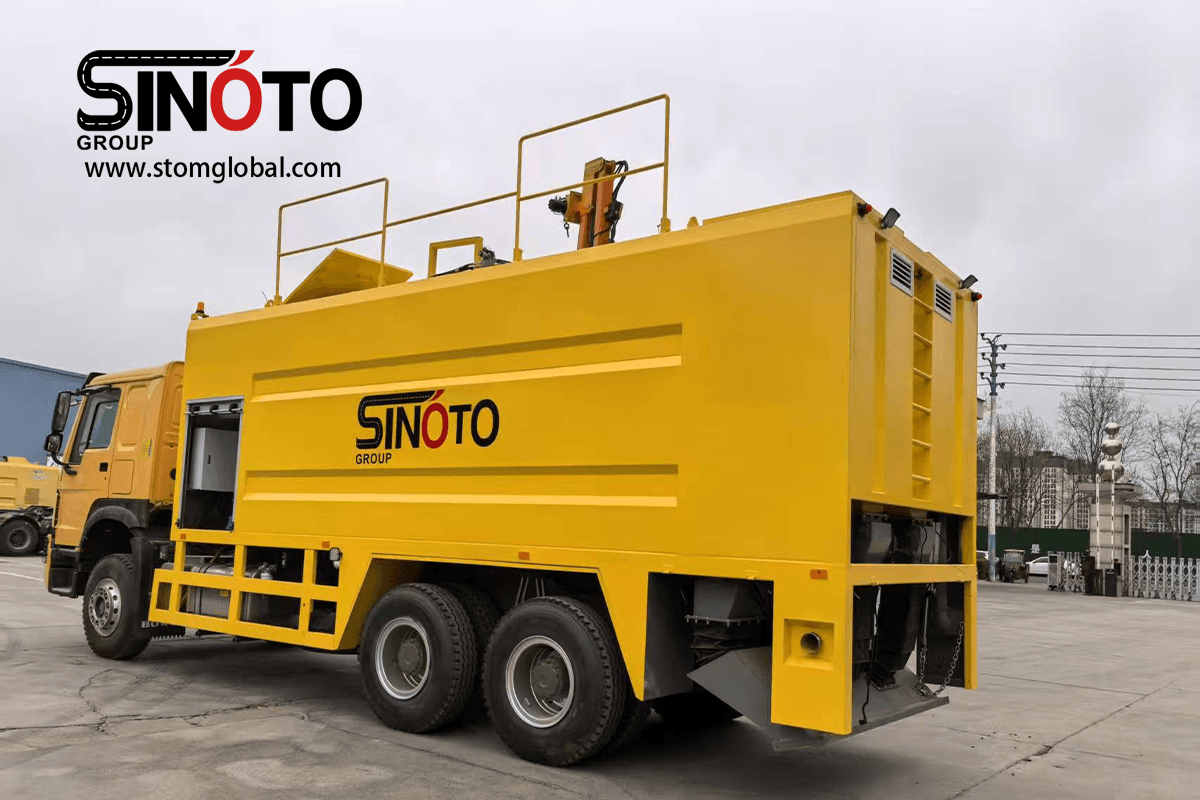
A cement spreader machine is not designed to mix or pour concrete. Instead, it is engineered to discharge a controlled, uniform layer of dry powdered cement (or lime, fly ash, and similar materials) across a road subgrade, embankment, or foundation area. This process is a critical first step in cement-stabilized base construction, where the powder is later mixed into the soil by a soil stabilizer and compacted by rollers.
Unlike a mixer truck, a modern cement spreader truck is built around a bin, a conveyor or auger feeding system, and a calibrated discharge gate — all mounted on a heavy-duty chassis such as SinoTruck or Shacman. Here’s how the two machines compare side by side:
|
Feature |
Ready-Mix Concrete Truck |
Cement Spreader Truck |
|
Material carried |
Wet mixed concrete |
Dry cement powder / lime / fly ash |
|
Discharge method |
Rotating drum, chute |
Auger/conveyor with calibrated gate |
|
Typical capacity |
9 – 11 yd³ |
Bins from 15 m³ to 25 m³ (e.g., 18 m³) |
|
Primary use |
Slabs, foundations, structural pours |
Road base, subgrade stabilization |
|
Spreading width control |
Not applicable |
Adjustable, e.g., up to 2500 mm |
|
Automation |
Drum rotation only |
Weighing system, automatic dosing |
ℹ️ On a well-equipped automatic cement spreader, the spreading rate can be set directly from a touchscreen — the operator enters the target dosage (kg/m²) and the machine’s weighing system manages the discharge automatically, independent of vehicle speed, achieving accuracy within roughly ±1%.
This is the core distinction contractors need to understand before searching for equipment: if your project involves subgrade improvement, base course construction, or road cold recycling, the question isn’t “how many yards does a cement truck carry” — it’s “how much bin capacity and spreading precision does my cement spreading machine need?”
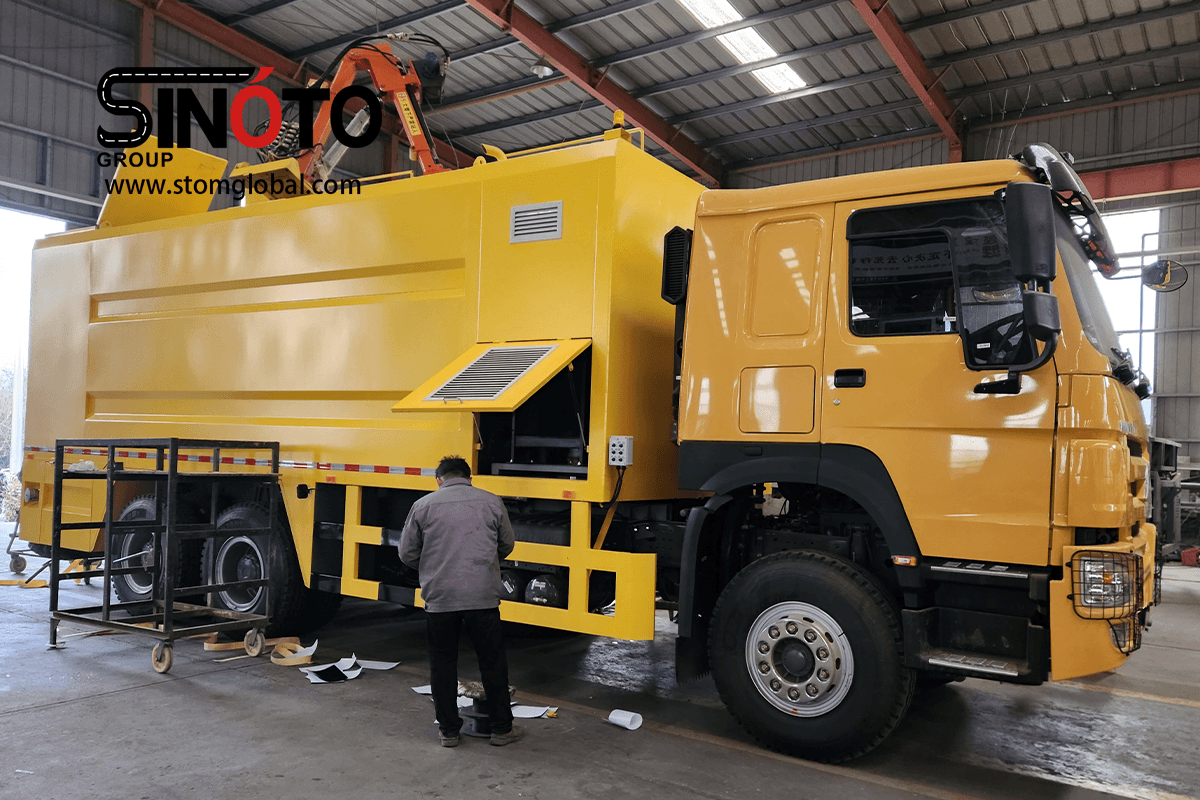
Terminology in the road construction industry can get confusing, and buyers often search for a cement distributor when they actually mean a cement spreader, or vice versa. While the terms are sometimes used interchangeably in casual conversation, it helps to understand the functional distinction:
📋 Contractor Tip: When comparing quotes or specs, always confirm whether “distributor” refers to a powder spreading machine or an asphalt/bitumen spraying truck. The two are frequently confused in search results, and ordering the wrong one can delay a project by weeks.
If your project scope includes any of the following, you’re likely looking for a true cement spreader/distributor unit rather than a mixer truck:
A well-built cement spreader truck — such as models with an 18 m³ bin and a 2500 mm maximum spreading width — can cover a wide working path in a single pass, cutting labor and material waste compared to manual spreading methods.
Once you’ve confirmed that a cement spreader (rather than a mixer truck) is the right tool, the next step is evaluating what’s actually on the market. Whether you’re searching for a cement spreader for sale locally or importing a cement spreader truck for sale from an overseas manufacturer, these are the specs worth comparing:
|
Specification |
Why It Matters |
|
Bin/tank capacity (m³) |
Determines how much material you can spread before reloading |
|
Spreading capacity (kg/m²) |
Should be adjustable across a wide range (e.g., 0.9–60 kg/m²) for different applications |
|
Max. spreading width |
Wider paths mean fewer passes and faster project completion |
|
Weighing/metering system |
Enables consistent, accurate dosage and less material waste |
|
Dust control system |
Important for eco-sensitive or urban job sites |
|
Chassis brand and engine power |
Affects reliability, fuel use, and resale value |
|
Emission standard |
Confirms compliance with your region’s regulations |
💬 “The equipment that pays for itself fastest isn’t necessarily the cheapest — it’s the one with the metering accuracy and dust control that keeps a crew from redoing work or halting for site complaints.” — a common takeaway shared across contractor forums when discussing spreader purchases.
Cement spreader truck price varies widely based on chassis brand, bin capacity, automation level, and whether the unit includes features like a dust collector, weighing system, or remote-monitoring platform. As a general guide:
ℹ️ Always request a full technical parameter sheet — engine power, curb weight, total weight, overall dimensions, and spreading accuracy — before comparing prices across suppliers. A lower sticker price on a cement spreader truck for sale can hide a smaller bin or a less precise metering system.
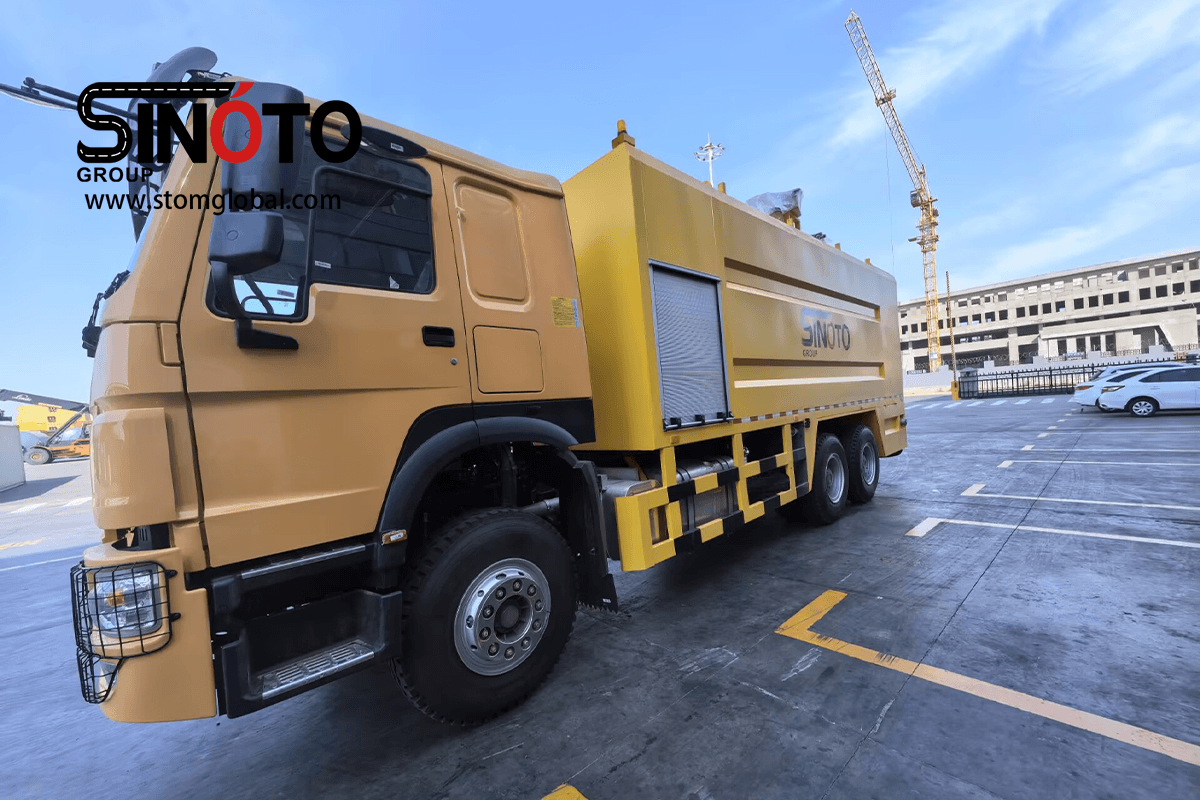
Once specifications and budget are clear, sourcing becomes the final step. Buyers typically search for a cement distributor near me when they want local dealer support, faster delivery, or in-person servicing — but for specialized, high-precision equipment like an automatic cement spreader, many contractors look beyond local dealers to established manufacturers with a track record in road maintenance machinery.
When evaluating a supplier of cement spreading machine equipment, consider:
📊 At a Glance — Typical Cement Spreader Truck Specs
|
Parameter |
Typical Range |
|
Cement bin capacity |
15 – 25 m³ |
|
Max. spreading width |
Up to 2,500 mm |
|
Spreading accuracy |
±1% with automatic weighing |
|
Engine power |
250 – 350+ hp |
|
Max. speed |
~80 km/h |
Whether you ultimately search for a “cement spreader for sale” through a local dealer network or contact a manufacturer directly for a cement spreader truck price quote, the underlying decision comes down to matching bin capacity, spreading precision, and dust control to your project’s scale — not simply picking the machine with the biggest tank.
So, how many yards of cement does a cement truck carry? If you mean a ready-mix concrete truck, the honest answer is 9 to 11 cubic yards for a standard unit, with smaller and larger variants at either end. But if your project involves road base construction, soil stabilization, or cold recycling, the more useful question is how many cubic meters of dry cement a cement spreader machine can hold and how precisely it can lay that material down. Bin capacities in the 15–25 m³ range, spreading widths up to 2,500 mm, and automatic weighing systems accurate to roughly ±1% are the benchmarks worth comparing when you’re shopping for a cement spreader truck, a cement distributor, or any automatic cement spreader built for serious infrastructure work.
Understanding this distinction before you request quotes will save you time, prevent mismatched equipment orders, and help you budget accurately for the machine your project actually needs.

Whatsapp ID: 8619059581045

WeChat ID: +8619059581045

