🏗️ Capacity is the first number every buyer asks about, and the easiest one to get wrong. When you browse an asphalt mixing plant for sale, an undersized unit leaves paving crews waiting for hot mix. An oversized one ties up cash in steel, fuel and power you never fully use. This guide shows how to size an asphalt batching plant around real project data. It draws on the stationary hot-mix range from SINOTO (STOM Global), which covers 40–400 tph.
💡 Engineer’s Rule of Thumb: Size the plant for your peak paving week, not your average one. Then confirm that the mixer, dryer and dust collector can all keep up.
Before comparing any asphalt plant on paper, most contractors weigh six practical concerns:
Capacity affects every item on this list. A larger plant needs a bigger dryer drum, more filter area and a larger site footprint. Getting the size right protects your whole budget, not just your output.
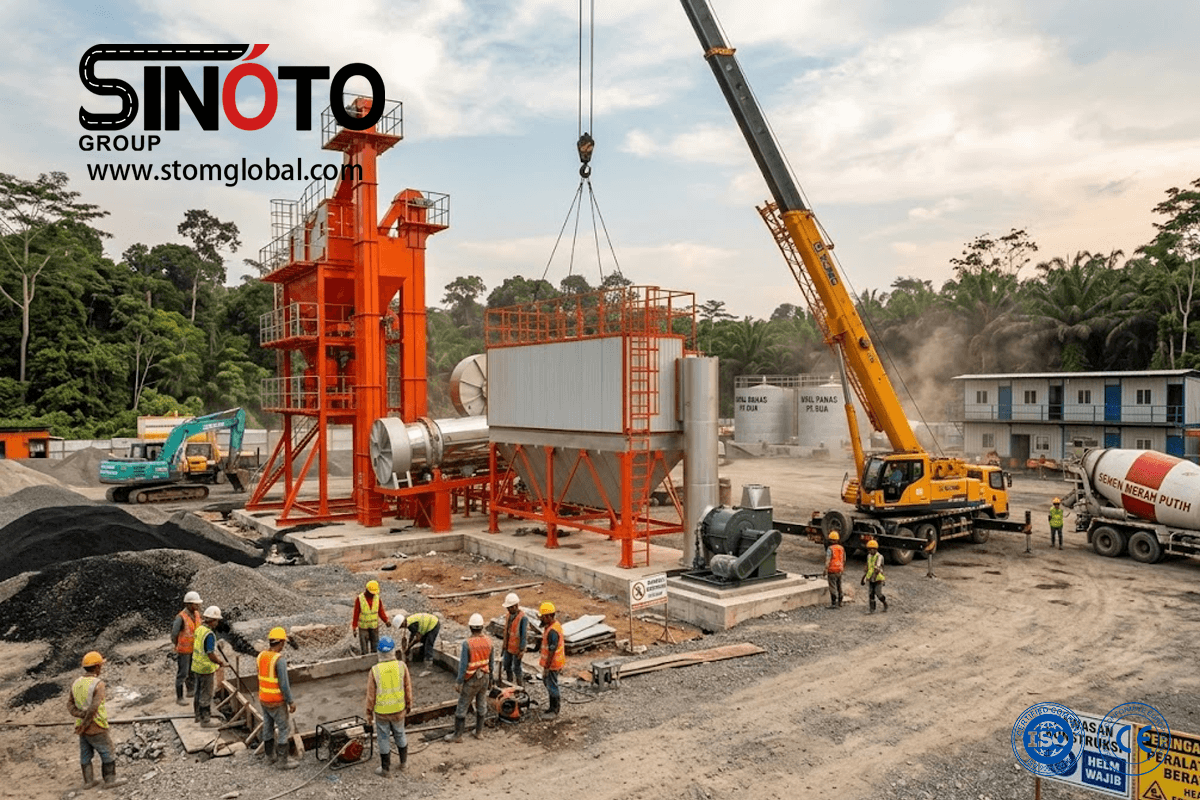
A simple four-step method works for most projects:
| 📊 Sizing Step | Worked Example |
|---|---|
| Peak daily demand | 1,500 tonnes |
| Paving window | 10 hours |
| Effective rate needed | 150 tph |
| Efficiency factor | 75% |
| Nameplate capacity required | ≈ 200 tph |
| Suggested model | LB3000 (260 tph) |
In this example, the 175 tph LB2000 would run flat out with no margin, so the LB3000 is the safer choice.
Then cross-check the mixer. A 45-second mixing cycle produces about 80 batches per hour, so a 1,100 kg mixer delivers roughly 88 t/h. That is consistent with the 90 tph rating of the LB1000 asphalt batch plant. Because a batch design weighs each ingredient separately, it also suits projects that switch between mix formulas.
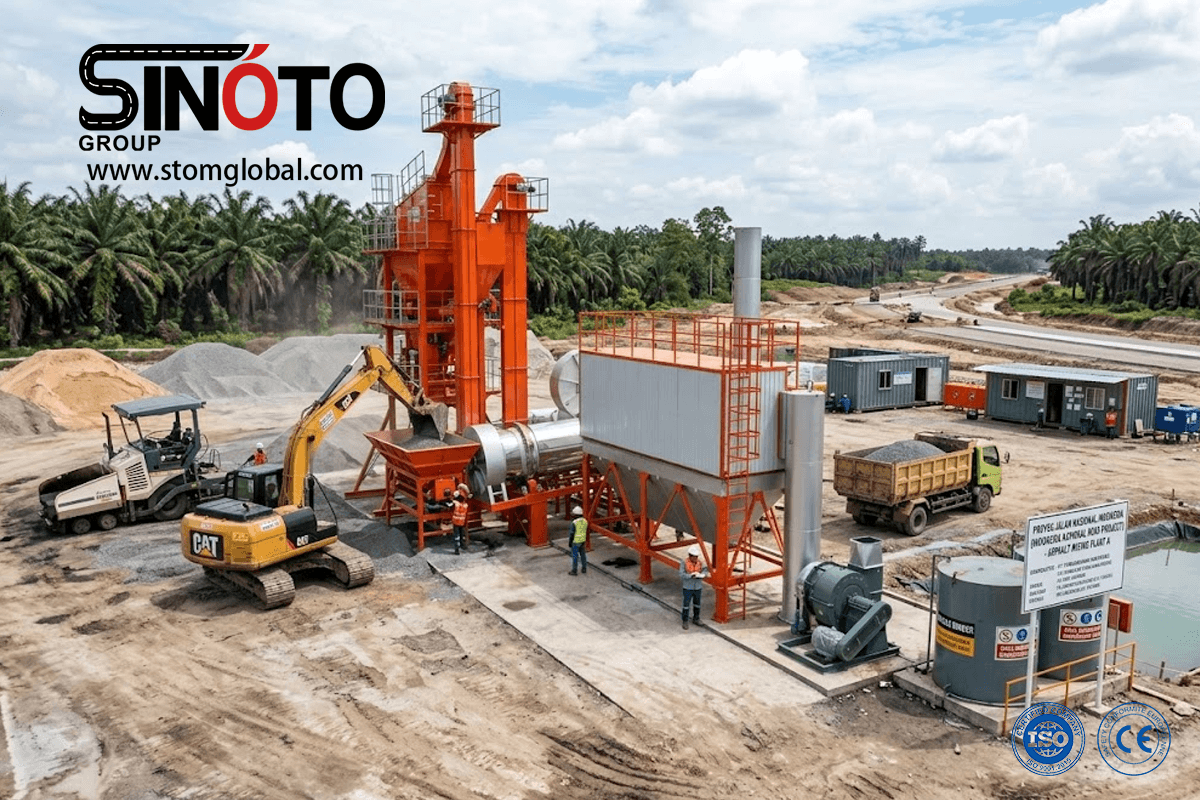
The stationary series spans five main models. Use this table as a starting point:
| Model | Rated Capacity | Mixer Size | Hot Storage Bin | Typical Project Fit |
|---|---|---|---|---|
| LB1000 | 90 tph | 1,100 kg | 18 m³ | Urban maintenance, municipal roads |
| LB1500 | 130 tph | 1,600 kg | 28.5 m³ | Medium provincial roads |
| LB2000 | 175 tph | 2,200 kg | 32.5 m³ | Large road works |
| LB3000 | 260 tph | 3,000 kg | 45 m³ | Highways, airports |
| LB4000 | 340 tph | 4,000 kg | 65 m³ | Ports, mega projects, multi-site supply |
Project fit is a general guide. Final selection should follow your own demand calculation.
SINOTO’s guidance is similar: roughly 80 tph suits urban maintenance, while about 160 tph suits large road works. A stationary asphalt mixing plant reaches up to 400 tph. It also offers a more stable structure and stronger dust collection than mobile units, which makes it the standard choice for highway construction. If your sites change every few months, a mobile asphalt batching plant may be the better fit.
Capacity is the biggest driver of asphalt plant cost, but not the only one. When you compare an asphalt mixing plant price, check these factors:
📌 Buyer Tip: Compare every asphalt plant quotation on a like-for-like basis: same tph, same emission limit, same fuel and same storage. A lower quote that leaves out the baghouse or silo often costs more once the plant is installed.
Ask your supplier to calculate return on investment from your actual project volume, not from a brochure figure. That approach shows whether a bigger plant pays for itself or sits idle.
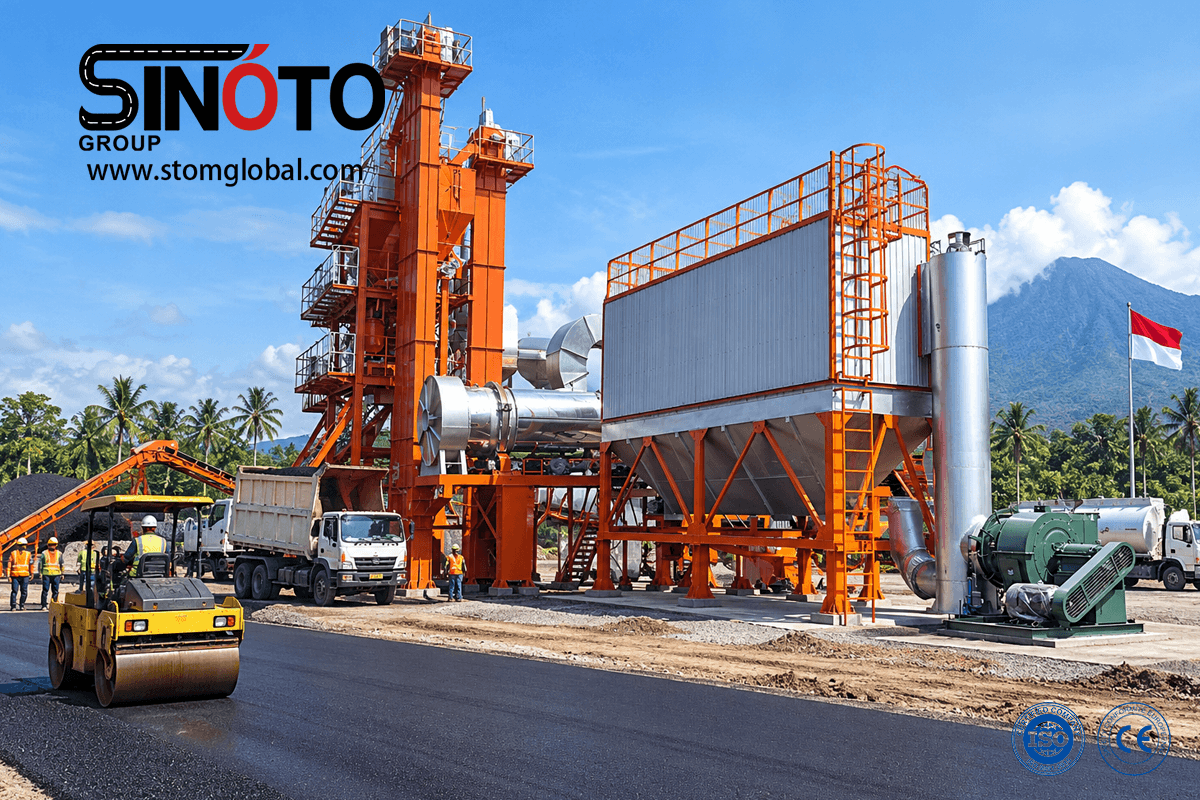
Sizing is easier with an engineering partner. A qualified asphalt mixing plant manufacturer reviews your project volume, climate and fuel supply before recommending a model. SINOTO (STOM Global) builds its stationary plants around these strengths:
Whether you are comparing an asphalt batch plant manufacturer or an asphalt mixing plant supplier, ask for references, spare-parts support and commissioning services. Ask every asphalt plant for sale to be quoted at both nameplate and real-world output. A trustworthy asphalt plant manufacturer will welcome that comparison, and a reliable asphalt plant supplier will explain the numbers behind it.
In short, choose capacity from your peak demand, confirm it with the mixer cycle, and compare quotations on identical terms. That is how you buy the plant your project needs and avoid paying for capacity you will not use.
Tell us your daily tonnage, paving window and fuel preference, and our engineers will recommend a model and prepare a detailed quotation.
👉 Request a Free Asphalt Plant Quotation Now
📧 info@stomglobal.com | 📱 WhatsApp: +86 190 5958 1045
#AsphaltMixingPlant #AsphaltBatchingPlant #AsphaltPlant #RoadConstruction #AsphaltPlantForSale

Whatsapp ID: 8619059581045

WeChat ID: +8619059581045

