Building a durable highway, national road, or industrial access road requires more than high-quality asphalt. A strong and stable foundation is equally important for long-term pavement performance.
A complete Road Base Stabilization & Asphalt Paving Solution integrates cement spreading, soil stabilization, compaction, curing, surface cleaning, bitumen distribution, and asphalt paving into a coordinated construction process.
For contractors working on new road construction projects, choosing compatible equipment can improve construction efficiency, reduce material waste, and achieve consistent pavement quality.
SINOTO provides integrated road construction machinery solutions designed to support different stages of road base preparation and asphalt pavement construction.
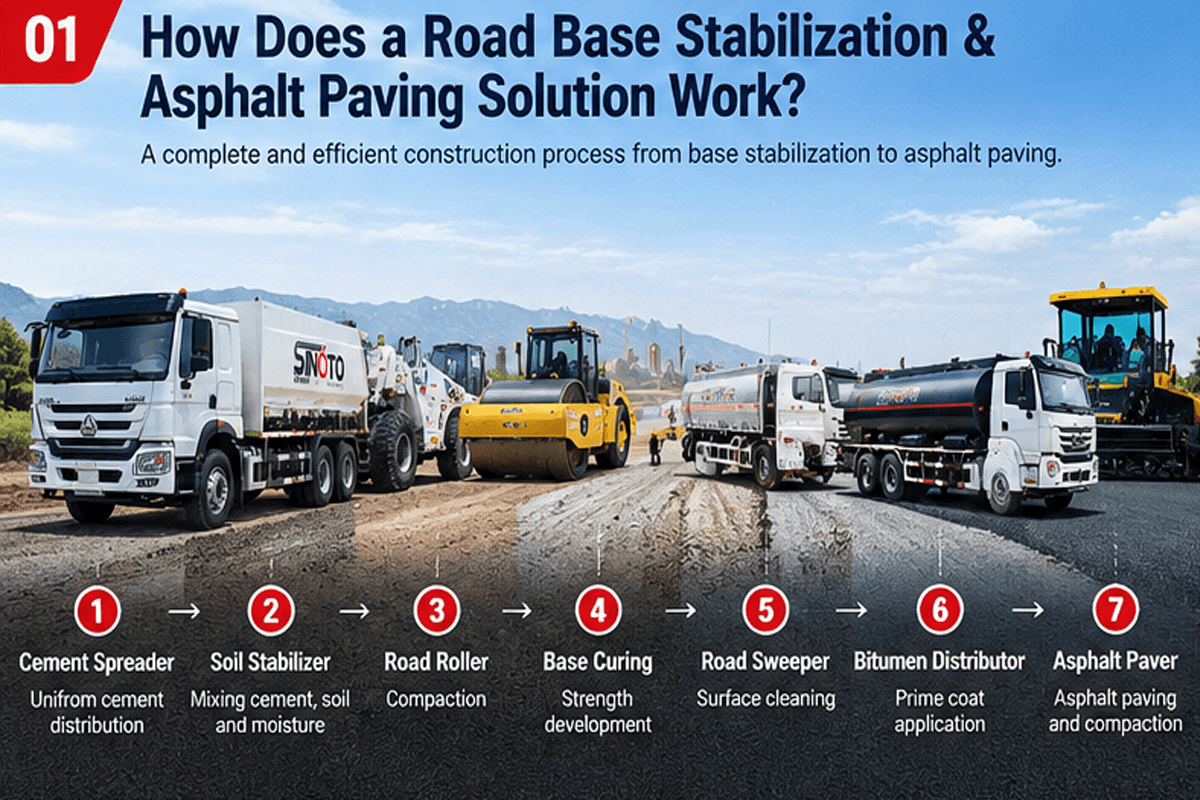
A Road Base Stabilization & Asphalt Paving Solution follows a systematic construction process, transforming prepared subgrade materials into a stable road base and finished asphalt pavement.
Each machine performs a specific function, and proper coordination between equipment helps maintain construction quality.
| Road Construction Equipment Workflow | ||||
|
Cement Spreader Uniform cement distribution |
Soil Stabilizer / Reclaimer Mixing cement, soil and moisture |
Road Roller → Base Curing Compaction and strength development |
Road Sweeper → Bitumen Distributor Surface cleaning and prime coat application |
Asphalt Paver → Asphalt Roller Asphalt placement and final compaction |
The cement spreader distributes the specified amount of cement across the prepared roadbed. A soil stabilizer then mixes the cement with existing soil or aggregates and controlled moisture.
After mixing, road rollers compact the stabilized material to the required density. The base is subsequently cured and inspected before surface cleaning and bitumen application.
Finally, asphalt paving equipment places the asphalt mixture, followed by compaction to achieve the specified pavement density and smoothness.
Selecting the correct combination of machines is essential for efficient road construction.
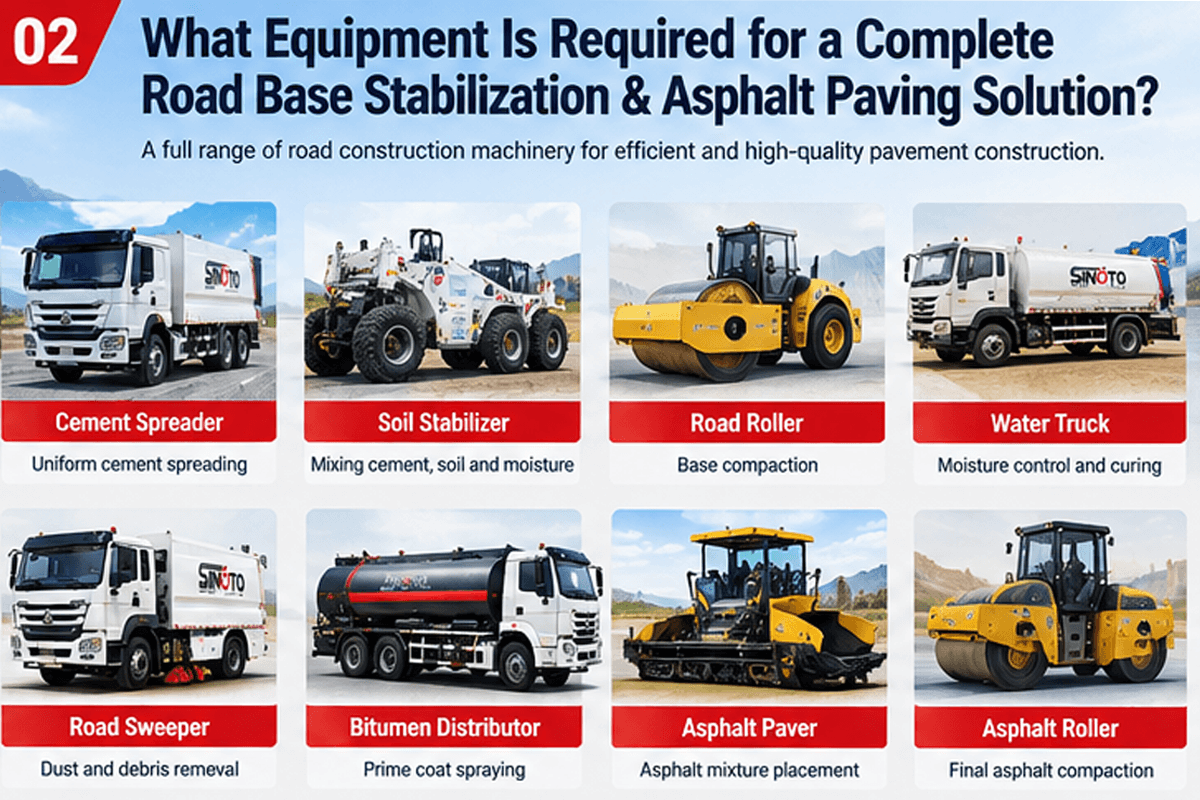
A complete Road Base Stabilization & Asphalt Paving Solution typically includes the following equipment:
|
Equipment |
Main Function |
Key Buyer Benefit |
|---|---|---|
|
Cement Spreader |
Uniform cement spreading |
Accurate material distribution |
|
Soil Stabilizer |
Cement-soil mixing |
Consistent base stabilization |
|
Road Roller |
Base compaction |
Improved density and strength |
|
Water Truck |
Moisture control and curing |
Better hydration and curing |
|
Road Sweeper |
Dust and debris removal |
Cleaner bonding surface |
|
Bitumen Distributor |
Prime coat spraying |
Controlled bitumen application |
|
Asphalt Paver |
Asphalt mixture placement |
Uniform pavement thickness |
|
Asphalt Roller |
Final asphalt compaction |
Improved surface durability |
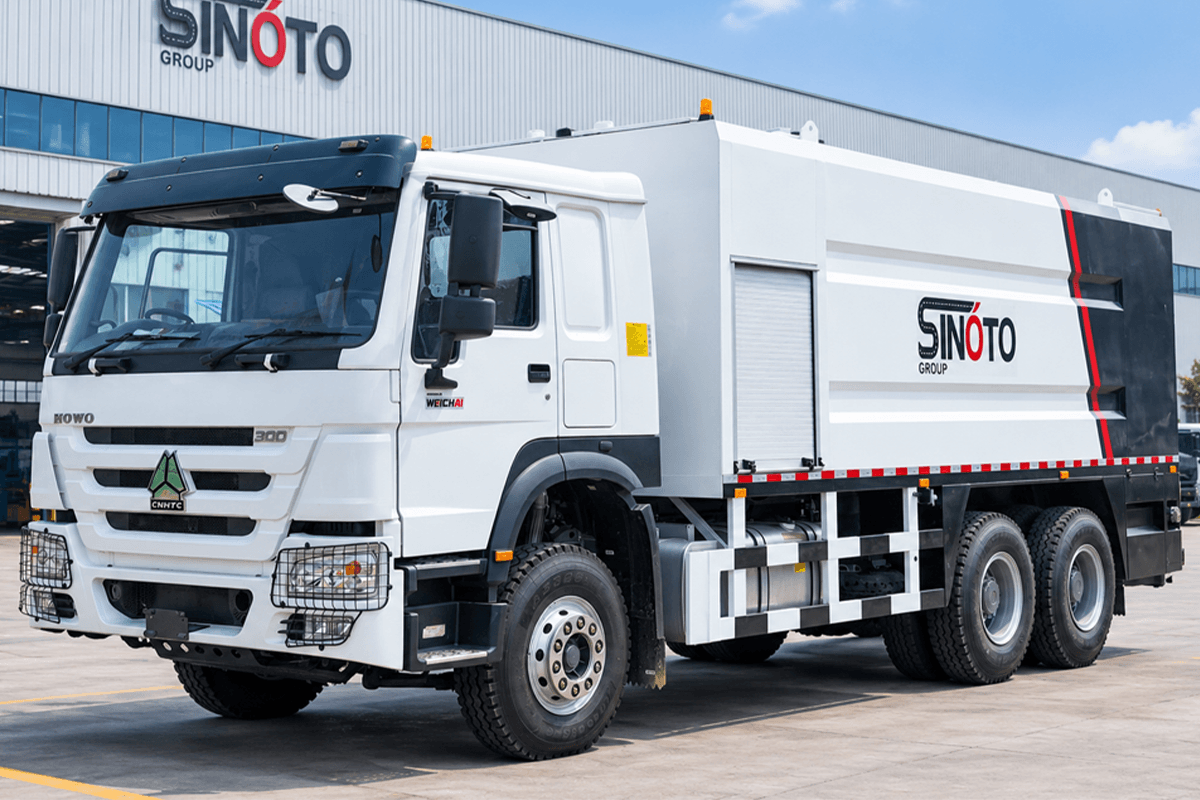 |
A cement spreader provides controlled binder distribution across the roadbed. Adjustable spreading rates and uniform coverage help reduce cement waste and improve stabilization consistency. Key factors: spreading width, hopper capacity, dosing accuracy. |
|
|
Soil Stabilizer A soil stabilizer blends cement, soil, aggregates, and moisture to create a more uniform stabilized layer. Key factors: mixing depth, rotor performance, working width. |
|
|
Bitumen Distributor A View Bitumen Distributor applies prime coat materials to a properly prepared base, supporting the subsequent asphalt pavement system. Key factors: spraying accuracy, spray width, heating and circulation system.
|
Engineering Recommendation: Evaluate equipment as a coordinated construction system rather than purchasing individual machines based only on their maximum capacity.
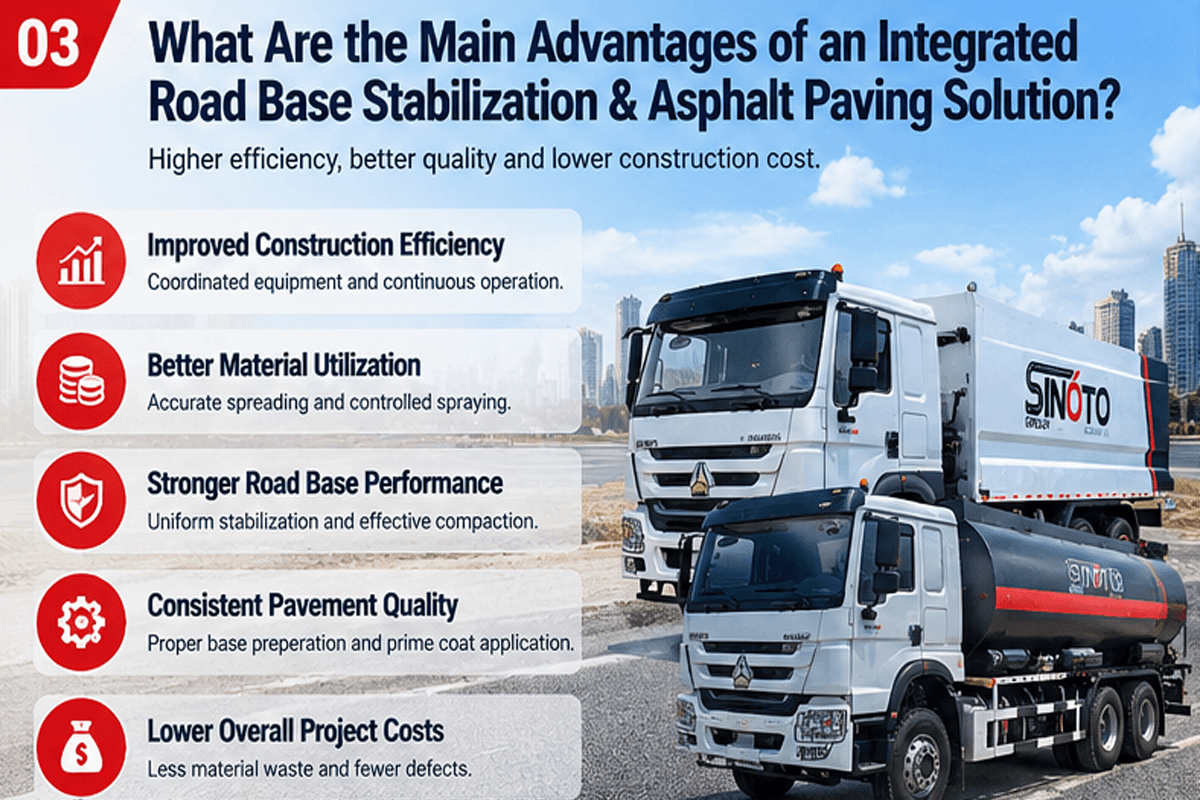
An integrated Road Base Stabilization & Asphalt Paving Solution offers several advantages for road contractors and infrastructure developers.
Improved Construction Efficiency
Coordinated equipment reduces unnecessary waiting between cement spreading, mixing, compaction, and asphalt paving. Proper machine scheduling helps contractors maintain steady construction progress.
Better Material Utilization
Controlled cement dosing and accurate bitumen spraying help minimize excessive material consumption while meeting engineering specifications.
Stronger Road Base Performance
Uniform stabilization, appropriate moisture content, and effective compaction help improve base strength and reduce the risk of uneven settlement.
Consistent Pavement Quality
Proper base preparation and controlled prime coat application support asphalt placement and long-term pavement performance.
Lower Overall Project Costs
Efficient machine utilization, reduced material waste, and fewer construction defects can help contractors control project expenses.
The following table summarizes important quality-control parameters for project planning.
|
Construction Stage |
Key Control Parameter |
Quality Objective |
|---|---|---|
|
Cement spreading |
Binder application rate |
Meet approved mix design |
|
Soil stabilization |
Mixing depth and uniformity |
Consistent stabilized layer |
|
Base compaction |
Moisture and field density |
Meet specified compaction |
|
Base curing |
Curing time and moisture |
Achieve required strength |
|
Prime coat spraying |
Application rate and coverage |
Proper penetration and coverage |
|
Asphalt paving |
Temperature and layer thickness |
Meet paving specifications |
Actual construction requirements depend on soil characteristics, traffic loading, climate, pavement design, and applicable engineering standards.
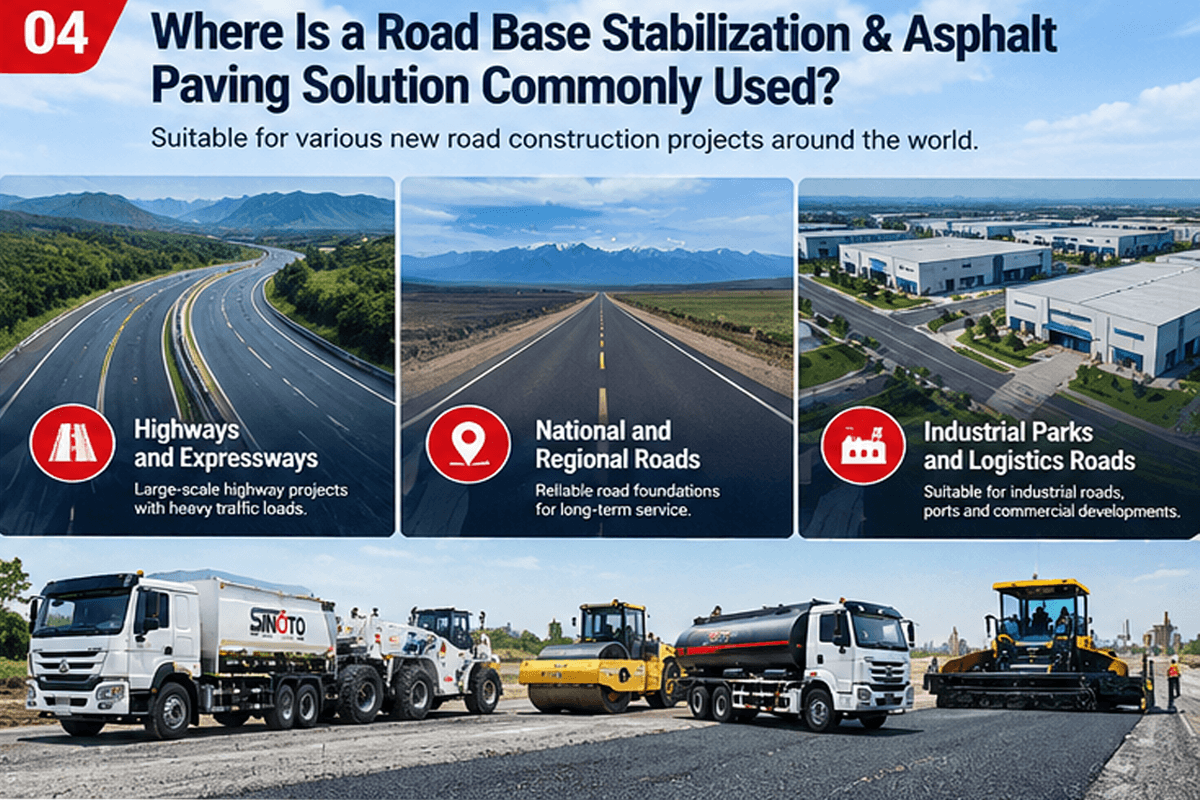
A Road Base Stabilization & Asphalt Paving Solution is suitable for infrastructure projects requiring reliable road foundations and asphalt pavement construction.
|
Highway and Expressway Construction Large-scale highway projects require stable pavement foundations capable of supporting repeated heavy traffic loads. Coordinated stabilization and paving equipment helps maintain consistent construction quality over long distances. |
National and Regional Roads Road construction contractors can use stabilized base technology to improve suitable in-situ materials, subject to geotechnical evaluation and pavement design requirements. |
Industrial Parks and Logistics Roads Industrial access roads often carry frequent heavy truck traffic. Proper stabilization and asphalt paving help provide the structural support required for demanding transportation conditions. |
However, cement stabilization is not suitable for every soil type. Laboratory testing and engineering evaluation should confirm material compatibility before construction begins.
Choosing the right Road Base Stabilization & Asphalt Paving Solution requires evaluating project conditions, construction capacity, and long-term operating costs.
Buyers should consider five essential factors.
1. Project Size and Construction Schedule
Determine the total road length, pavement width, daily production target, and available construction period. These factors influence the required capacity and quantity of machines.
2. Soil Conditions and Stabilization Requirements
Analyze existing soil properties, required cement content, mixing depth, and target strength. The soil stabilizer and cement spreader should support the approved stabilization design.
3. Equipment Compatibility
Match the working widths and production capacities of the cement spreader, soil stabilizer, rollers, bitumen distributor, and asphalt paver to minimize operational bottlenecks.
4. Climate and Construction Environment
High temperatures, rainfall, and changing moisture conditions can affect cement stabilization, curing, prime coat application, and asphalt paving. Equipment and construction methods should suit local conditions.
5. Maintenance and Technical Support
Evaluate spare parts availability, operator training, equipment reliability, and after-sales service before making a purchasing decision.
Buyer Tip: Request a complete equipment configuration based on your road width, daily construction capacity, stabilization depth, and asphalt pavement requirements instead of relying on a single machine quotation.
For international contractors, SINOTO offers road construction equipment options covering cement spreading, bitumen distribution, and related road construction operations.
By selecting properly matched machinery, contractors can develop a more efficient construction workflow and improve equipment utilization across different project stages.
A reliable road begins with a properly engineered foundation. From cement spreading and soil stabilization to prime coat application and asphalt paving, every construction stage contributes to pavement performance.
SINOTO helps contractors identify suitable machinery for new highway, national road, and industrial road construction projects.
Whether you need an individual cement spreader, a bitumen distributor, or a coordinated road construction equipment package, our team can help evaluate your project requirements.
Ready to Start Your Road Construction Project?
Contact SINOTO for Equipment Recommendations & Request a Free Quotation →
Share your road width, project length, required construction capacity, and destination country to receive equipment recommendations and a customized quotation.
Hashtags: #RoadBaseStabilization #AsphaltPaving #RoadConstructionEquipment #CementSpreader #BitumenDistributor #SINOTO

Whatsapp ID: 8619059581045

WeChat ID: +8619059581045




