For contractors and plant operators evaluating a bitumen drum melter, one question almost always comes before capacity or price: will the machine actually accept the drums sitting in my yard? Bitumen is shipped worldwide in a mix of packaging — 200-litre steel drums, open-top pails, and occasionally non-standard barrels from regional suppliers — and mismatched equipment leads to jammed feed lines, wasted labor, and drums that simply won’t empty. This guide breaks down drum compatibility, pre-loading requirements, and how a modern bitumen drum decanter compares on price and output, so you can match the right machine to the packaging you already receive.
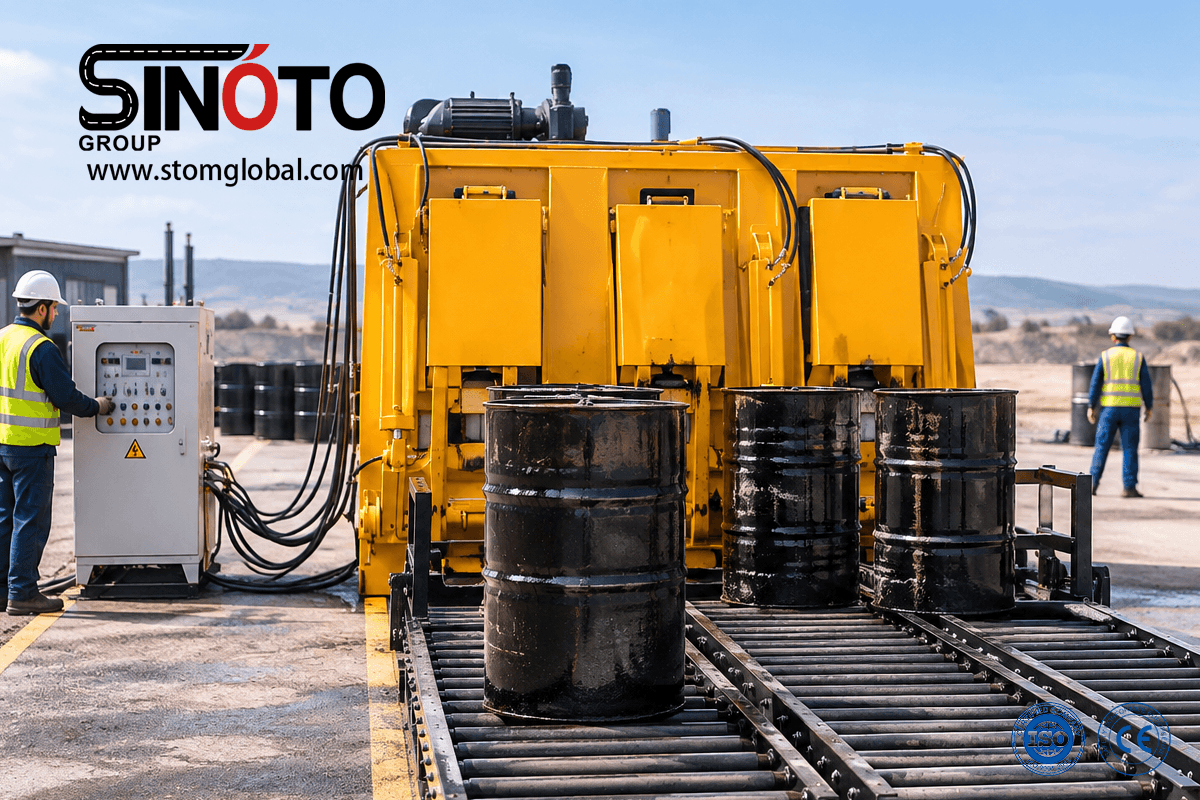
Nearly every industrial bitumen decanter on the market — including barrel-fed units — is built around the 200-litre (55-gallon) steel drum, since this is the packaging that refineries and bitumen traders use for export shipments. A well-designed bitumen drum melting machine uses a hydraulic turning mechanism to tip the drum, then a pushing arm feeds it along a rail track into an enclosed heating chamber. Because the drum geometry is standardized, the loading rails, tilt angle, and chamber clearance can be pre-set at the factory rather than adjusted on site.
This standardization is also why manufacturers rate throughput per hour rather than per drum: a mid-size bitumen drum heating machine processing 40 drums in a single loading rail can sustain 6–8 tons per hour, while larger configurations with additional rails scale up to 12–15 tons per hour. If your operation regularly handles drums outside the 200L standard — smaller lab pails or oversized regional barrels — flag this at the inquiry stage, since rail spacing and chamber dimensions can usually be customized before manufacturing.
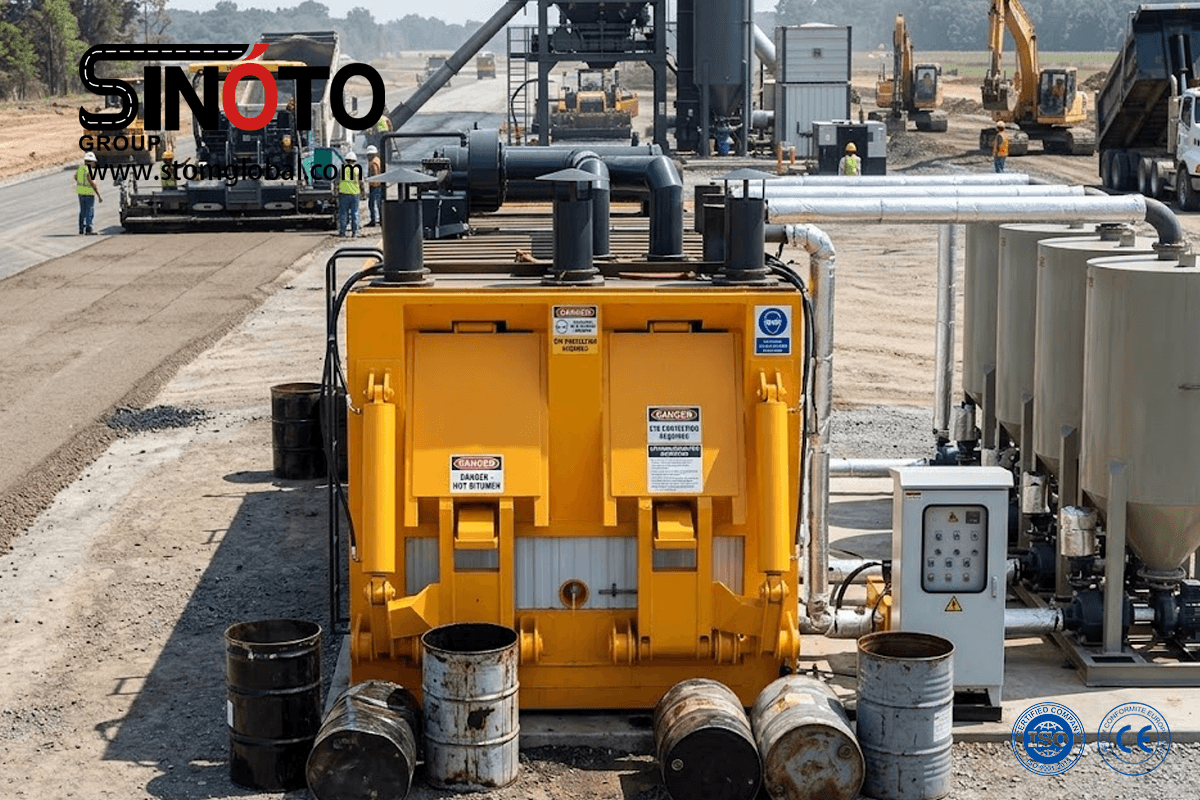
Bitumen drums generally arrive in one of two forms: open-top (also called open-mouth) drums, where the entire lid is removable, and closed-head (tight-head) drums, where only a small bung opening exists at the top. This distinction matters more than tonnage or brand when it comes to feeding an asphalt drum decanter.
“The packaging format on your delivery note decides your labor cost more than anything else in the spec sheet — open-top drums are effectively plug-and-play, while tight-head drums add one extra handling step before they ever reach the heating chamber.”— Common guidance from bitumen processing equipment suppliers
Understanding the melting sequence explains why drum type affects throughput. A typical bitumen drum heater cycle runs as follows:
Because thermal oil indirect heating avoids open flame contact, this style of bitumen melting machine is generally rated safer than kettle-type melters, and an automatic temperature control system helps prevent localized overheating or carbonization that would otherwise degrade the bitumen’s original performance.
Barrel-Fed Bitumen Decanter — Model Comparison
| Model | Capacity (t/h) | Drums Accommodated | Bitumen Pool (m³) | Total Power (kW) |
|---|---|---|---|---|
| DT-4 | 4–5 | 30 | 14 | 9.5 |
| DT-6 | 6–8 | 40 | 17 | 18.5 |
| DT-10 | 8–10 | 44 | 18 | 20.5 |
| DT-12 | 12–15 | 60 | 22 | 20.5 |
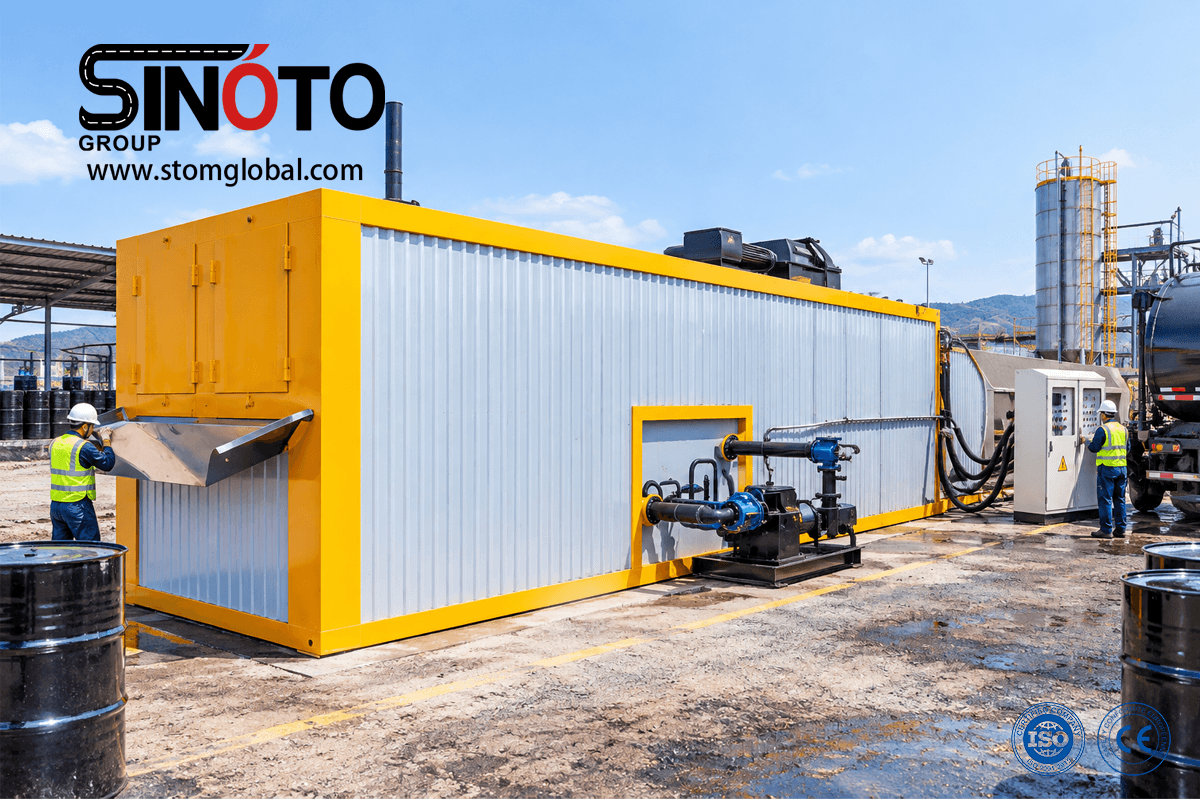
Every buyer eventually asks for a bitumen decanter machine price, but the figure depends less on brand and more on three variables: throughput tier, heating source, and drum compatibility features. A compact 4–5 t/h unit built for standard open-top drums costs far less to configure than a 12–15 t/h line with multiple rails, an exhaust filtration package, and reinforced chamber walls for handling deformed barrels.
Heating source is the second driver behind bitumen drum melter price quotes: integrated burner units (diesel, gas, or heavy oil) typically bundle the heat source into the machine, while thermal-oil-coupled units assume you already run a boiler elsewhere on site and can share that heat source across multiple pieces of equipment. Buyers already operating a thermal oil furnace for other asphalt equipment often find the shared-boiler configuration brings the effective bitumen melting machine price down considerably.
Before requesting a formal quotation for a bitumen drum heating machine, confirm the following with your supplier:
Not sure which drum-fed model matches your daily barrel volume?
Request a Free Quote & Drum Compatibility Check →
Whatsapp ID: 8619059581045

WeChat ID: +8619059581045

