🔥 Quick Answer: A jumbo bag bitumen melting machine heats bitumen indirectly. Thermal oil circulates through pipes beneath the feeding ports, while hot flue gas passes through a 4-way smoke pipe inside the heating chamber. The heat source is either a built-in diesel/gas burner or an external thermal oil furnace, with customized electric heating also available.
Contractors, asphalt plant operators, and distributors who buy bitumen in 1-ton bags tend to ask the same thing before placing an order: how is the bitumen actually melted? The answer is more than a technical footnote. The heating method decides on-site safety, fuel consumption, melting speed, and whether the bitumen keeps its original performance grade when it reaches your distributor or mixing plant.
This guide explains the heating technology inside the Sinoto jumbo bag bitumen melter, highlights what buyers care about most, and compares the STBD-6 and STBD-10 so you can shortlist the right bitumen melting machine for your project.
A jumbo bag bitumen melter must do two jobs at once: liquefy solid bitumen packed in large bulk bags, and deliver it as a pumpable fluid without harming its properties. Sinoto splits the machine into two parts. The first is a skid-mounted melting chamber with three to five feeding ports and a heating chamber. The second is a bolt-together hoisting structure built around a 2-ton electric hoist that lifts each bag into position.
The heating system is where the engineering matters. Heat transfer oil pipes run beneath the feeding ports, so each bag rests above a hot surface. Inside the heating bin, a 4-way high-temperature smoke pipe carries flue gas through the chamber to heat the bitumen quickly. Sinoto describes the result as a dual heating system: thermal oil combined with flue gas recovery. Together they push heat into the bitumen fast and reuse energy that would otherwise escape through the stack.
📋 Table 1: Heating Options for the STBD Series
| Heating Option | How It Works | Typical Fit |
|---|---|---|
| Built-in oil burner (diesel/gas) | The burner heats the thermal oil and the flue gas path inside the machine | Remote sites needing a self-contained unit |
| External thermal oil furnace connection | The melter plugs into an existing thermal oil supply | Plants that already run a thermal oil system |
| Customized electric heating | Electric heating built to the buyer’s requirements | Sites with specific power or emission needs |
Because the bitumen never meets an open flame, the risks of local overheating, aging, and carbonization drop sharply. A fully automatic temperature control system regulates ignition according to the measured temperature, so the bitumen stays within its original specification. Sinoto also installs automatic temperature and pressure control plus a high-temperature alarm, and the enclosed operation limits operator exposure to hot bitumen and fumes.
Two more design details lift thermal efficiency. Finned tube technology increases the heat exchange area to 1.5 times that of conventional thermal oil pipes, and an asphalt fume recovery and hot air circulation system evens out the heating while cutting heat loss and fuel use. High-density rock wool insulation on all sides keeps that heat inside the machine.
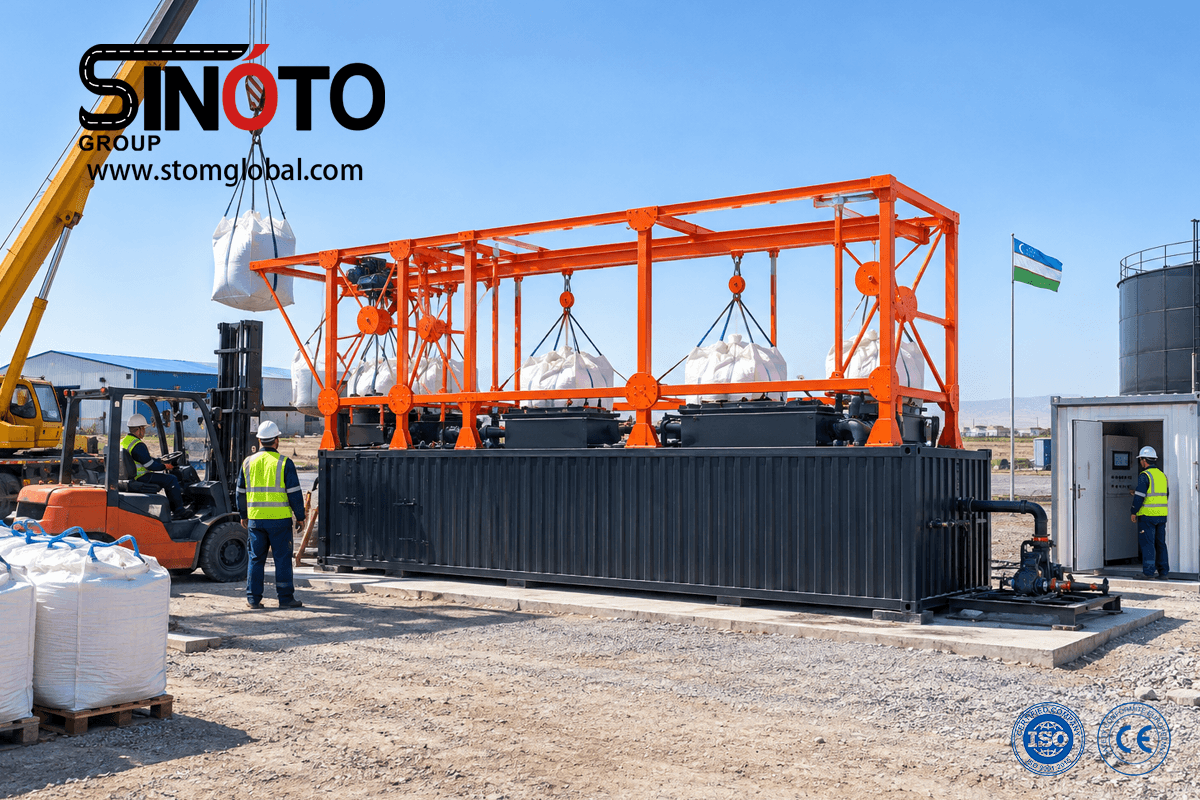
When importers and contractors compare suppliers, five concerns come up again and again. A well-designed bulk bitumen melting machine has to answer every one of them:
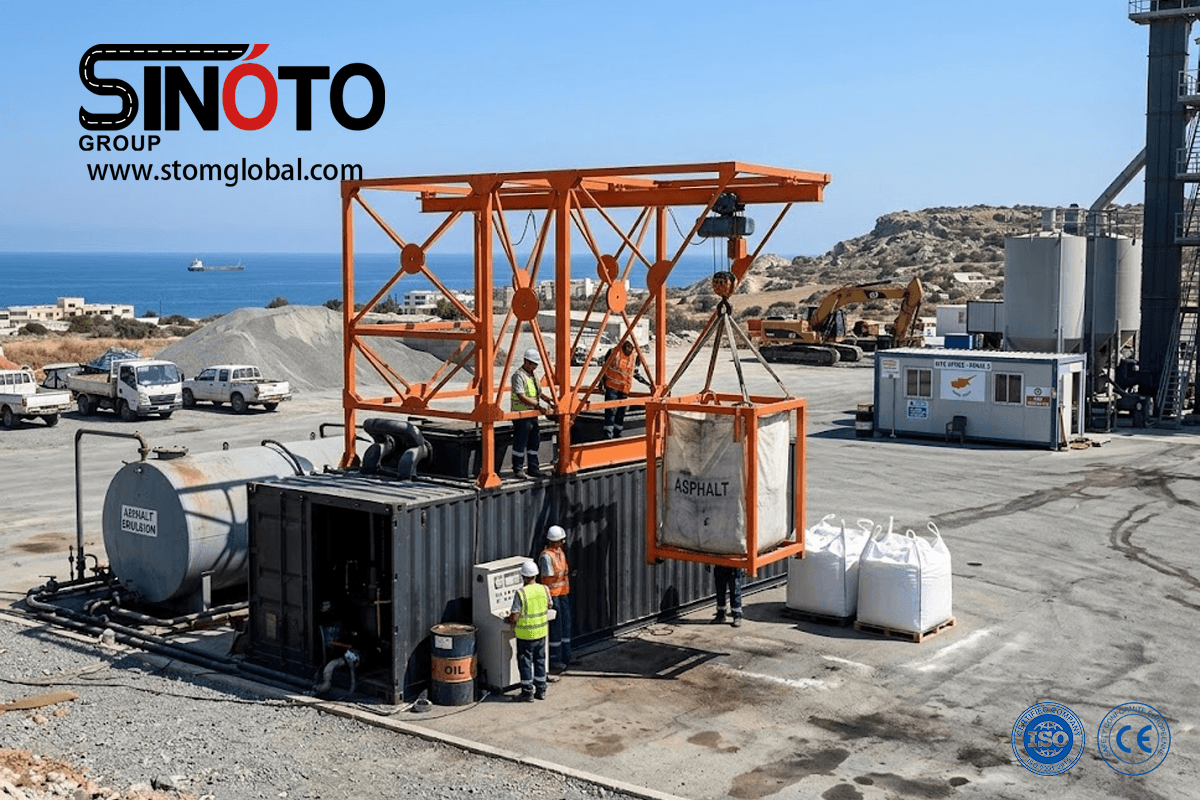
Many buyers also ask about packaging. A 1 ton bag bitumen melter setup needs safe lifting and clean discharge. The STBD series offers a maximum hoisting capacity of 2,000 kg and a hoisting height of 3 m, so standard bags fit with margin. Sinoto states that its bag suspension and residual-free discharge system recover 100% of the bitumen, which prevents waste and saves cost. For contractors comparing a bulk bag asphalt melter with drum melting, that recovery rate, together with fewer manual handling steps, is often the deciding factor.
📋 Table 2: Buyer Concern vs. What to Verify
| Buyer Concern | What to Ask the Supplier |
|---|---|
| Safety | Is the heating indirect? Are temperature, pressure, and over-temperature alarms included? |
| Fuel cost | Is there flue gas or fume recovery? How is the machine insulated? |
| Bitumen quality | Does ignition follow the actual temperature automatically? |
| Site logistics | Is the unit skid-mounted and suited to container shipping? |
| Loading | Is a hoist included, or do you need a separate crane? |
💡 Buyer Tip: Ask every supplier to state the heating method, the available heat sources, and the temperature control logic in writing. Those three lines tell you more about a jumbo bag bitumen melter than any brochure photo.
If you are searching for a jumbo bag bitumen melting machine for sale, Sinoto offers two standard models that cover small and large output. The data below comes from the manufacturer’s product page.
📋 Table 3: Technical Parameters
| Parameter | STBD-6 | STBD-10 |
|---|---|---|
| Productive capacity | 5–6 tph | 10–12 tph |
| Max. hoisting capacity | 2,000 kg | 2,000 kg (two hoists) |
| Max. hoisting height | 3 m | 3 m |
| Feeding ports | 3 | 5 |
| Melting pool | 32 m³ | 80 m³ (35 + 45) |
| Heating method | Oil burner / thermal oil furnace | Oil burner / thermal oil furnace |
| Bitumen pump capacity | 16.8 m³/h | 24 m³/h |
| Working size (L×W×H) | 16,000×2,250×6,500 mm | 16,000×7,000×6,500 mm |
| Transport size (L×W×H) | 11,500×2,250×2,450 mm | 11,500×2,250×2,450 mm ×2 pcs |
| Total power | 15 kW | 22 kW |
| Total weight | 12,000 kg | 20,000 kg |
The STBD-6 suits mid-size operations. It delivers 5–6 tph through three feeding ports and a 32 m³ melting pool, with a 16.8 m³/h bitumen pump and 15 kW of total power. The STBD-10 scales up: 10–12 tph, five feeding ports, two hoists, an 80 m³ melting pool split into 35 m³ and 45 m³ sections, and a 24 m³/h pump.
Both models ship compactly. The melting chamber travels at 11,500 × 2,250 × 2,450 mm, and the STBD-10 ships as two pieces. Because the hoisting structure is taller than transport height limits, it is assembled with bolts on site, which simplifies logistics for remote projects. As a rule of thumb, match the tph rating to the bitumen consumption of your distributor, paver, or mixing plant, and leave room for growth.
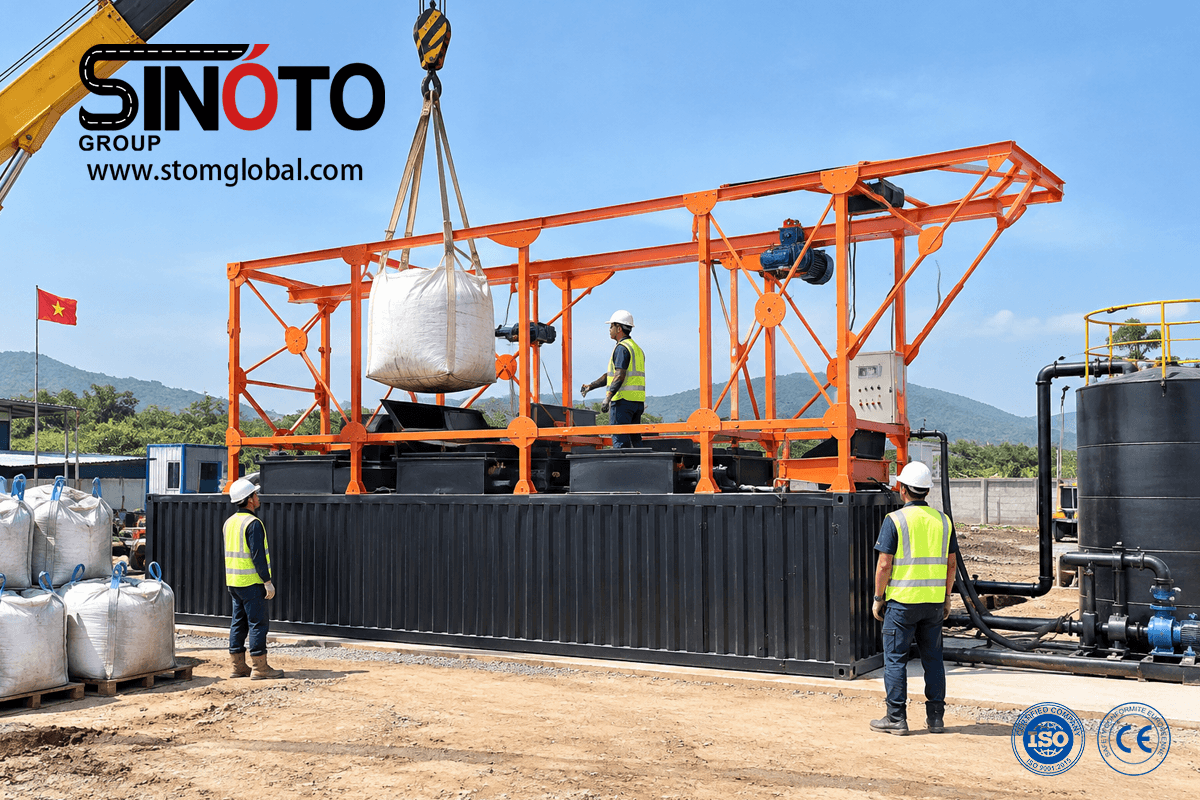
Buyers often search for the jumbo bag bitumen melter price or the bitumen bag melter price before they contact a supplier. Sinoto does not publish a fixed price on its product page because the final quotation depends on configuration. These factors move the number most:
Instead of comparing list prices alone, compare the cost per ton of bitumen melted. A machine with a larger heat exchange area, fume recovery, and full insulation may cost more up front, but the fuel savings repeat every shift. Add the crane and labor costs that an integrated hoist removes, and the bitumen you no longer lose to residue in the bags.
📌 Note: For an accurate bitumen bag melter price, send your target capacity, bag size, preferred fuel, and destination country. A clear brief speeds up the quotation.
Melting is only one step in bulk bitumen handling. Once the bitumen turns liquid, it must reach a tank, distributor, or mixing plant without cooling down. The STBD series includes a bitumen pump, rated at 16.8 m³/h on the STBD-6 and 24 m³/h on the STBD-10, plus heating pipelines that keep the liquid moving.
The tank layout deserves attention too. The main tank and the auxiliary tank connect through pipelines. The main tank can operate on its own, while the auxiliary tank can work separately as a bitumen storage tank. That allows the machine to melt and raise the temperature of fresh bitumen while the second tank supplies material, so the two steps do not interfere and output rises. For projects that need a continuous supply, this simple bitumen storage arrangement removes the stop-start rhythm that slows many jobsites.
Bag packaging helps upstream as well. Where bulk tankers are hard to arrange, 1-ton bags stack, ship in standard containers, and travel to remote sites. Sinoto’s melter turns that packaged material back into liquid on arrival. If your team also works with drums, the company builds a barrels bitumen melting machine on the same decanter principle, so one supplier can cover both packaging formats.
Final Thoughts
So what heating method is used in a jumbo bag bitumen melting machine? The answer is indirect thermal oil heating, reinforced by flue gas recovery and driven by a built-in burner, an external thermal oil furnace, or a custom electric system. That combination gives buyers safer operation, tighter temperature control, and lower fuel use than open-flame methods. When you evaluate any bitumen melting machine, check the heating method first, then capacity, hoisting, and storage design.
📩 Ready to compare options for your project?
👉 Request a Free Quote from Sinoto
Tell us your capacity, bag size, and fuel preference, and our team will recommend the right jumbo bag bitumen melter for you. Email: info@stomglobal.com | WhatsApp: +86 190 5958 1045
#JumboBagBitumenMelter #BitumenMeltingMachine #BulkBitumenHandling #BitumenStorage #RoadConstruction

Whatsapp ID: 8619059581045

WeChat ID: +8619059581045

