Municipal roads, expressways, heavy-haul truck corridors, airport runways, and bridge deck pavements all place very different demands on the asphalt binder used. Ordinary base bitumen — soft when hot, brittle when cold — simply cannot survive these conditions for long, which is exactly why a Polymer Modified Bitumen Plant has become standard equipment for asphalt mixing stations and modified-bitumen producers worldwide.
A PMB plant blends polymers such as SBS, PE, or EVA (or crumb rubber) into base bitumen through high-shear colloid milling, transforming a chemically simple material into a binder that resists rutting in summer and cracking in winter. For buyers evaluating equipment today, three questions dominate the decision: What capacity do I actually need? What separates a good SBS bitumen plant manufacturer from a mediocre one? And what should I expect to pay? This article walks through the buyer’s core concerns and the genuine selling points behind modern modified bitumen plant technology.
“Ordinary bitumen has an inherent contradiction: it softens under summer heat and turns brittle in winter cold. Polymer modification resolves both problems inside a single binder system.” — industry engineering summary
The core value of an SBS modified bitumen plant lies in the molecular transformation that happens inside the colloid mill and development tank. Polymer modification is not a simple physical mix — it unfolds in three sequential stages:
| Stage | What Happens | Result |
|---|---|---|
| Swelling | Polymer absorbs light bitumen components, expands in volume | Molecular weight increases |
| Adsorption | Polymer chains physically entangle with bitumen components | Structural stability improves |
| Crosslinking | A stable three-dimensional network forms | Elastic skeleton is built |
🔧 Infographic takeaway: once this elastic skeleton forms, the finished binder is “soft but not sticky, hard but not brittle” — the exact property profile that lets SBS modified bitumen handle both summer rutting and winter cracking in the same pavement layer.
The performance gains an SBS bitumen plant delivers are measurable, not theoretical:
| Indicator | Before Modification | After Modification | Improvement |
|---|---|---|---|
| Dynamic stability | ~800 passes/mm | 3,000+ passes/mm | ~4x |
| Rutting resistance index | ~4.0 | 6.5+ | ~60% |
| Rutting depth at 60°C | Exceeds 15mm | ≤8mm | -47% |
| Low-temp bending strain | ~2,000 με | 3,500+ με | Significantly higher |
Because the sourcing polymer and base bitumen have different molecular weights, they don’t blend easily on their own. A well-engineered PMB plant controls three critical process parameters:
This is exactly the engineering knowledge a serious SBS modified bitumen plant manufacturer builds into its equipment control logic — not just the tank and mixer, but the automated dosing and temperature-holding sequence that keeps every batch consistent.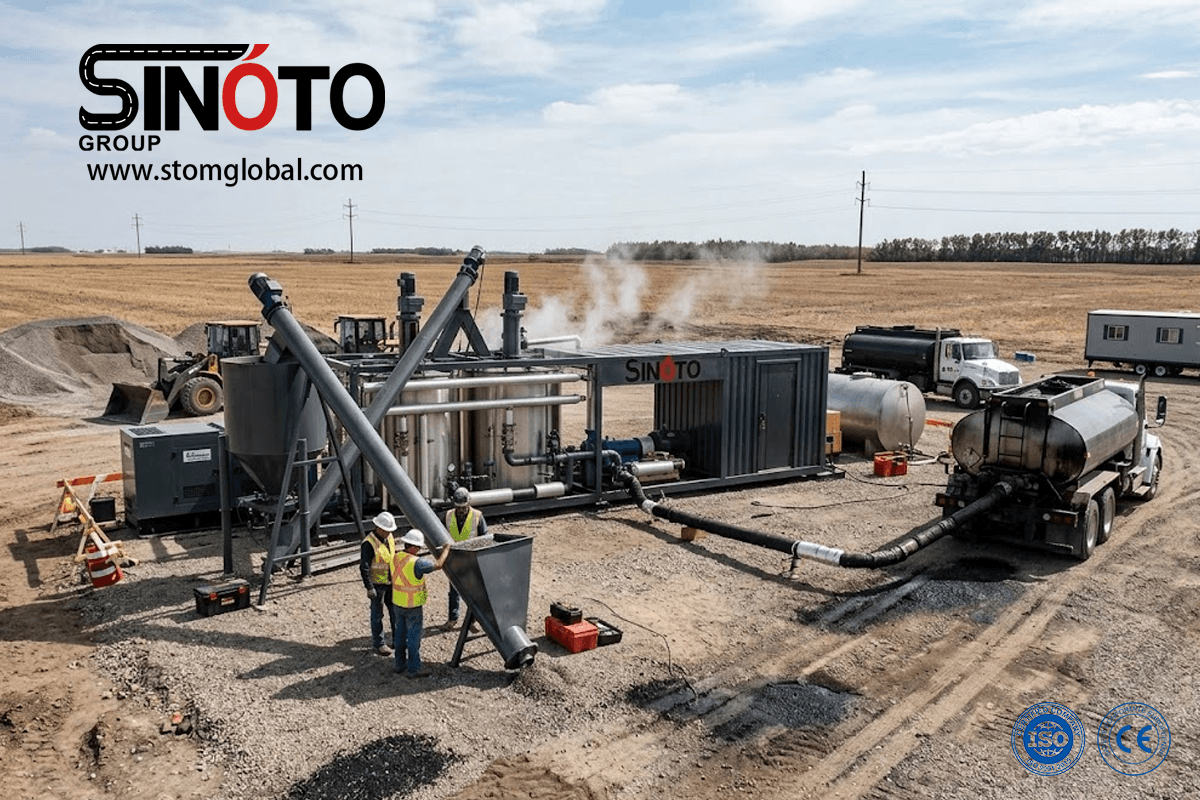
This is the single most common question buyers ask before requesting a polymer modified bitumen plant price quote, and the answer depends on four progressive checks:
📊 Capacity reference table
| Configuration | Typical Output | Best Fit |
|---|---|---|
| 10 tph PMB plant | 10 tons/hour | Small to mid-size projects, single mixing station supply |
| 20 tph polymer modified bitumen plant | 20 tons/hour | Mid-size expressway or municipal contracts |
| Large intelligent lines | 40–60+ tons/hour | Annual output up to 200,000 tons; large-scale, multi-project supply |
A critical detail many buyers overlook: the same nominal machine produces different volumes depending on the material. A colloid mill rated at 30 tph for SBS-modified bitumen may only reach 15–18 tph when running rubber-modified bitumen, because crumb rubber requires more intensive grinding. Always confirm the rated capacity against the specific modifier type you plan to run — not a generic number on a spec sheet.
“Since project demand for modified bitumen fluctuates seasonally, it’s better to size a PMB plant for sale slightly larger than your baseline need — a 20% capacity buffer prevents supply shortfalls during peak construction periods.”
Beyond raw tonnage, the real differentiator between plants is the colloid mill’s grinding fineness. Quality hinges on how evenly the polymer disperses through the bitumen:
When comparing a PMB plant for sale, ask the manufacturer three specific questions:
| Control Type | Characteristics | Best Suited For |
|---|---|---|
| Full-automatic (PLC) | Automated dosing, blending, milling; high metering precision | Large-scale standardized production, tight project schedules |
| Semi-automatic | Key steps automated, some manual involvement | Small-batch, multi-formula production |
| Manual | High flexibility, fully hand-operated | Trial lines, formula R&D |
For large, standardized construction projects, a full-automatic PLC-controlled modified bitumen plant is generally the smarter investment: higher metering precision, better batch-to-batch consistency, and easier quality traceability. Projects with frequently changing formulas may find semi-automatic configurations more cost-effective.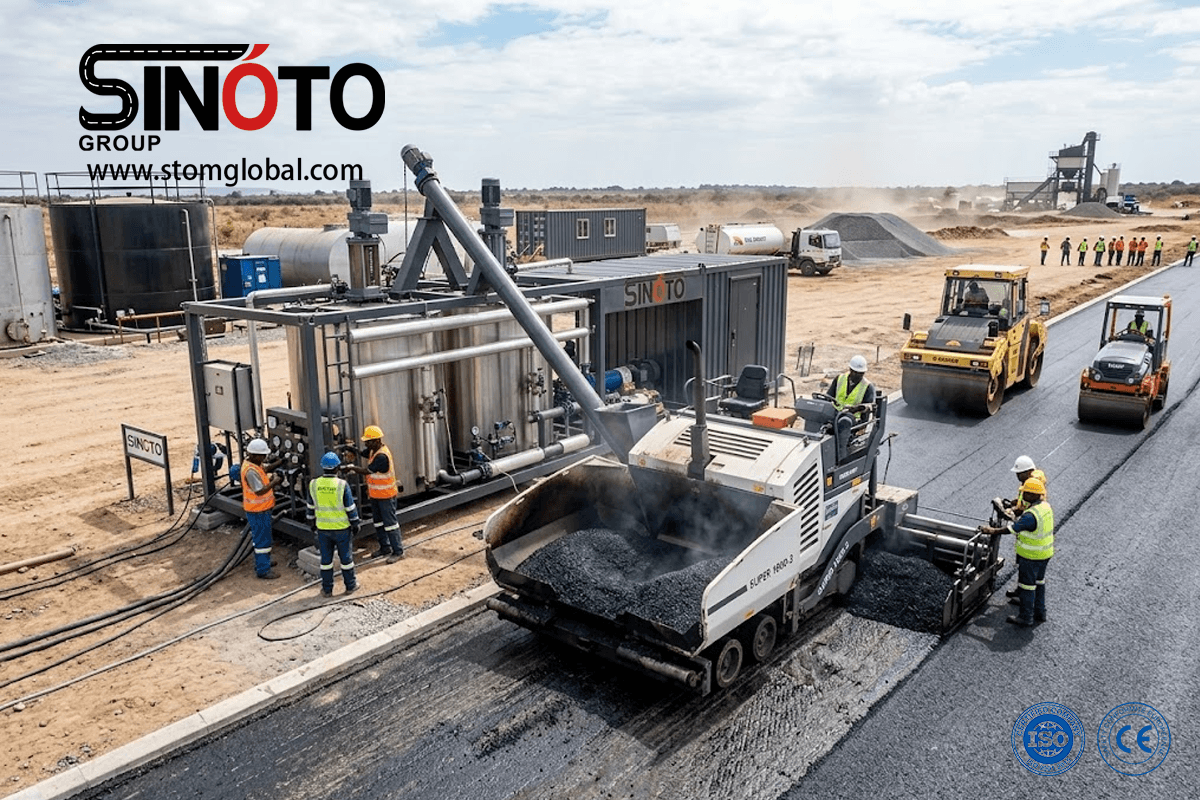
Buyers often assume PMB plant price is determined purely by tonnage, but four factors matter just as much:、
| Price Driver | Why It Matters |
|---|---|
| Colloid mill grinding technology | Fine grinding (<5μm) requires more precise engineering |
| Automation level | Full-PLC control costs more upfront but reduces labor and rework |
| Capacity buffer | Sizing 20% above baseline avoids costly future upgrades |
| Manufacturer support | Installation, commissioning, and after-sales service affect total cost of ownership |
💰 Economic payoff table
| Metric | Effect |
|---|---|
| Pavement service life | Extended 5–10 years |
| Maintenance cost | Reduced 30%–50% |
| Modifier dosage required | Only 0.3%–0.6% by weight |
| Warm-mix variants | Lower mixing temperature by ~30°C, cutting carbon emissions |
This is the core economic logic behind investing in a properly specified PMB plant: a relatively small modifier dosage buys a much longer pavement lifespan and dramatically fewer repair cycles. Combined with environmental gains — such as recycling waste tire rubber in rubber-modified formulations and lower-temperature mixing that reduces carbon output — the total value proposition extends well beyond the sticker price.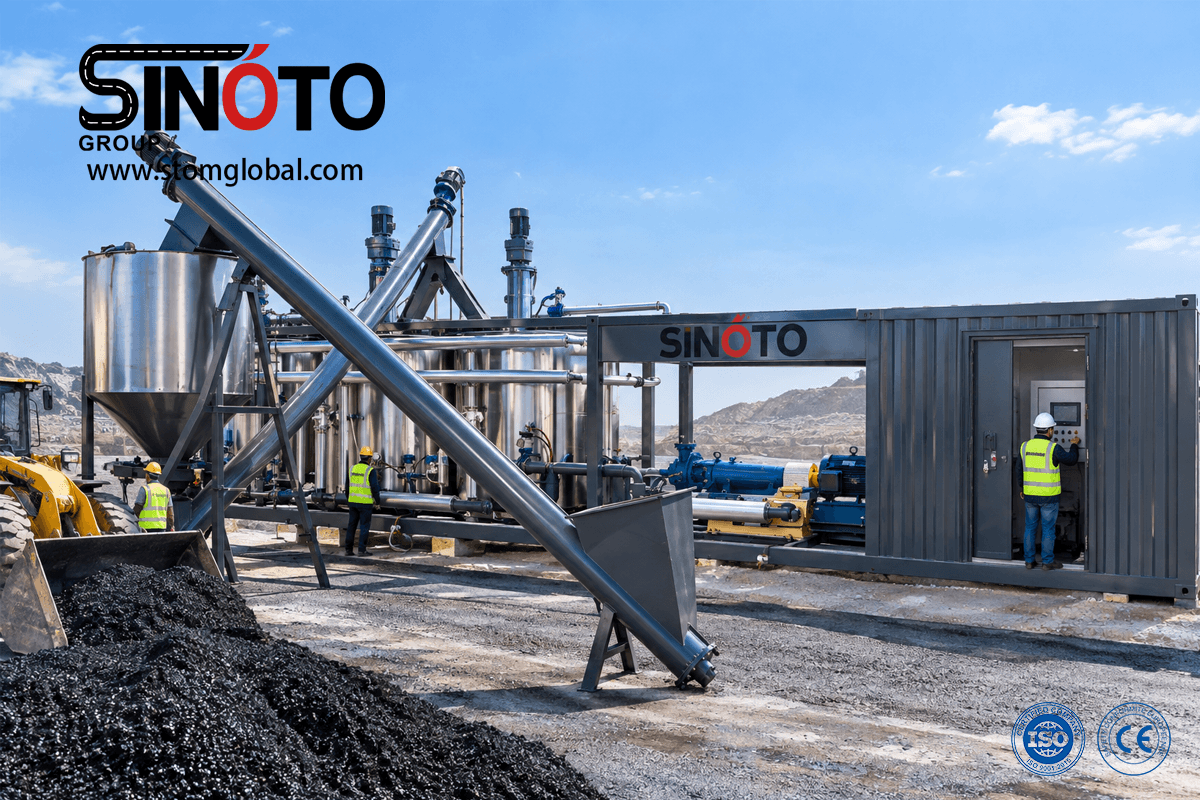
Not every SBS modified bitumen plant manufacturer engineers to the same standard. Before signing a contract, verify:
A dependable manufacturer treats plant selection as a four-question process — production goal, output requirement, process quality, and automation fit — rather than pushing the highest-margin unit. That consultative approach is usually the clearest signal of long-term reliability.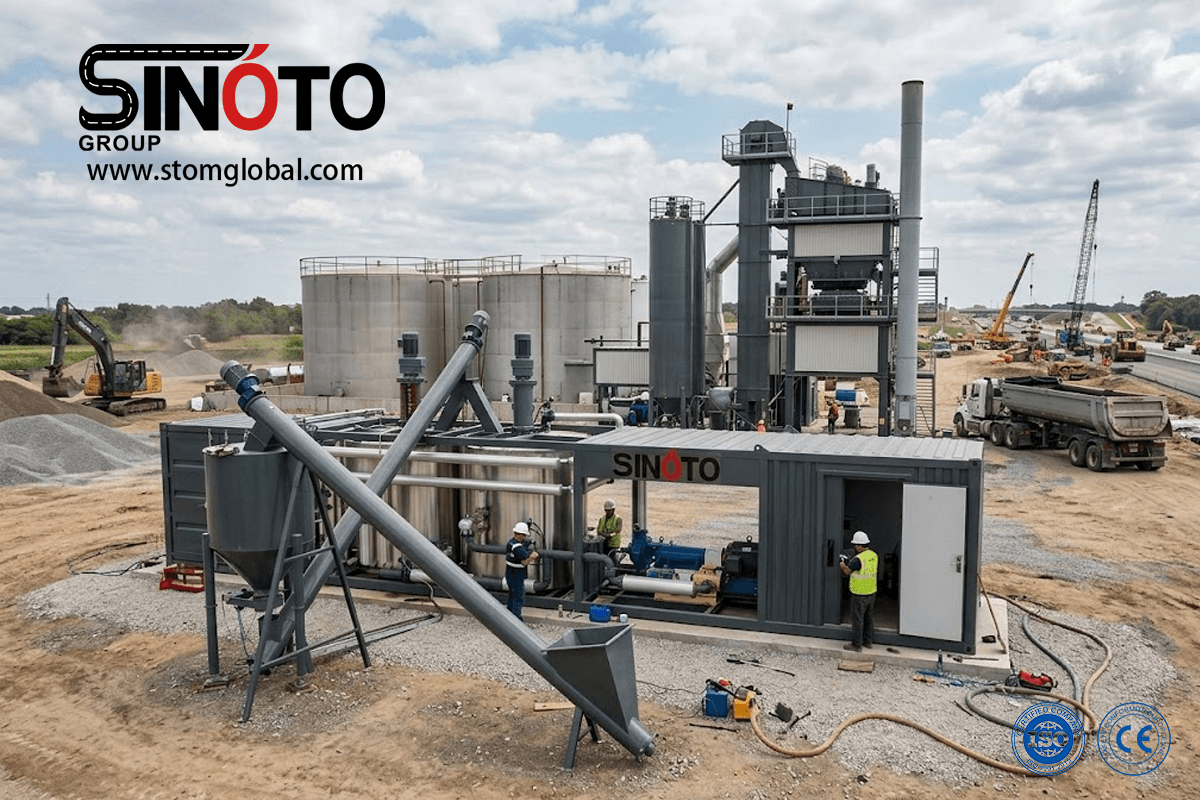
A Polymer Modified Bitumen Plant is not a commodity purchase — it’s an engineering decision that affects pavement performance for the next decade. Whether you’re evaluating a 10 tph PMB plant for a smaller municipal contract or a 20 tph polymer modified bitumen plant for expressway-scale supply, the fundamentals stay the same: confirm your production target, size in a capacity buffer, verify grinding fineness, and match automation to your team’s operating capability. Get those four right, and the polymer modified bitumen plant price you pay will be justified many times over in extended pavement life and reduced maintenance spend.
Ready to compare specifications and get an accurate PMB plant price for your project?
👉 Request a Free Quote & Technical Consultation →

Whatsapp ID: 8619059581045

WeChat ID: +8619059581045

