Every road engineer knows that a pavement is only as good as the mixture beneath it. Conventional continuous drum plants win on simplicity and cost, but buyers have long questioned their mixing precision. The Continuous Forced Asphalt Mixing Plant closes that gap by adding a weighing system and a twin-shaft mixer to the proven continuous drum design. This guide explains how the twin-shaft forced mixer lifts mixture quality, what buyers should check before purchasing, and what the STOM Global (Henan Sinoto Machinery) line delivers.
| 🎯 Precise Dosing | 🔄 Forced Twin-Shaft Mixing | 🛣️ Highway-Grade Output | 💰 Low Investment |
|---|---|---|---|
| Weighed mineral powder addition | Thorough blending of binder, filler and aggregate | Suits expressways, airports and demanding projects | Small footprint, simple structure |
Rutting, cracking and raveling often trace back to an inconsistent mix: uneven binder film, poorly distributed filler, or temperature swings between batches. On expressways and airports, the specification leaves little room for these defects, so high-quality asphalt production is a requirement rather than a bonus for any highway construction contractor.
A standard continuous drum plant dries aggregate, sprays bitumen and mixes the material inside one drum, which keeps production uninterrupted. The trade-off is limited mixing intensity and difficulty adding mineral powder accurately. Forced mixing solves both problems.
💡 Engineer’s Note: In a forced mixer, aggregate and binder are blended under mechanical force rather than by tumbling alone. The result is a more uniform coating and better resistance to road rutting, which is why forced mixing is the preferred route for high-grade roads.
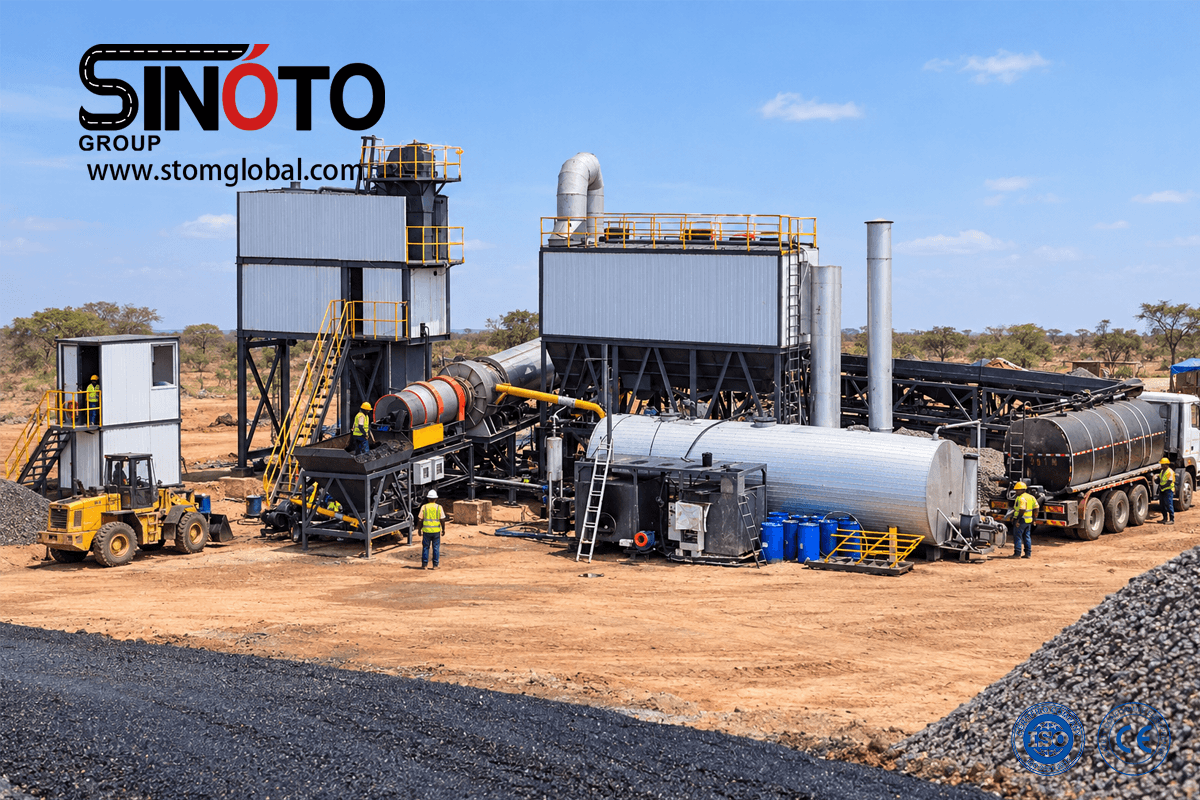
The advantage of a continuous twin shaft asphalt plant starts before the mixer. Heated aggregate leaves the dryer drum, and a weighing system meters the mineral powder quantitatively. Everything then enters the continuous twin-shaft mixer, where two counter-rotating shafts fitted with paddles lift, shear and fold the material. Every particle is moved repeatedly through the mixing zone, so bitumen is spread evenly across the aggregate surface and the filler is dispersed throughout the mixture.
Continuous mixing also brings a practical benefit on site. Because material flows steadily from the cold feed bins through the dryer and into the mixer, temperature and gradation stay stable across a long shift, and operators avoid the stop-start rhythm of batch cycles. Stable conditions make it easier to hold the mix design from the first truck to the last.
This is what separates forced mixing asphalt plant technology from drum-only designs. Four quality gains stand out:
For buyers, the practical outcome is that a continuous forced asphalt plant can produce mixtures that meet high-grade road standards while keeping the cost and footprint advantages of a continuous asphalt plant.
| Feature | Continuous Drum Plant | Continuous Forced Plant | Traditional Batch Forced Plant |
|---|---|---|---|
| Mixing method | Inside drying drum | Dedicated twin-shaft mixer | Twin-shaft batch mixer |
| Mineral powder dosing | Limited | Quantitative, weighed | Precise |
| Footprint and investment | Small, low | Small, relatively low | Larger, higher |
| Production flow | Continuous | Continuous | Batch cycles |
| Typical application | Low-grade roads | Highways, airports, expressways | Highways, airports |
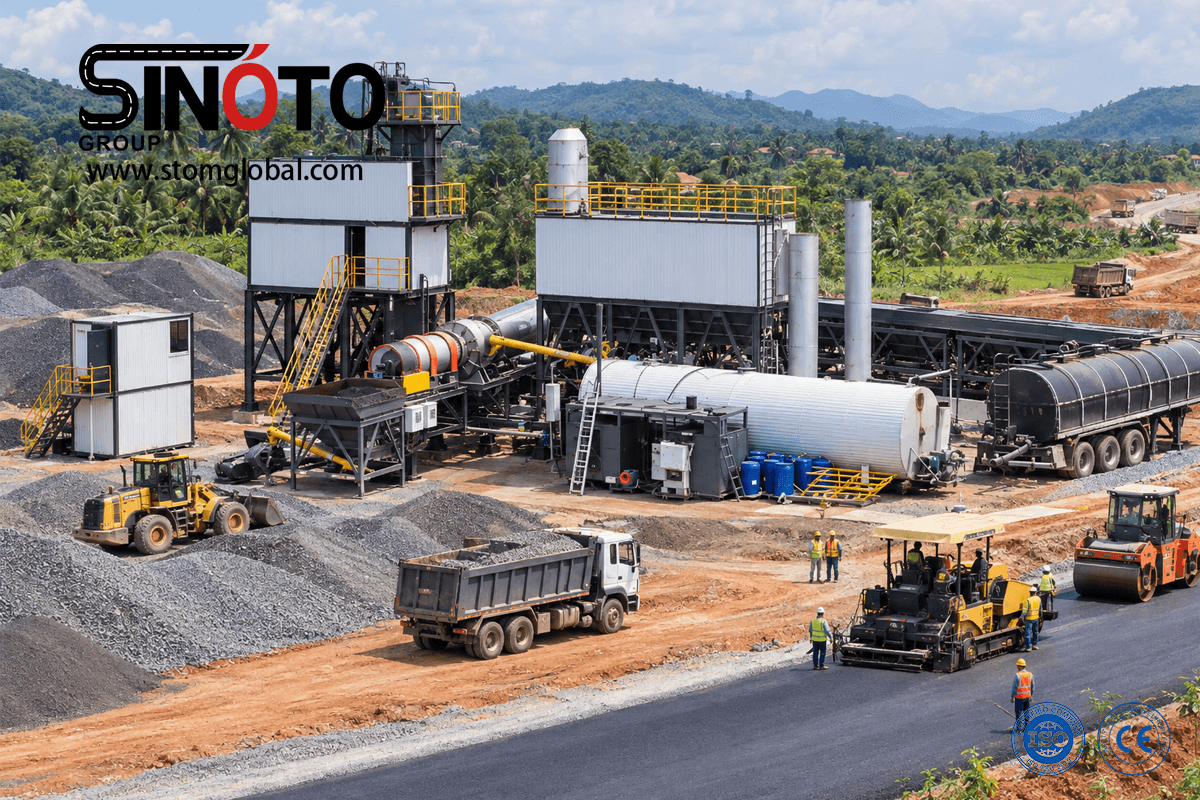
Buyers evaluating a continuous forced asphalt plant for sale usually focus on five questions: Does the output match my project? Which fuels can it burn? Will it meet environmental limits? How easy is it to operate and move? And what is the total cost of ownership?
Environmental performance. Dust collection is a common approval hurdle for new plants. The system combines a primary gravity or cyclone collector with a baghouse and induced draft fan, and noise is rated at 70 dB or below, which helps with permits near populated areas. Buyers should still confirm local emission limits before ordering.
Capacity fit. Contractors searching for a 120 tph asphalt plant typically compare the DHL100 and DHL130 models, choosing according to daily paving volume. Larger projects can step up to the DHL160.
Fuel flexibility. The burner system supports diesel, heavy oil, fuel oil, coal and natural gas, which helps buyers adapt to local fuel prices.
Control options. Manual operation is standard, and automatic computer control is optional.
Key specifications for reference:
| Parameter | DHL100 | DHL130 | DHL160 |
|---|---|---|---|
| Capacity (t/h) | 100 | 130 | 160 |
| Total power (kW) | 223 | 290 | 354 |
| Dryer drum size (mm) | Φ1500×7600 | Φ1800×8000 | Φ1980×10000 |
| Twin-shaft mixer capacity (m³) | 1.5 | 2 | 2.2 |
| Mixer motor power (kW) | 30 | 37 | 45 |
| Hot mix storage silo (m³) | 5.5 | 7.5 | 12 |
| Bitumen tank (m³) | 40 | 40 | 40 |
| Noise (dB) | ≤70 | ≤70 | ≤70 |
Specifications are for reference only and may be adjusted by the manufacturer.
What drives the price? A twin shaft asphalt plant price depends on capacity, burner and fuel type, dust collection configuration, silo size and control level. In general, the forced asphalt plant price for a continuous design sits below a comparable batch plant because of fewer components and a compact structure. For an accurate figure, request a quote based on your output target and site conditions.
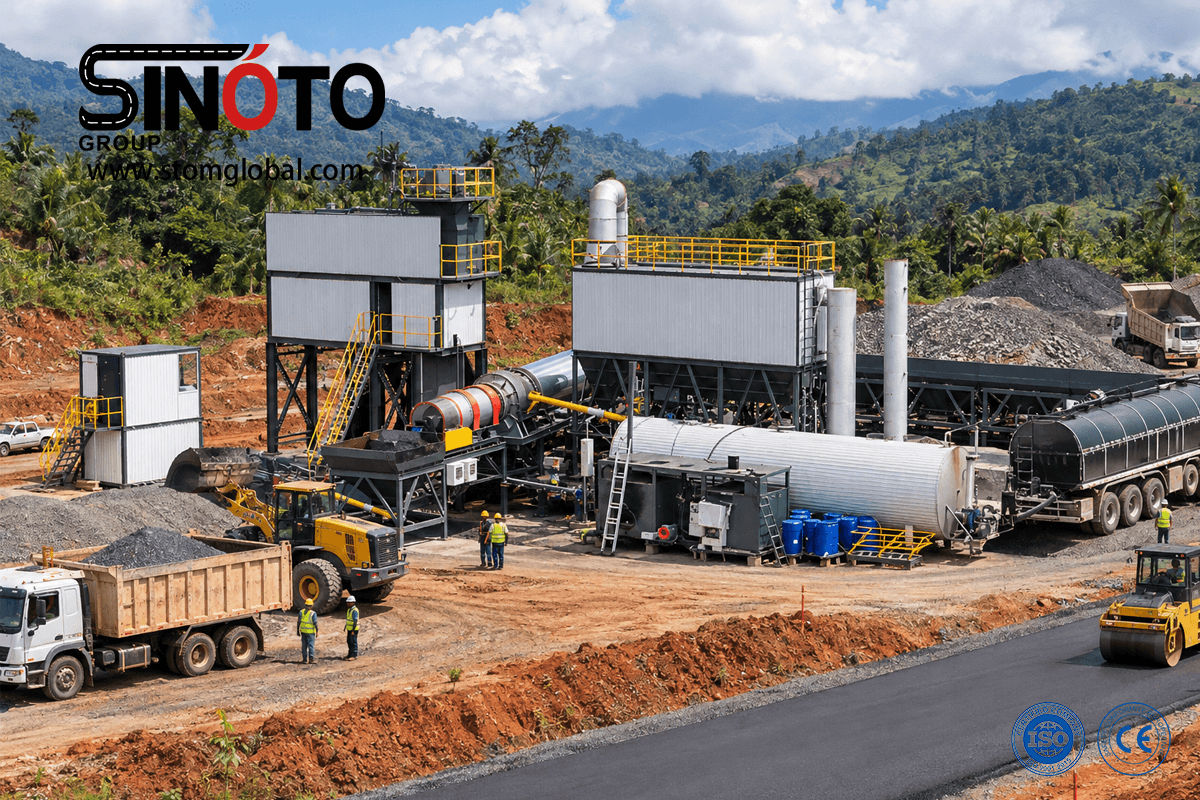
The STOM continuous forced asphalt mixing plant combines the strengths of both plant families. Its main selling points are:
Henan Sinoto Machinery, based in Zhengzhou, supplies asphalt machinery and road construction equipment worldwide, including stationary and mobile asphalt mixing plant models, polymer modified bitumen plants and road maintenance vehicles. That range lets contractors source the mixing plant and related equipment from one supplier.
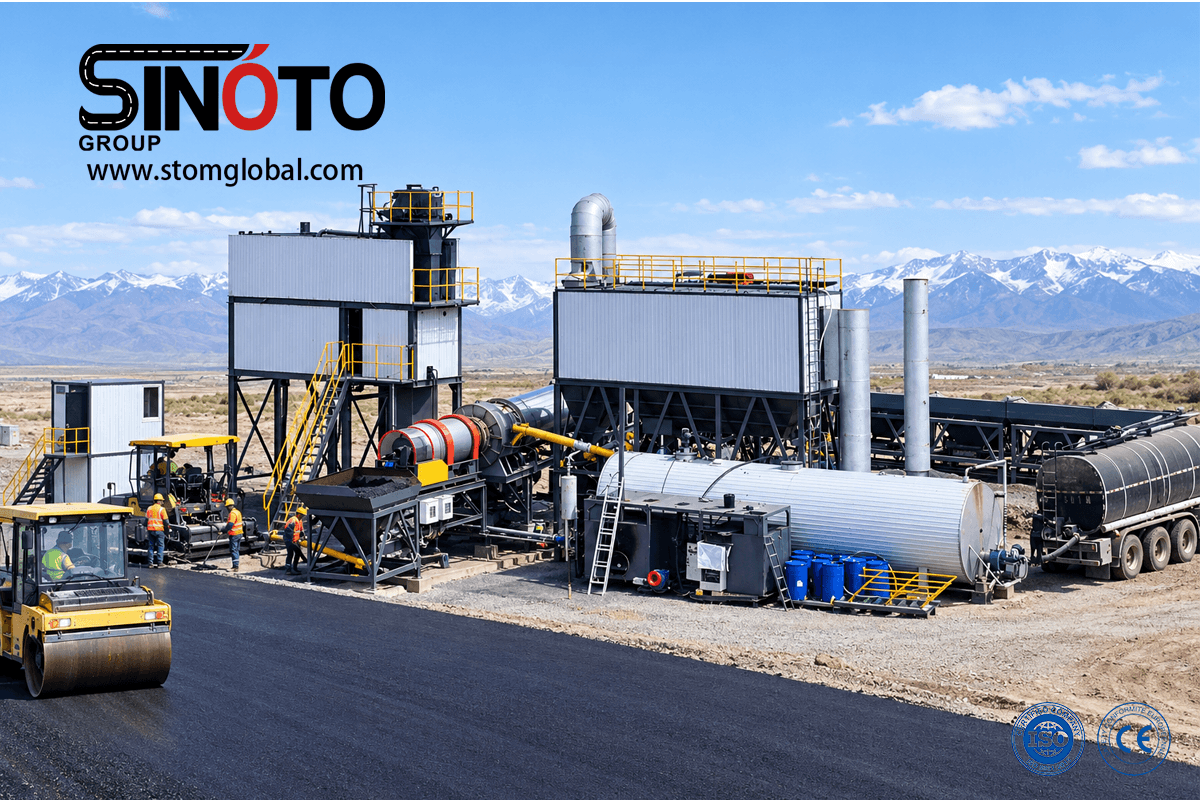
Whatever the project scale, the same rule applies: consistent mixing protects pavement life, reduces rework and supports long-term road performance. A twin-shaft forced mixer improves asphalt mixing quality through intense mechanical blending, weighed filler dosing and continuous, uniform output. For contractors who need highway-grade mixtures without the cost of a full batch plant, the continuous forced design is a practical choice.
📩 Request Your Quote: Tell us your target output, fuel type and project location, and our engineers will recommend the right model and configuration.
👉 Get a Free Quote for a Continuous Forced Asphalt Mixing Plant | ✉️ info@stomglobal.com | 📱 WhatsApp: +86-190 5958 1045
#ContinuousForcedAsphaltPlant #AsphaltMixingPlant #TwinShaftMixer #HighwayConstruction #AsphaltPlantForSale

Whatsapp ID: 8619059581045

WeChat ID: +8619059581045

